• About
  • Anacotilla: History & Hearsay
  • Junk: A Curated Collection
  • Resources
  • Species List
  • Yarnauwingga and beyond

Yarnauwi Farm

~ Fleurieu Peninsula, South Australia

Yarnauwi Farm

Category Archives: trees

Planting and preparing trees for El Niño

09 Tuesday Jun 2015

Posted by Joel in diy, ecology, propagation, regeneration, trees

≈ 3 Comments

Tags

ecology, farm, kangaroos, permaculture, planning, propagation, revegetation, seasons, southwestern Fleurieu, trees, water, winter

IMG_6330

A baby, or a nest, are not essential for tree-planting, but they help.

We’re in our third season of tree planting at Yarnauwi now, working to revegetate sections of the property for habitat, shelter and timber. We’ve planted about 1,000 plants a year, from groundcovers to future woodland giants. Once they were guarded from marauding roos, we’ve necessarily had a philosophy of leaving the plants to survive without too much intervention. Even in a dry year such as 2014, we had a modest 60ish percent survival rate, but with El Niño tipped to recur in 2015, we’ve tried to further refine our approach to give our trees an improved chance of survival. Of course, there are absolutely no guarantees it will work, or will work for everything, but it’s worth a shot.

IMG_6328

The bunyip water level: bringer of contoured joy to young and old alike.

This year, we’ve also planted our first, experimental, woodlot of river oaks (Casuarina cunninghamiana) in an awkward corner of the farm. The paddock was too small and inaccessible to deep rip, so we began by marking contours with a bunyip water level, an essential DIY tool for measuring and marking slope (see Brad Lancaster’s guide to bunyip construction and usage here).  Continue reading →

A break in the season

15 Wednesday Apr 2015

Posted by Joel in ecology, regeneration, trees, waterways

≈ Leave a comment

Tags

ecology, farm, photography, revegetation, seasons, southwestern Fleurieu, summer, trees, water, waterways

IMG_6090

The rain gauge almost full!

With the big rains of the last couple of weeks, it feels like we’re approaching an break in the seasons. In most parts of the property, the cracks that open in the clay over summer are softening and closing, and there’s a green fuzz of new growth on the ground (especially in the areas with existing, dry ground cover, we’ve noticed). The sheep march briskly between discoveries of fresh grass and happily fan out over new paddocks.

IMG_6093

A self-sown red gum pushes through the cracks.

Continue reading →

Maintain the rain! Piecing together the past to imagine a future

05 Thursday Mar 2015

Posted by Joel in ecology, history, planning, regeneration, trees, waterways

≈ 2 Comments

Tags

art, ecology, erosion, farm, history, livestock, photography, planning, revegetation, seasons, soil, southwestern Fleurieu, summer, trees, water, waterways, winter

It’s been a dry year on the Fleurieu Peninsula. After the inundation of 2013, 2014’s rainfall came in almost 200mm shy of the year before, and about 100mm short of the average. By February 2015, the dam had receded to a few centimetres of sludge, and the water carter had come to top up the stock water tanks. While there’s no doubt that the Fleurieu Peninsula has had the Mediterranean pattern of dry summers and cool, wet winters for some time, recently I’ve begun to wonder whether this pattern has shifted towards greater aridity as successive land-uses have cleared the landscape.

Curruckalinga, looking over St. Vincent’s Gulf, 1846, George French Angas, depicting a mosaic of woodland and open grassland. From the description: “This view is taken from the rocky hills near Mr Kemmis’s Station, to the northward of Rapid Bay … The undulating appearance of the country here represented, together with the singular manner in which the trees are dotted about in all directions over the landscape … principally ‘casuarinae’ or she-oak, with ‘eucalyptus’.” From the collection of the State Library of South Australia, B15276/33.

At the time of European colonisation, the Fleurieu Peninsula was most likely covered with a mosaic of woodland, forest and grasslands, maintained through Aboriginal burning and land management practices. In his paper on the discovery and settlement of the Fleurieu (1986), Rob Linn draws from the diaries of settlers in his descriptions of the landscape of the South Western Fleurieu. Writing in 1838, William Giles described the landscape around Rapid Bay, as “a most beautiful valley, the soil of great depth covered with most luxuriant herbage … on the sides of these hills we found plenty of keep for sheep, and wherever the grass had been burnt in these places it was looking beautifully verdant … fine land, excellent water, plenty of timber …” This was echoed by John Stephens in 1839, describing the “country from Cape Jervis upwards” as “very picturesque” and “well-timbered” (Linn 1986). Continue reading →

A moveable sheep shelter: the sequel

05 Monday Jan 2015

Posted by Joel in diy, livestock, trees

≈ 4 Comments

Tags

building, farm, hack, livestock, recycling, reuse, sheep, southwestern Fleurieu, summer, waste

IMG_5448

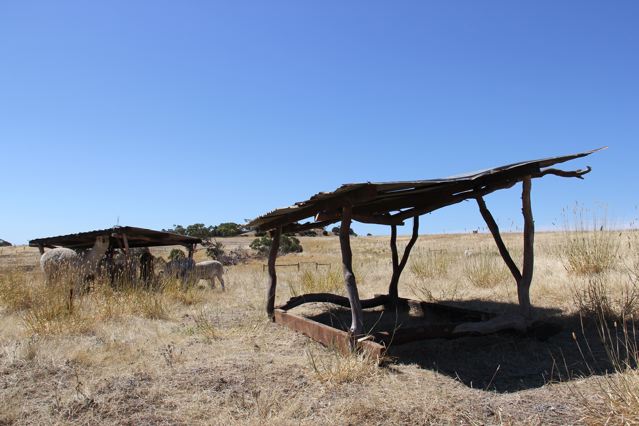
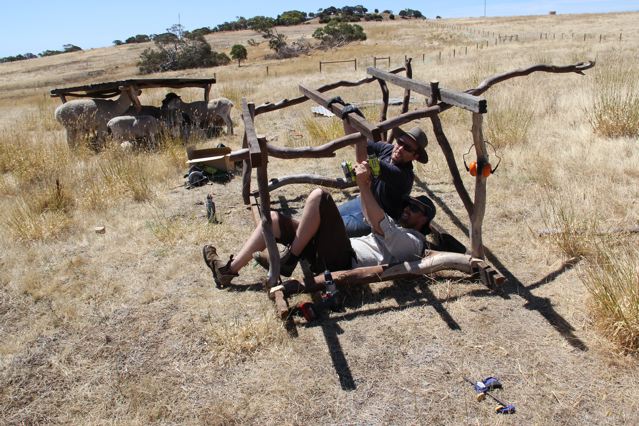
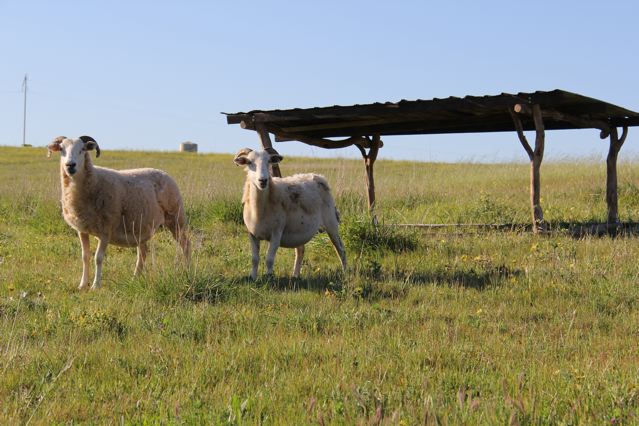
With recent temperatures climbing into the 40s (about 107 degrees Fahrenheit), and tree-induced shade still a few years away, we’ve constructed another moveable sheep shelter to ensure our sheep and alpacas have a cooler place to recline on the most hostile of days.

IMG_5444

Employing the off-grid carpentry prowess of Jeremy and Pete, we knocked up the second shelter to the same rough plan as the original: salvaged hardwood for a sled base, allowing it to be dragged from pasture to pasture, fallen redgum for uprights, and tin reclaimed from the gullies for the roof. The previous life of the tin means that a hole is already cut for the installation of a pot-belly stove, should the sheep find one that fits their budget. This sheep shelter also includes a perch, should passing birds need a break while searching for a tree. Continue reading →

Regeneration: Two years of practising patience

16 Sunday Nov 2014

Posted by Joel in ecology, planning, regeneration, trees, waterways

≈ 4 Comments

Tags

before and after, ecology, erosion, farm, fencing, kangaroos, permaculture, planning, propagation, revegetation, seasons, southwestern Fleurieu, trees, waste, waterways

IMG_5332

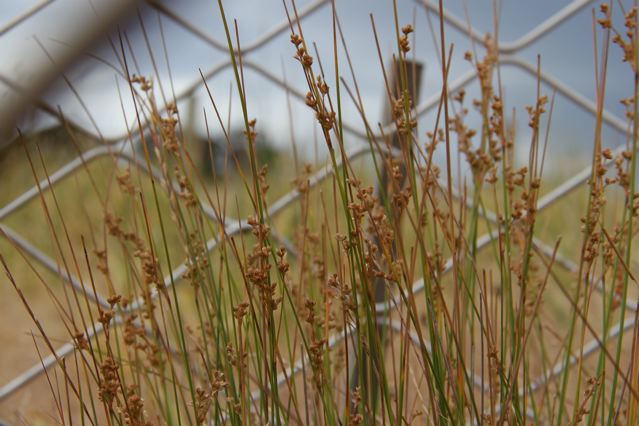
Some might consider Shark-mesh overkill for allowing rushes to regenerate.

In our first year of working on the farm, we really tried to practise the permaculture principle of long and thoughtful observation, but it always competed with our own impatience to see change. In that first flurry of clearing gullies and planting seedlings, I remember trawling the internet for before-and-after shots of other people’s reveg projects: something to help imagine a future for the block. Seasoned tree-planters told us we’d see real change in five years, the optimistic suggested three, others, fifteen.

PycnanthaRegen

Self-regenerating golden wattle (Acacia pycnantha) after two years, and protection from kangaroos. This wattle was one of four trees present on the entire property in 2012.

Now at the two year mark, we are noticing change. Removing cattle and fencing sensitive areas has allowed a fuzz of groundcover to begin growing over the barest of gullies. Fences have reoriented deer and kangaroo movement and grazing patterns. Some seedlings planted in the cold, soggy winter of 2013 appeared to die, but then surprised us by resprouting and growing at a cracking pace the following autumn. Other plants that were repeatedly pruned back to their tree-guard height by roos have invested their growing energy into roots and woody stems.

Continue reading →

Small mysteries: A year in bugs

27 Saturday Sep 2014

Posted by Joel in ecology, regeneration, trees

≈ Leave a comment

Tags

ecology, farm, insects, photography, seasons, southwestern Fleurieu, summer, trees, winter

As part of our record-keeping, in the almost-two-years since we bought Yarnauwi we’ve tried to document the natural phenomena we observe season by season. At the end of each year, we go back over our journals and add what we’ve discovered to the records of the previous year. Over time, we hope, we’ll get a much more complex understanding of the ecological patterns that occur in our landscape, as well as the changes that may occur as a result of our activities.

Already, in the short time we’ve been on the block, we’ve noted shifts in the populations and presence of certain plants and creatures. While we often overlook insects, when looking back through our photos and notes, we realised that we have actually been observing their more subtle role through the seasons: the sudden chorus of crickets after the opening rains, or the way the grass flickers with grasshoppers in late summer. In their honour, here’s a year in bugs. Representing less than a couple of years of observation, it’s far from authoritative, but perhaps it offers the beginnings of a pattern.

Autumn

IMG_4085

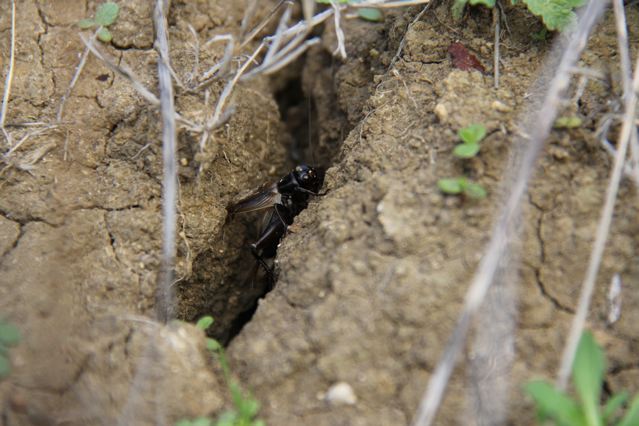
Crickets sing from the cracked soil after the first flush of rains.

IMG_2396

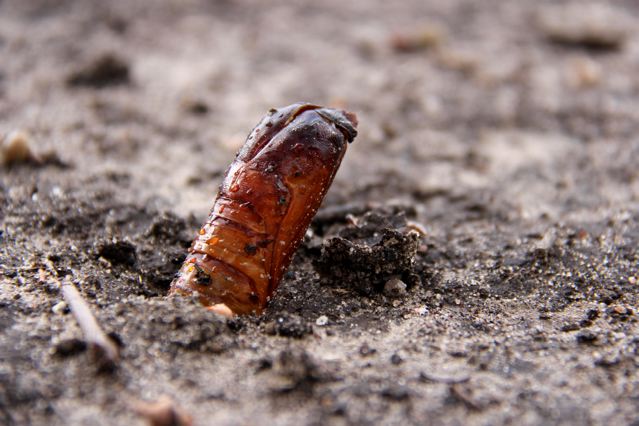
Bardi grubs (Rain moth pupae) emerge from the soil around the River red gums following the first rains.

Continue reading →

A moveable sheep shelter

22 Monday Sep 2014

Posted by Joel in diy, livestock, planning, trees

≈ 2 Comments

Tags

building, design, farm, fencing, hack, livestock, recycling, reuse, sheep, southwestern Fleurieu, summer, trees

The moveable sheep shelter in fresh pasture.

The moveable sheep shelter in fresh pasture.

While the name Trees, Bees and Cheese might suggest otherwise, one thing we’re short on is trees. So with the arrival of sheep, and now lambs, we’ve tried to get in before summer with a sheep shade-shelter. With our soon-to-be-complete subdivision of the property into smaller paddocks, we thought we’d build a moveable shelter that would allow us to rotate it from paddock to paddock with the flock, rather than building seven or eight smaller structures. Continue reading →

The Second Annual TBC Tree-planting Extravaganza

19 Saturday Jul 2014

Posted by Joel in ecology, events, regeneration, trees

≈ 2 Comments

Tags

ecology, erosion, events, farm, kangaroos, planning, revegetation, southwestern Fleurieu, trees, waterways, winter, zones

The 'before' photo: 800 new plants in position. Stay tuned over the next 20 years for the 'after' shot.

The ‘before’ photo: 800 new plants in position. Stay tuned over the next 20 years for the ‘after’ shot.

Over the weekend of the 12-13 July, around 30 dedicated volunteers descended on TBC for our annual tree-planting fiesta. Over two days, we managed to plant some 800 locally indigenous plants in the two ‘wilderness zones’, kick-starting their transition back to pink- and red-gum woodland. The first area was planted outwards from the former Bee House (currently tree-planter snack dispensary and rain shelter) with around 600 plants selected to address the water-logging in the area and to revegetate in and around erosion gullies. The second area saw the planting of around 200 plants, radiating from the existing remnant redgums. Once again these plants were selected to address water-logging and erosion as well as provide shelter to adjacent paddocks. Over the following week, we dodged thunderstorms and icy squalls to add another 150 or so plants, with about 200ish to go! Continue reading →

Propagating Oaks 1: Germination

02 Wednesday Jul 2014

Posted by Joel in diy, livestock, planning, propagation, trees

≈ Leave a comment

Tags

food, livestock, nursery, permaculture, planning, propagation, seeds, trees, winter

An English oak seedling (Quercus robur) reachers towards the winter sun.

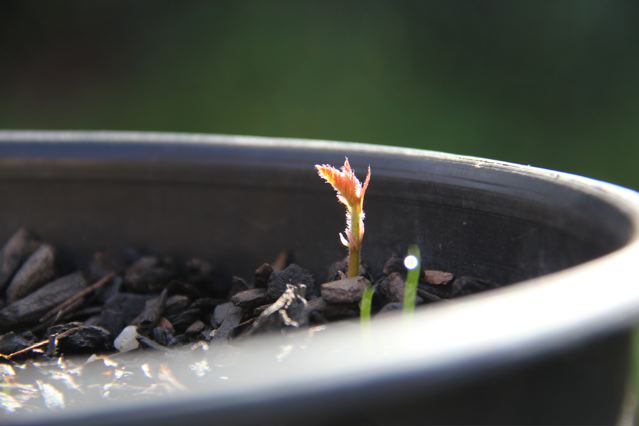
An English oak seedling (Quercus robur) reaches towards the winter sun.

Back in autumn, we gathered freshly fallen acorns from the base of a row of massive old English oaks (Quercus robur). Inspired by the dehesa agroforestry systems of Spain and Portugal, we’ve often pondered how a livestock-grazed oak plantation could work on the property. Acorns for pigs, and perhaps even human consumption, timber for the use of our great-great-grandchildren, and in the meantime, a carpet of fallen leaves offering organic matter for composting and mulch. So, with some bags of acorns and few containers of the topsoil and leaf litter from around the parent oaks, we set to propagating them.

We mixed the leaf litter and gathered topsoil in with our potting medium, hoping to inoculate our own medium with beneficial fungi, and then planted the acorns. We planted some close to the surface, and others about an acorn-width deep. After about eight weeks of being kept damp and left in the late autumn-early winter sun, they began sending their first shoots upwards, red furry things with a cluster of jagged leaves at the top. The depth of the acorn doesn’t seem to have had any bearing on their readiness to propagate. Once they’ve all emerged and are about 8-10 cm tall, we’ll carefully thin them, planting out excess strong specimens to their own pots until we have one decent plant per pot.

Grow little seedling, grow!

Grow little seedling, grow!

Representing the Block: The farm logo

29 Sunday Jun 2014

Posted by Joel in art & craft, trees

≈ 4 Comments

Tags

art, design, erosion, farm, history, logo, revegetation, southwestern Fleurieu

tbcgreyscalesmlAfter a year and a half, we’ve finally got to developing a visual identity for the farm. While our working name for the farm, “Trees, Bees and Cheese”, is more conceptual than place-based, we wanted the logo to reflect some of the distinctiveness of the farm’s landscape.

Yep, there is wind and rain, but there’s also the symphonic light that rolls across the hills and the late afternoon haze that reduces the sequence of valleys into golden layers of theatre scenery. There are the rolling, low clouds that we ache for in late summer and autumn, then look forward to farewelling by late winter. These tumbling clouds also reference the nearby sea. The lone tree and falling rain suggest how the landscape has been reshaped over the last 180ish years through clearing and subsequent erosion, but also remind us of the resources available in restoration when we harvest rainwater and gather seed. Perhaps in the future we might be able to add some more trees to the logo to reflect the changing reality of the property!

tbcbwsml

We also have a black-and-white option, particularly good for stencilling farmy things. We’d love to hear what you reckon, and if you have any ideas for tweaks or adjustments!

← Older posts
Newer posts →

Yarnauwi on Etsy

Enter your email address to follow this blog and receive notifications of new posts by email.

Join 223 other subscribers

What We’re Writing About

alpacas annual report art art and craft bees before and after birds books building cheese climate change craft damara design downloads ecology embroidery erosion etsy events farm fencing fire Fleurieu Fleurieu Coast Fleurieu Peninsula food fungi future hack hiking history illustration insects kangaroos leather leathercraft linoprint livestock logo nursery permaculture photography picnics planning plants Plastic-free July printing propagation rain recycling regeneration regenerative agriculture reuse revegetation sea seasons seeds shed sheep sheepskins shop soil southwestern Fleurieu stiles summer textiles tractor trees ute waste water waterways winter zones

Meta

  • Create account
  • Log in
  • Entries feed
  • Comments feed
  • WordPress.com

Blog at WordPress.com.

  • Subscribe Subscribed
    • Yarnauwi Farm
    • Join 223 other subscribers
    • Already have a WordPress.com account? Log in now.
    • Yarnauwi Farm
    • Subscribe Subscribed
    • Sign up
    • Log in
    • Report this content
    • View site in Reader
    • Manage subscriptions
    • Collapse this bar
 

Loading Comments...