• About
  • Anacotilla: History & Hearsay
  • Junk: A Curated Collection
  • Resources
  • Species List
  • Yarnauwingga and beyond

Yarnauwi Farm

~ Fleurieu Peninsula, South Australia

Yarnauwi Farm

Tag Archives: trees

A break in the season

15 Wednesday Apr 2015

Posted by Joel in ecology, regeneration, trees, waterways

≈ Leave a comment

Tags

ecology, farm, photography, revegetation, seasons, southwestern Fleurieu, summer, trees, water, waterways

IMG_6090

The rain gauge almost full!

With the big rains of the last couple of weeks, it feels like we’re approaching an break in the seasons. In most parts of the property, the cracks that open in the clay over summer are softening and closing, and there’s a green fuzz of new growth on the ground (especially in the areas with existing, dry ground cover, we’ve noticed). The sheep march briskly between discoveries of fresh grass and happily fan out over new paddocks.

IMG_6093

A self-sown red gum pushes through the cracks.

Continue reading →

Maintain the rain! Piecing together the past to imagine a future

05 Thursday Mar 2015

Posted by Joel in ecology, history, planning, regeneration, trees, waterways

≈ 2 Comments

Tags

art, ecology, erosion, farm, history, livestock, photography, planning, revegetation, seasons, soil, southwestern Fleurieu, summer, trees, water, waterways, winter

It’s been a dry year on the Fleurieu Peninsula. After the inundation of 2013, 2014’s rainfall came in almost 200mm shy of the year before, and about 100mm short of the average. By February 2015, the dam had receded to a few centimetres of sludge, and the water carter had come to top up the stock water tanks. While there’s no doubt that the Fleurieu Peninsula has had the Mediterranean pattern of dry summers and cool, wet winters for some time, recently I’ve begun to wonder whether this pattern has shifted towards greater aridity as successive land-uses have cleared the landscape.

Curruckalinga, looking over St. Vincent’s Gulf, 1846, George French Angas, depicting a mosaic of woodland and open grassland. From the description: “This view is taken from the rocky hills near Mr Kemmis’s Station, to the northward of Rapid Bay … The undulating appearance of the country here represented, together with the singular manner in which the trees are dotted about in all directions over the landscape … principally ‘casuarinae’ or she-oak, with ‘eucalyptus’.” From the collection of the State Library of South Australia, B15276/33.

At the time of European colonisation, the Fleurieu Peninsula was most likely covered with a mosaic of woodland, forest and grasslands, maintained through Aboriginal burning and land management practices. In his paper on the discovery and settlement of the Fleurieu (1986), Rob Linn draws from the diaries of settlers in his descriptions of the landscape of the South Western Fleurieu. Writing in 1838, William Giles described the landscape around Rapid Bay, as “a most beautiful valley, the soil of great depth covered with most luxuriant herbage … on the sides of these hills we found plenty of keep for sheep, and wherever the grass had been burnt in these places it was looking beautifully verdant … fine land, excellent water, plenty of timber …” This was echoed by John Stephens in 1839, describing the “country from Cape Jervis upwards” as “very picturesque” and “well-timbered” (Linn 1986). Continue reading →

Fleurieu Foliage: River red gum (Eucalyptus camaldulensis)

19 Monday Jan 2015

Posted by Joel in ecology, propagation, regeneration

≈ 5 Comments

Tags

bees, books, ecology, farm, nursery, propagation, revegetation, seasons, southwestern Fleurieu, summer, trees, water

IMG_5468

After shedding two-thirds of its branches last year, one of our giant red gums is now a forest of new shoots.

As the two remnant trees on our farm, River red gums (Eucalyptus camaldulensis) hold a special place in our hearts. Our red gums are bent and stretch up the hillside away from the prevailing winds. Red gums are not unique to the Fleurieu however, in fact, their high level of adaptability means that they have a distribution across Australia, most commonly occurring on floodplains and waterways as well as throughout higher rainfall regions.

IMG_5466

Not dead yet! After apparently dying in an unusually dry winter and spring, this year-old red gum seedling has re-sprouted from its base after receiving about 10mm of rain over several weeks.

With red gums as a significant species in the past ecosystem of our property, they’ve been a clear choice for revegetation. When planting, we’re constantly inspired by their resilience. I’ve heard it said that red gum roots grow at a centimetre a day, which puts them at over three-and-a-half metres a year. If it’s true, then it’s an indicator of their startling ability to find water and nutrients. We’ve been amazed by some of our red gums that have shot to almost 1.5 metres after a couple of years in the ground, but also by their apparent capacity for dormancy. Some seedlings will sit in dry, cracked clay soil for months on end, leaves green but not growing. Then, with a decent rain, they burst into new growth. Likewise, others appear to have died, leaving nothing but a dry stick until the opening rains of autumn when they reshoot from the ground, sending out a profusion of leaves and spindly branches. We’ve noticed some other plants behave similarly – the occasional melaleuca or acacia for example – but none so consistently and successfully resurrect themselves as the red gum.

Continue reading →

Visions of the Past: historical photos of Anacotilla

15 Thursday Jan 2015

Posted by Joel in history

≈ Leave a comment

Tags

Anacotilla, farm, history, photography, seasons, southwestern Fleurieu, trees, waterways, winter

4567. Anacotilla Bridge

Anacotilla Bridge on Main South Road, with Lorna Kelly (riding side saddle), E.C. and G.F. Kelly (c1896). Image courtesy of the Yankalilla & District Historical Society.

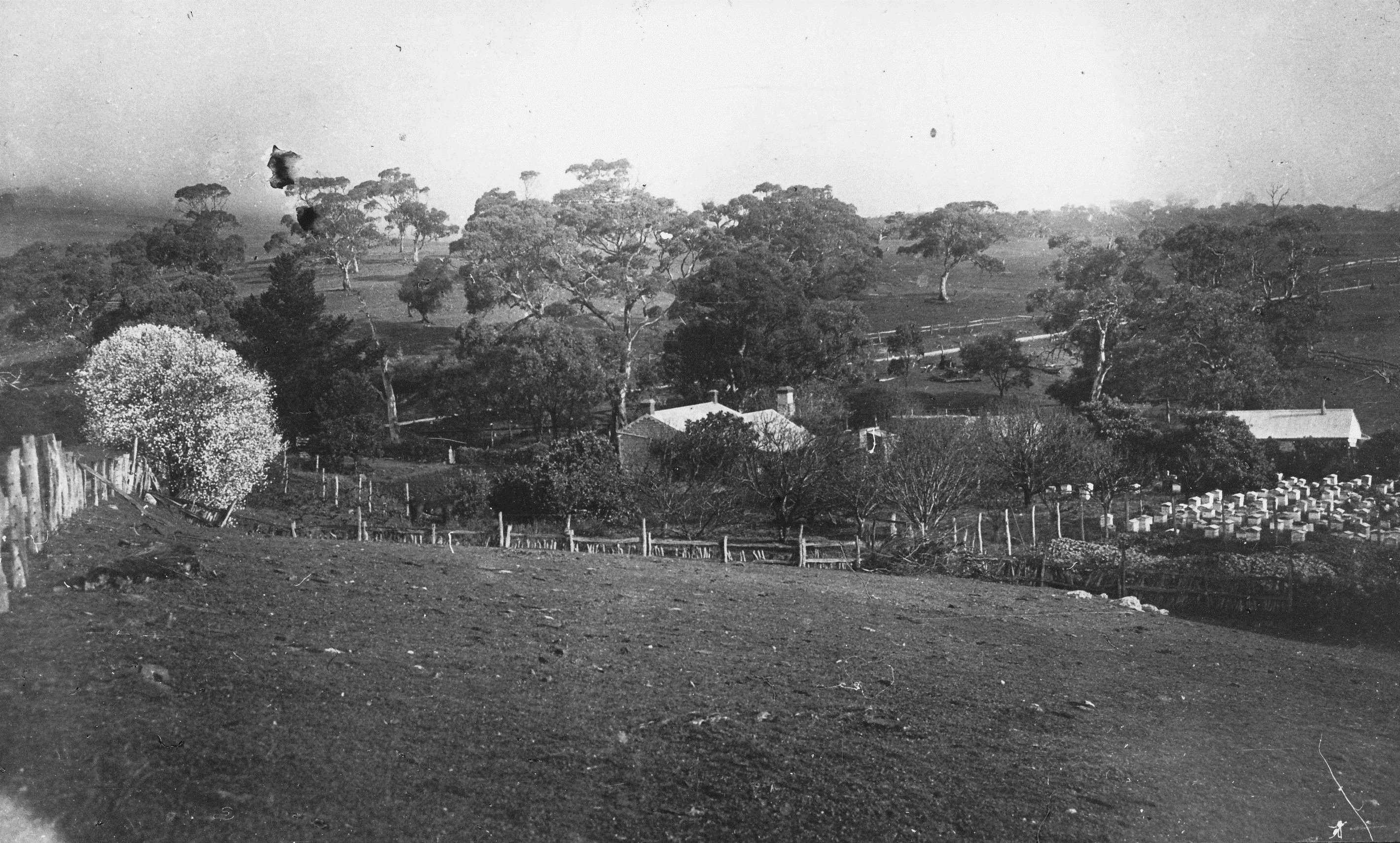
Our farm, Yarnauwi, is one lot of the once expansive Anacotilla pastoral property. Just over the ridge, in the Anacotilla river valley, are the old workers’ cottages, and on the hillside opposite, the sprawling homestead and outbuildings. We’ve recently been corresponding with the Yankalilla and District Historical Society about our interest in the property’s history, and they shared with us a number of photographs from the late 1800s onwards.

4563. Anacotilla

“Anacotilla”, Second Valley, home of A.C. Kelly in the 1880s. Image courtesy of the Yankalilla & District Historical Society.

IMG_5348

The Anacotilla cottage and outbuildings, 2014, viewed from Main South Road, near Paradise Drive. While the cottage has undergone substantial additions and renovations, the original two-room dwelling still exists at its centre.

Continue reading →

Farm hack: stock trough hose outlet

23 Sunday Nov 2014

Posted by Joel in diy

≈ 4 Comments

Tags

farm, hack, livestock, reuse, seasons, southwestern Fleurieu, trees, water

IMG_5325Every week or so we empty our stock troughs, sometimes for cleaning, sometimes to shift it into a new paddock or location to prevent the soil getting bared out. As dry springs like this one remind us, water is precious. The dam fills in winter, we pump up to the tanks, then try to gravity feed the stock troughs from spring until the rains come again. When it came to empty the troughs, we tried some judicious bucketing onto nearby seedlings, but that’s long and arduous when you have 450 litres to decant.  Continue reading →

Regeneration: Two years of practising patience

16 Sunday Nov 2014

Posted by Joel in ecology, planning, regeneration, trees, waterways

≈ 4 Comments

Tags

before and after, ecology, erosion, farm, fencing, kangaroos, permaculture, planning, propagation, revegetation, seasons, southwestern Fleurieu, trees, waste, waterways

IMG_5332

Some might consider Shark-mesh overkill for allowing rushes to regenerate.

In our first year of working on the farm, we really tried to practise the permaculture principle of long and thoughtful observation, but it always competed with our own impatience to see change. In that first flurry of clearing gullies and planting seedlings, I remember trawling the internet for before-and-after shots of other people’s reveg projects: something to help imagine a future for the block. Seasoned tree-planters told us we’d see real change in five years, the optimistic suggested three, others, fifteen.

PycnanthaRegen

Self-regenerating golden wattle (Acacia pycnantha) after two years, and protection from kangaroos. This wattle was one of four trees present on the entire property in 2012.

Now at the two year mark, we are noticing change. Removing cattle and fencing sensitive areas has allowed a fuzz of groundcover to begin growing over the barest of gullies. Fences have reoriented deer and kangaroo movement and grazing patterns. Some seedlings planted in the cold, soggy winter of 2013 appeared to die, but then surprised us by resprouting and growing at a cracking pace the following autumn. Other plants that were repeatedly pruned back to their tree-guard height by roos have invested their growing energy into roots and woody stems.

Continue reading →

Small mysteries: A year in bugs

27 Saturday Sep 2014

Posted by Joel in ecology, regeneration, trees

≈ Leave a comment

Tags

ecology, farm, insects, photography, seasons, southwestern Fleurieu, summer, trees, winter

As part of our record-keeping, in the almost-two-years since we bought Yarnauwi we’ve tried to document the natural phenomena we observe season by season. At the end of each year, we go back over our journals and add what we’ve discovered to the records of the previous year. Over time, we hope, we’ll get a much more complex understanding of the ecological patterns that occur in our landscape, as well as the changes that may occur as a result of our activities.

Already, in the short time we’ve been on the block, we’ve noted shifts in the populations and presence of certain plants and creatures. While we often overlook insects, when looking back through our photos and notes, we realised that we have actually been observing their more subtle role through the seasons: the sudden chorus of crickets after the opening rains, or the way the grass flickers with grasshoppers in late summer. In their honour, here’s a year in bugs. Representing less than a couple of years of observation, it’s far from authoritative, but perhaps it offers the beginnings of a pattern.

Autumn

IMG_4085

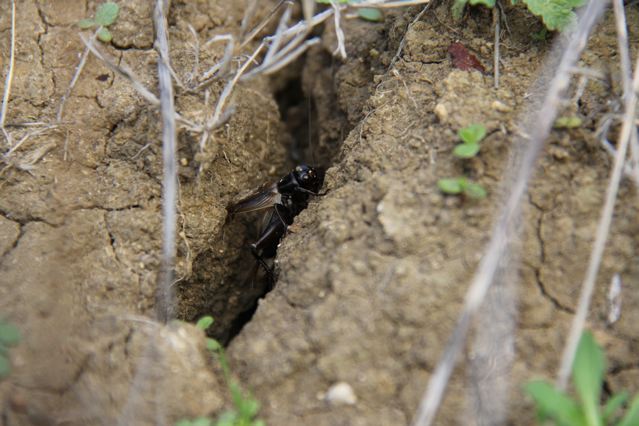
Crickets sing from the cracked soil after the first flush of rains.

IMG_2396

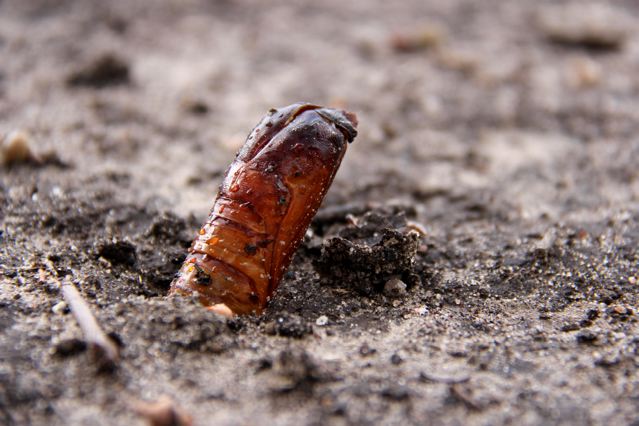
Bardi grubs (Rain moth pupae) emerge from the soil around the River red gums following the first rains.

Continue reading →

A moveable sheep shelter

22 Monday Sep 2014

Posted by Joel in diy, livestock, planning, trees

≈ 2 Comments

Tags

building, design, farm, fencing, hack, livestock, recycling, reuse, sheep, southwestern Fleurieu, summer, trees

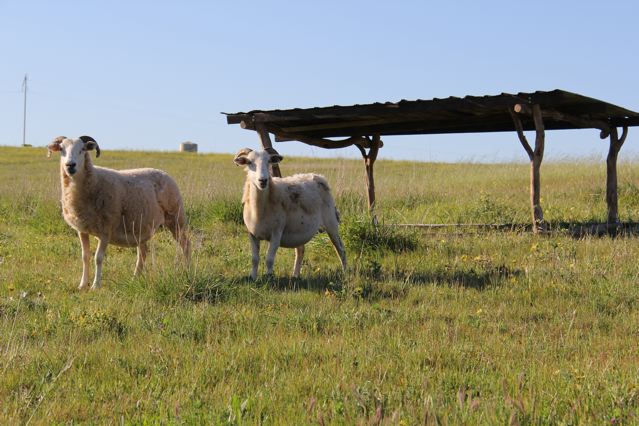
The moveable sheep shelter in fresh pasture.

The moveable sheep shelter in fresh pasture.

While the name Trees, Bees and Cheese might suggest otherwise, one thing we’re short on is trees. So with the arrival of sheep, and now lambs, we’ve tried to get in before summer with a sheep shade-shelter. With our soon-to-be-complete subdivision of the property into smaller paddocks, we thought we’d build a moveable shelter that would allow us to rotate it from paddock to paddock with the flock, rather than building seven or eight smaller structures. Continue reading →

The Second Annual TBC Tree-planting Extravaganza

19 Saturday Jul 2014

Posted by Joel in ecology, events, regeneration, trees

≈ 2 Comments

Tags

ecology, erosion, events, farm, kangaroos, planning, revegetation, southwestern Fleurieu, trees, waterways, winter, zones

The 'before' photo: 800 new plants in position. Stay tuned over the next 20 years for the 'after' shot.

The ‘before’ photo: 800 new plants in position. Stay tuned over the next 20 years for the ‘after’ shot.

Over the weekend of the 12-13 July, around 30 dedicated volunteers descended on TBC for our annual tree-planting fiesta. Over two days, we managed to plant some 800 locally indigenous plants in the two ‘wilderness zones’, kick-starting their transition back to pink- and red-gum woodland. The first area was planted outwards from the former Bee House (currently tree-planter snack dispensary and rain shelter) with around 600 plants selected to address the water-logging in the area and to revegetate in and around erosion gullies. The second area saw the planting of around 200 plants, radiating from the existing remnant redgums. Once again these plants were selected to address water-logging and erosion as well as provide shelter to adjacent paddocks. Over the following week, we dodged thunderstorms and icy squalls to add another 150 or so plants, with about 200ish to go! Continue reading →

Propagating Oaks 1: Germination

02 Wednesday Jul 2014

Posted by Joel in diy, livestock, planning, propagation, trees

≈ Leave a comment

Tags

food, livestock, nursery, permaculture, planning, propagation, seeds, trees, winter

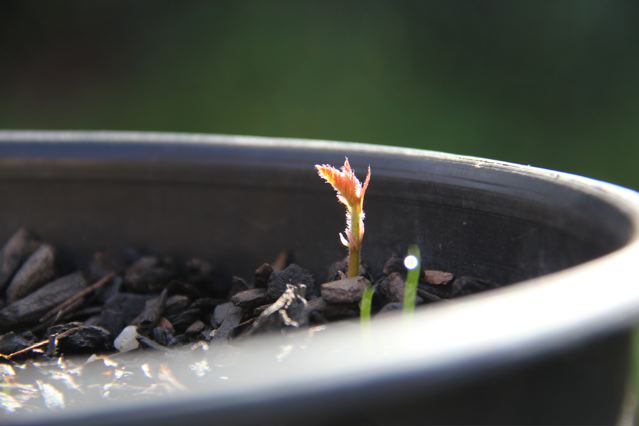
An English oak seedling (Quercus robur) reachers towards the winter sun.

An English oak seedling (Quercus robur) reaches towards the winter sun.

Back in autumn, we gathered freshly fallen acorns from the base of a row of massive old English oaks (Quercus robur). Inspired by the dehesa agroforestry systems of Spain and Portugal, we’ve often pondered how a livestock-grazed oak plantation could work on the property. Acorns for pigs, and perhaps even human consumption, timber for the use of our great-great-grandchildren, and in the meantime, a carpet of fallen leaves offering organic matter for composting and mulch. So, with some bags of acorns and few containers of the topsoil and leaf litter from around the parent oaks, we set to propagating them.

We mixed the leaf litter and gathered topsoil in with our potting medium, hoping to inoculate our own medium with beneficial fungi, and then planted the acorns. We planted some close to the surface, and others about an acorn-width deep. After about eight weeks of being kept damp and left in the late autumn-early winter sun, they began sending their first shoots upwards, red furry things with a cluster of jagged leaves at the top. The depth of the acorn doesn’t seem to have had any bearing on their readiness to propagate. Once they’ve all emerged and are about 8-10 cm tall, we’ll carefully thin them, planting out excess strong specimens to their own pots until we have one decent plant per pot.

Grow little seedling, grow!

Grow little seedling, grow!

← Older posts
Newer posts →

Yarnauwi on Etsy

Enter your email address to follow this blog and receive notifications of new posts by email.

Join 223 other subscribers

What We’re Writing About

alpacas annual report art art and craft bees before and after birds books building cheese climate change craft damara design downloads ecology embroidery erosion etsy events farm fencing fire Fleurieu Fleurieu Coast Fleurieu Peninsula food fungi future hack hiking history illustration insects kangaroos leather leathercraft linoprint livestock logo nursery permaculture photography picnics planning plants Plastic-free July printing propagation rain recycling regeneration regenerative agriculture reuse revegetation sea seasons seeds shed sheep sheepskins shop soil southwestern Fleurieu stiles summer textiles tractor trees ute waste water waterways winter zones

Meta

  • Create account
  • Log in
  • Entries feed
  • Comments feed
  • WordPress.com

Blog at WordPress.com.

  • Subscribe Subscribed
    • Yarnauwi Farm
    • Join 223 other subscribers
    • Already have a WordPress.com account? Log in now.
    • Yarnauwi Farm
    • Subscribe Subscribed
    • Sign up
    • Log in
    • Report this content
    • View site in Reader
    • Manage subscriptions
    • Collapse this bar
 

Loading Comments...