Bee-house update: Roo-house?
11 Tuesday Feb 2014
11 Tuesday Feb 2014
11 Tuesday Feb 2014
Posted in ecology, regeneration
River red gums (Eucalyptus camaldulensis) are notorious limb droppers. With the recent blistering temperatures (Adelaide’s been experiencing been experiencing strings of days above 40 degrees Celcius, and the normally milder Southern Fleurieu has had days in the early 40s) and a burst of gale-force winds, one of our two remnant red gums has lived up to its notoriety. Continue reading
27 Wednesday Nov 2013
Posted in ecology, planning, regeneration
November marks one year since we began our relationship with this patch of soil, grass and rusty car parts. If the permaculture imperative is to obtain a yield, then the yields of this first year have been largely intangible, but no less real. It has been a year of observing and learning about the land, ourselves and what we can do here. I remember emotions I was feeling about this project a year ago, and I think my terror has been mostly balanced by a sense of calm. Where 12 months ago I was overwhelmed by the scale of our ignorance, now, our ignorance is still largely intact, but I’m more confident in our collective abilities as a family, nested within a community, to unravel the challenges we face. Continue reading
03 Sunday Nov 2013
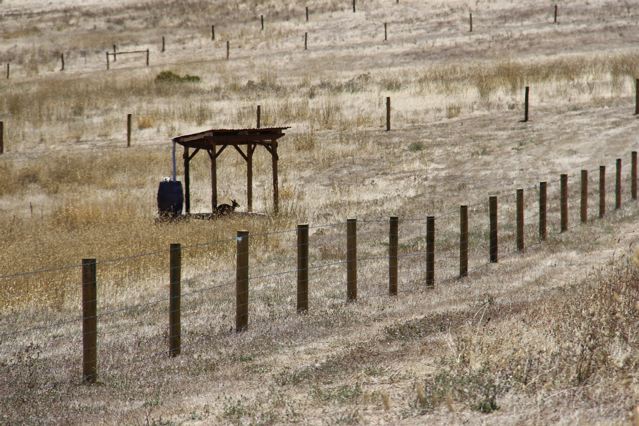
When we first dug the post holes for the bee house, it was winter. It was a clear, sunny day, but only 30cm underground it was a river. Now, the soil has hardened again and already cracks are forming where the sun has touched between the tussocks. It is the time of insects: the long grass shimmers with the darting of grasshoppers and butterflies, the red gums are awash with ants and centipedes uncurl in dark, hidden places. It’s a good time to introduce our first livestock – bees – and to finally complete their shelter: the Bee House. Continue reading
01 Sunday Sep 2013
Posted in ecology, events, planning, regeneration
Tags
erosion, events, photography, revegetation, seasons, trees, winter
I feel like I’ve never really understood winter until this year. When the first rains came, they came hard, revealing slippery, sticky mud and rivulets in unexpected places. The average June rainfall for Second Valley is around 90mm. This year the Bureau of Meteorology recorded over 200mm, and the nearby district of Parawa scored a record-breaking 266mm. Long-dormant erosion gullies were reawoken, creek banks slumped, and everywhere there was the sound of dripping. Now, the days are clearing, the sun has bite and already the kangaroos have joeys in pouch. Here’s some highlights from the wet season. Continue reading
01 Sunday Sep 2013
Posted in ecology, planning, regeneration, waterways
One of winter’s most exciting prospects was the chance to get some trees in the ground. Our strategy for revegetation has been to try to build islands of vegetation in the most vulnerable areas, with the view to expanding them outwards until they connect up. We were aware that the kangaroos would take an interest, but just how much of an interest we were unprepared for.
Continue reading
05 Monday Aug 2013
With our dam now full, one task that’s been on our list since summer is to calculate its approximate capacity to aid with planning our watering infrastructure. We found a couple of possible methods: the Western Australian Department of Agriculture has a very thorough approach, while the Victorian Department of Primary Industries offers a rougher option. We opted for the Victorian method, not least because it offered a chance for us to take our very patriotic inflatable adventure craft out onto the pond.
26 Friday Apr 2013
Posted in ecology
17 Wednesday Apr 2013
Posted in art & craft, diy
After watching the hills turn dry and crispy over the summer, I don’t think I’ve ever pined so much for the return of a little rain, cool weather and a sun not-quite-so-withering, and all the opportunities they bring.
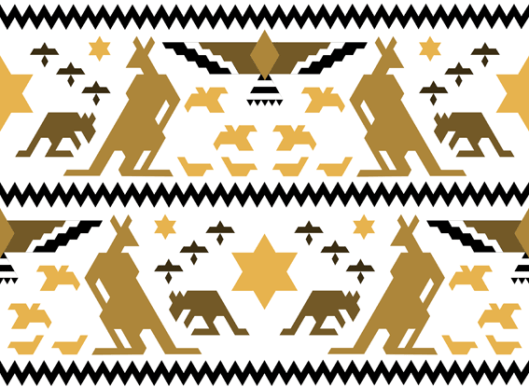
In that spirit, and inspired by the aesthetic of knitted woolly jumpers, I’ve been working on some new images depicting life on the block. I developed them from sketches on isometric graph paper, so each of the elements is actually composed of little equilateral triangles. Among them you may spot Grey Kangaroos, Stubble Quail scattering beneath a harrier and lorikeets zooming overhead. The colour options reference the dry browns of summer and the blue of a big sky and the nearby sea. Continue reading