• About
  • Anacotilla: History & Hearsay
  • Junk: A Curated Collection
  • Resources
  • Species List
  • Yarnauwingga and beyond

Yarnauwi Farm

~ Fleurieu Peninsula, South Australia

Yarnauwi Farm

Tag Archives: revegetation

Yarnauwi: A Kaurna name for the farm

20 Saturday Sep 2014

Posted by Joel in events, regeneration

≈ Leave a comment

Tags

farm, history, kangaroos, revegetation, southwestern Fleurieu, water


New-KWP-logo_ed200px

In August 2014, Kaurna Warra Pintyanthi granted us the name Yarnauwi to describe the landscape of our farm. We approached Kaurna Warra Pintyanthi, a body of Kaurna people and linguists dedicated to the revival of the Kaurna language, for a property name as a way of acknowledging the enduring connection of the Kaurna nation with the landscape of the South Western Fleurieu.

Bald hills

Continue reading →

The Second Annual TBC Tree-planting Extravaganza

19 Saturday Jul 2014

Posted by Joel in ecology, events, regeneration, trees

≈ 2 Comments

Tags

ecology, erosion, events, farm, kangaroos, planning, revegetation, southwestern Fleurieu, trees, waterways, winter, zones

The 'before' photo: 800 new plants in position. Stay tuned over the next 20 years for the 'after' shot.

The ‘before’ photo: 800 new plants in position. Stay tuned over the next 20 years for the ‘after’ shot.

Over the weekend of the 12-13 July, around 30 dedicated volunteers descended on TBC for our annual tree-planting fiesta. Over two days, we managed to plant some 800 locally indigenous plants in the two ‘wilderness zones’, kick-starting their transition back to pink- and red-gum woodland. The first area was planted outwards from the former Bee House (currently tree-planter snack dispensary and rain shelter) with around 600 plants selected to address the water-logging in the area and to revegetate in and around erosion gullies. The second area saw the planting of around 200 plants, radiating from the existing remnant redgums. Once again these plants were selected to address water-logging and erosion as well as provide shelter to adjacent paddocks. Over the following week, we dodged thunderstorms and icy squalls to add another 150 or so plants, with about 200ish to go! Continue reading →

Representing the Block: The farm logo

29 Sunday Jun 2014

Posted by Joel in art & craft, trees

≈ 4 Comments

Tags

art, design, erosion, farm, history, logo, revegetation, southwestern Fleurieu

tbcgreyscalesmlAfter a year and a half, we’ve finally got to developing a visual identity for the farm. While our working name for the farm, “Trees, Bees and Cheese”, is more conceptual than place-based, we wanted the logo to reflect some of the distinctiveness of the farm’s landscape.

Yep, there is wind and rain, but there’s also the symphonic light that rolls across the hills and the late afternoon haze that reduces the sequence of valleys into golden layers of theatre scenery. There are the rolling, low clouds that we ache for in late summer and autumn, then look forward to farewelling by late winter. These tumbling clouds also reference the nearby sea. The lone tree and falling rain suggest how the landscape has been reshaped over the last 180ish years through clearing and subsequent erosion, but also remind us of the resources available in restoration when we harvest rainwater and gather seed. Perhaps in the future we might be able to add some more trees to the logo to reflect the changing reality of the property!

tbcbwsml

We also have a black-and-white option, particularly good for stencilling farmy things. We’d love to hear what you reckon, and if you have any ideas for tweaks or adjustments!

Farm Hack: Nursery tables

23 Monday Jun 2014

Posted by Joel in diy, tools

≈ 1 Comment

Tags

design, farm, hack, nursery, propagation, recycling, reuse, revegetation, trees

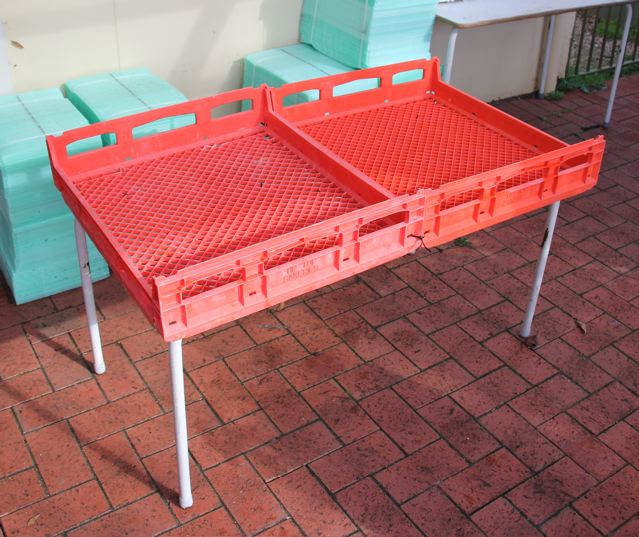
nurserytableOur passion for growing trees has in many ways outstripped our capacity to grow them, and so our growing space has become overrun with foam containers balancing precariously on the edges of hard rubbish chairs, bricks and scraps of wood. Some months ago, we claimed some old school tables from a local school’s throw-out pile, and thought they might be good for more growing space. Predictably, the manufactured timber tops very quickly fattened in the moisture, buckled and then started getting slimy.

Continue reading →

If a tree falls…

23 Wednesday Apr 2014

Posted by Joel in ecology

≈ Leave a comment

Tags

ecology, photography, revegetation, southwestern Fleurieu, summer, trees, water

IMG_3799A couple of months after the central third of our biggest remnant red gum crashed to earth, I climbed into the centre of the fallen limbs to try to remove some timber for erosion control structures. I was surrounded by the faint, constant pattering of distant rain. The tree was rustling, but no wind moved the leaves. I put my ear to the boughs and realised the sound was coming from inside, exhaling as the timber dried and cracks slowly opened in the bark. Meanwhile, in the leaf litter below, the spiders and beetles delight in the thick undergrowth of their new canopy. Continue reading →

A One-Page Place Assessment for TBC Farm, Second Valley

30 Sunday Mar 2014

Posted by Joel in ecology, planning, regeneration, waterways

≈ 2 Comments

Tags

books, design, ecology, permaculture, planning, revegetation, seasons, soil, southwestern Fleurieu, trees, water, waterways

Brad Lancaster’s books on Rainwater Harvesting would have to be among the most consistently inspiring books we own. Two volumes into his trilogy on Rainwater Harvesting for Drylands and Beyond, Lancaster combines accumulated community wisdom with permaculture principles to produce lavishly illustrated, practical and highly accessible manuals for managing water in urban and rural environments. Consistent with permaculture thinking, Lancaster urges land managers to spend time observing the season patterns of the landscape to more effectively design for sustainable, integrated water management. One method of doing this is to compile a One Page Place Assessment, drawing together essential climatic and ecological information about your particular location.

Our first year has been one of spreadsheets, mapping out our seasonal observations and activities, and the One Page Place Assessment concept is a elegant way of compiling climatic data from Second Valley and the surrounding area. We’ve finally completed the first version of a place assessment for our property, with much of the data drawn from Bureau of Meteorology stations nearby (Myponga Reservoir being the furthest). While we have tailored information to our particular location, we hope it will be of use to other landowners in the region. We have also referenced information sources so others can draw on the same resources in exploring their own area.

You can download our One Page Place Assessment here. Continue reading →

Book Review: Embracing an arid future in “Growing Food in a Hotter, Drier Land”

19 Wednesday Mar 2014

Posted by Joel in ecology, planning, reviews

≈ Leave a comment

Tags

bees, books, design, ecology, food, permaculture, planning, revegetation, seeds, soil, trees, water

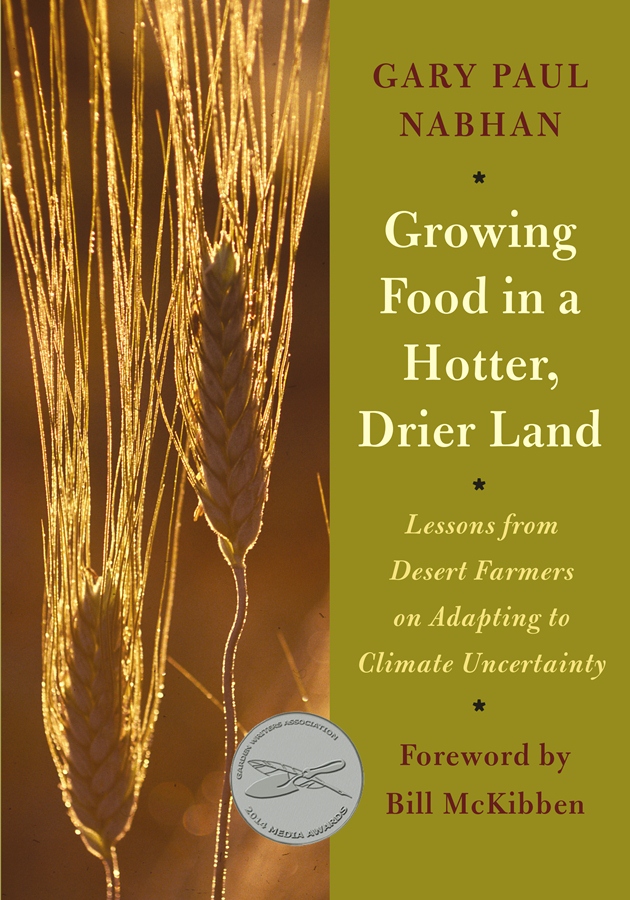
Years before there was talk of locavores and 100-mile-diets and omnivore’s dilemmas, I came upon Gary Nabhan’s book Coming Home to Eat, a personal account of his experiences striving to solely eat food produced in his home bioregion of the US-Mexican borderlands in southern Arizona. His observations as renowned desert ecologist and ethno-botanist redefined how I thought about food and sustainability and accompanied me on my own sustainable food explorations for years after.

I get the feeling that his latest book, Growing Food in a Hotter, Drier Land: Lessons from Desert Farmers on Adapting to Climate Uncertainty (Chelsea Green, 2013), may be another companion for us in our adventures on the farm. While Growing Food is as practical as its title suggests, it is permeated by Nabhan’s respect for the insights of cultures deeply connected to the land, and his belief that communities connected to their bioregion are the most resilient in the face of environmental change. Continue reading →

Travels in Inter-Tussock Space: Planning for Woodland

10 Monday Mar 2014

Posted by Joel in ecology, planning, regeneration

≈ 3 Comments

Tags

design, ecology, erosion, kangaroos, permaculture, planning, revegetation, seeds, soil, southwestern Fleurieu, trees, waterways, zones

We’ve seeded our last 150 tubes in preparation for planting in a few months time. When the rains come, we’ll have over 1000 plants ready to go. Most are destined for the regeneration areas we’ve fenced around the waterways, but a few others are non-indigenous livestock fodder plants, timber trees and food plants we’ve raised from seed and cuttings to begin developing other zones around the farm.

IMG_3579

It’s a Pink Gum Woodland, it just doesn’t know it yet.

Late in 2013, along with a posy of other plant nerds, we attended a workshop with botanist Ann Prescott (author of It’s Blue with Five Petals) to explore ideas behind revegetation for habitat. We walked through remnant woodland in the hills above Yankalilla, and tried to imagine how our farm might have looked 180 years ago. Continue reading →

There’s something different about you…

11 Tuesday Feb 2014

Posted by Joel in ecology, regeneration

≈ Leave a comment

Tags

ecology, photography, revegetation, seasons, southwestern Fleurieu, summer, trees

IMG_3630River red gums (Eucalyptus camaldulensis) are notorious limb droppers. With the recent blistering temperatures (Adelaide’s been experiencing been experiencing strings of days above 40 degrees Celcius, and the normally milder Southern Fleurieu has had days in the early 40s) and a burst of gale-force winds, one of our two remnant red gums has lived up to its notoriety. Continue reading →

Been & Gone: The Hive Takes Flight

19 Sunday Jan 2014

Posted by Joel in livestock

≈ Leave a comment

Tags

bees, food, livestock, revegetation, summer

A couple of weeks ago, we checked the hive and all seemed well. We found the queen, the bees were busy and on opening the hive there was the seductive scent of honey. The colony had spent weeks drawing out the honeycomb on the hive frames, and seemed to be just beginning to lay a good pattern of brood (young).

IMG_3250

Spot the queen

There were a few ants that seemed to be making a nuisance of themselves. The bees would try to expel them from the hive, while the ants would cling on to their legs and wings pulling them off-balance. After a little research, we thought we’d apply cinnamon, a widely recommended treatment for ant problems. The bees were irritated by it, and the ants unmoved. Next, we constructed a hive stand with the intention of putting the legs in tins of oil as a physical barrier for the ants, but unfortunately for us, it was too late. Continue reading →

← Older posts
Newer posts →

Yarnauwi on Etsy

Enter your email address to follow this blog and receive notifications of new posts by email.

Join 223 other subscribers

What We’re Writing About

alpacas annual report art art and craft bees before and after birds books building cheese climate change craft damara design downloads ecology embroidery erosion etsy events farm fencing fire Fleurieu Fleurieu Coast Fleurieu Peninsula food fungi future hack hiking history illustration insects kangaroos leather leathercraft linoprint livestock logo nursery permaculture photography picnics planning plants Plastic-free July printing propagation rain recycling regeneration regenerative agriculture reuse revegetation sea seasons seeds shed sheep sheepskins shop soil southwestern Fleurieu stiles summer textiles tractor trees ute waste water waterways winter zones

Meta

  • Create account
  • Log in
  • Entries feed
  • Comments feed
  • WordPress.com

Blog at WordPress.com.

  • Subscribe Subscribed
    • Yarnauwi Farm
    • Join 223 other subscribers
    • Already have a WordPress.com account? Log in now.
    • Yarnauwi Farm
    • Subscribe Subscribed
    • Sign up
    • Log in
    • Report this content
    • View site in Reader
    • Manage subscriptions
    • Collapse this bar
 

Loading Comments...