• About
  • Anacotilla: History & Hearsay
  • Junk: A Curated Collection
  • Resources
  • Species List
  • Yarnauwingga and beyond

Yarnauwi Farm

~ Fleurieu Peninsula, South Australia

Yarnauwi Farm

Tag Archives: planning

Yarnauwi Annual Report 2016

29 Thursday Dec 2016

Posted by Joel in ecology, planning, regeneration

≈ 9 Comments

Tags

annual report, birds, ecology, erosion, farm, Fleurieu Coast, livestock, permaculture, planning, revegetation, seasons, sheep, soil, southwestern Fleurieu, trees, waste, water, winter

img_7646

In birthday cards I often wish the recipient a coming year of “the right kind of challenge”, optimistically suggesting it will herald positive growth and empowerment through problem-solving and negotiation. This year, I got a taste of my own medicine, with a winter of biblical proportions just the beginning of the challenges.

November marks four years since we began the Yarnauwi project. Four years of attempting to regenerate the property to our optimistic standards on the weekends, of packing and unpacking the car, of ferrying and entertaining one, then two, small children, of revegetating, managing erosion, managing pasture, managing water, managing livestock, managing weeds and managing the legacy of past land managers. These are all admirable, ambitious intentions, and what we’ve achieved has only been possible through the support and enthusiasm of our community of neighbours, friends and family. Continue reading →
Winter and the One Rock Dams: erosion control after the rain

24 Sunday Jul 2016

Posted by Joel in ecology, planning, regeneration, waterways

≈ 4 Comments

Tags

before and after, ecology, erosion, farm, Fleurieu Coast, one rock dam, planning, reuse, seasons, soil, southwestern Fleurieu, water, waterways, winter

IMG_8265

Rain, and a full dam.

By late July this year we’ve already exceeded our entire rainfall for 2015, and for now, the rain shows no signs of abating. This is fantastic news for our revegetation efforts, and our dam is now almost full for the first time in two years. With heavy rains – we managed to top 100mm (4 inches) in a single day – it’s also a chance to test the effectiveness of the erosion control strategies we’ve employed.

With significant erosion in some key areas of the property, we’ve worked to adapt erosion control strategies such as those practised by Bill Zeedyk and Craig Sponholtz (see April’s Waterway Restoration workshop/working bee and our Resources page for more information). In particular, we’ve constructed Zuni bowls, for arresting headcuts, and One Rock Dams, to slow water flow, catch sediment and gradually lift the floor of erosion gullies. After the recent deluge, we toured the works to see how we went. The Zuni bowls have had mixed success: those in relative stable locations have been effective, those in dispersive soils have been unpredictable. The One Rock Dams (ORDs) have been generally successful, if swamped by sediment!

The impact of 100mm of rain in one day is significant: exposed areas lose significant amounts of soil (some areas of gully floor had almost 30cm of freshly deposited sediment), and areas of dispersive soil go berserk, collapsing in all directions. For some of these areas, we’re continually seeking further advice, but for those we can manage, we monitor and tweak over time, and try to “let the water do the work” in healing the landscape.

Continue reading →

Exploring the Fleurieu’s climate future

20 Saturday Feb 2016

Posted by Joel in ecology, livestock, planning, regeneration, reviews, waterways

≈ 2 Comments

Tags

books, climate change, design, ecology, farm, future, livestock, permaculture, planning, southwestern Fleurieu, water

Handbook
2PercentSolutions

We’ve recently read a couple of books that have served as a catalyst to revisit what a future climate scenario might be like for the Fleurieu Peninsula, and how we can ensure the greatest resilience for our patch of ground. The books are two practical volumes on climate change, the first The Handbook: Surviving and Living with Climate Change, by Jane Rawson and James Whitmore, is a tour of practical household and community strategies for adapting to climate change in Australia. The second, Two Percent Solutions for the Planet: 50 low-cost, low-tech, nature-based practices for combatting hunger, drought and climate change, is a farming and land restoration-focussed collection of case studies collected by Quivira Coalition co-founder, Courtney White. For readers that may’ve grown weary of the political inertia around climate change, not to mention the vast scale of the problem, the practical, household-, community- or farm-scale focus of both books offers a practical way of re-engaging with the climate challenge. Two Percent Solutions serves as an optimistic companion read to the sometimes gloomy vibe of The Handbook, with its strategies offering scope for both climate mitigation and adaptation. Continue reading →

The Yarnauwi Farm Annual Report 2015

13 Wednesday Jan 2016

Posted by Joel in diy, events, livestock, planning, regeneration, trees

≈ 5 Comments

Tags

annual report, design, ecology, farm, livestock, permaculture, planning, revegetation, seasons, sheep, soil, southwestern Fleurieu, trees

You can view a printable version of this Annual Report here.

IMG_5895

We’re now three years into the Yarnauwi project. With all of our major water and fencing infrastructure in place, 2015 was a year of consolidating and refining our planting and grazing systems, and continuing to restore habitat while also developing income streams. Once again, we thank you for your support this year, whether that’s been planting trees, purchasing meat, hauling junk, offering advice or just being generally encouraging! We feel enormously privileged to have such a supportive community of family, friends and neighbours contributing to the restoration and development of this patch of ground. Continue reading →

The time of plans and projects

23 Monday Nov 2015

Posted by Joel in ecology, livestock, planning, regeneration, trees

≈ 2 Comments

Tags

damara, ecology, farm, kangaroos, livestock, photography, planning, revegetation, seasons, sheep, southwestern Fleurieu, summer, trees, waterways

IMG_7113

Grain fields at Aldinga, and drying hills

It seems like summer comes sooner and sooner. Winter was short, and so dry that the dam never progressed beyond a puddle, then the sun was back, the grass grew for a moment then was baked dry again by an early heatwave. The northern faces of the hills turned a bleached gold, then quickly the green haze on the south sides followed. And we’re back, heading into the hot season again, settling into a holding pattern of heat and dormancy until the opening rains.

IMG_7058

North faces baked dry in the first heat

Tolstoy apparently called spring “the time of plans and projects”. Now a year into our sheep project, we’ve begun tweaking our grazing practices in an effort to manage our pasture more effectively. We’ve increased our flock size through both breeding and the acquisition of some hardy, desert-adapted damara sheep, brought in from a dusty paddock outside Nuriootpa to replace the ageing and increasingly delicate Wiltshire Horn matriarchs. The existing flock hasn’t exactly embraced the new arrivals, there’s plenty of bleating and foot-stomping. You could cut the tension with a knife when we pour out the sheep nuts. Among the damaras is Manchego, our new ram. Looking at Pecorino’s legacy, it’s clear he has big hooves to fill.

Continue reading →

Seeing the forest for the trees: piecing together past ecology

21 Monday Sep 2015

Posted by Joel in ecology, planning, regeneration, trees

≈ 6 Comments

Tags

ecology, farm, planning, revegetation, seasons, soil, southwestern Fleurieu, trees

IMG_6958

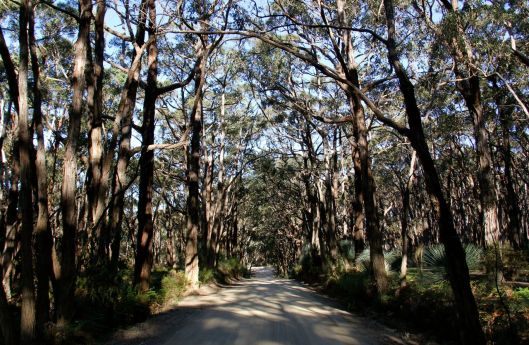
Tall stringybark forest, Deep Creek Conservation Park, southwestern Fleurieu Peninsula.

It’s a preoccupation of ours to develop our understanding of the historic ecology of the farm. We’ve pored over books such as Mangroves to Mallee (Berkinshaw 2009), and The Native Forest and Woodland Vegetation of South Australia (Boomsma & Lewis), but their listings of different plant associations were often bewildering as we tried to nut out which was the best fit for our patch of ground. We had some information about climate, and a basic knowledge of soils, but only limited local remnant vegetation to refer to for an idea of what might’ve been here before colonisation. Our property has a couple of old red gums, but little sense of what the landscape might have looked like two hundred years ago. Early advice we received suggested that our landscape was once “pink gum woodland”, yet most of the initial pink gums we planted died. Having a sense of how our landscape was in the past not only assists our success in habitat regeneration, but also offers insight into how our landscape works in general.

We’ve looked at historical photographs, and they seemed to confirm our sense that there were once more trees than there are now, but by the late 1800s they already depict a deforested landscape. Through early colonial accounts we’ve also pieced together a rough picture of what the landscape may have been like, with a particular focus on how water may have been managed in the vegetation and soil. We’ve even brainstormed a sequence of events for how the landscape may have changed between colonisation and now, but what we lacked was local ecological detail. It was time to go back to the library, this time to trawl through past ecological studies of the region. With many written in the early 20th century, the papers we found articulate connections between soils, rainfall and then-living memory of plant communities throughout the Mount Lofty Ranges.

SpechtVegetationMap

Vegetation Map of the Mount Lofty Ranges and Murraylands, from Specht 1972

Continue reading →

The ground beneath your feet: resources for exploring soil

13 Sunday Sep 2015

Posted by Joel in ecology, regeneration, tools

≈ 1 Comment

Tags

design, ecology, erosion, farm, fencing, permaculture, planning, soil, southwestern Fleurieu, water

2Env_Res4Soils

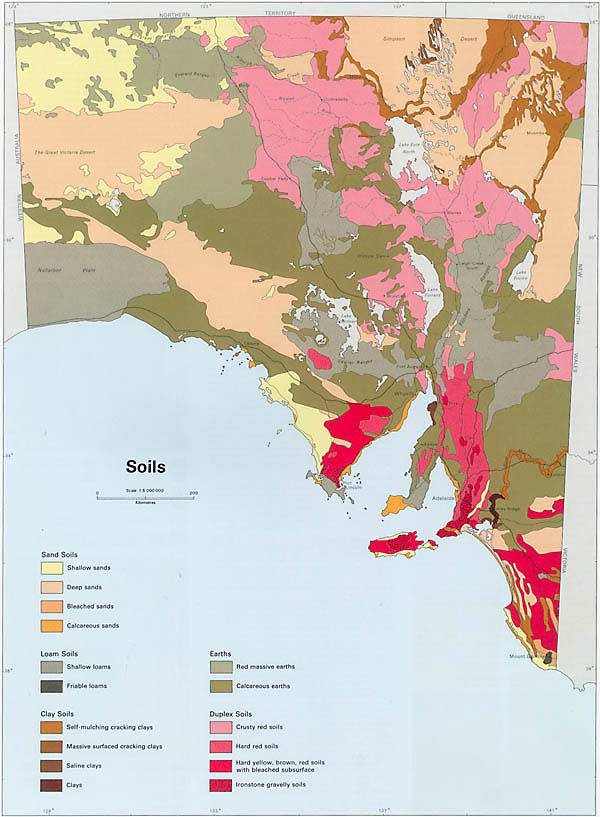
Soils of South Australia, divided into 16 subgroups, from the 1986 Atlas of South Australia.

Recently we’ve been thinking a lot about soil. After all, it is the International Year of Soils, and really, without dirt, there’s not much else. Understanding how our soils work and how to restore them is an essential part of our regeneration project and their structure and composition help define the boundaries of what’s possible on our patch of ground. As Adamson and Osborn asserted in their pioneering 1924 study of the ecology of the eucalypt forests of the Mount Lofty Ranges, climate and soils are the primary factors in determining ecological variation in the region, so even where the scrub has long been cleared, soils can also offer a memory of past ecosystems.

However, it’s taken us a while to unravel meaningful information about soils. There’s a whole new vocabulary, and when you don’t yet know your Kandosols from your Kurosols the whole experience can be a bit mystifying. To make things even more complex, there are oodles of different technical terms for describing any particular soil type, depending on era or classification systems. So we thought we’d share some resources that we’ve come across that may be of use in working out what you’re sitting on. Continue reading →

Planting and preparing trees for El Niño

09 Tuesday Jun 2015

Posted by Joel in diy, ecology, propagation, regeneration, trees

≈ 3 Comments

Tags

ecology, farm, kangaroos, permaculture, planning, propagation, revegetation, seasons, southwestern Fleurieu, trees, water, winter

IMG_6330

A baby, or a nest, are not essential for tree-planting, but they help.

We’re in our third season of tree planting at Yarnauwi now, working to revegetate sections of the property for habitat, shelter and timber. We’ve planted about 1,000 plants a year, from groundcovers to future woodland giants. Once they were guarded from marauding roos, we’ve necessarily had a philosophy of leaving the plants to survive without too much intervention. Even in a dry year such as 2014, we had a modest 60ish percent survival rate, but with El Niño tipped to recur in 2015, we’ve tried to further refine our approach to give our trees an improved chance of survival. Of course, there are absolutely no guarantees it will work, or will work for everything, but it’s worth a shot.

IMG_6328

The bunyip water level: bringer of contoured joy to young and old alike.

This year, we’ve also planted our first, experimental, woodlot of river oaks (Casuarina cunninghamiana) in an awkward corner of the farm. The paddock was too small and inaccessible to deep rip, so we began by marking contours with a bunyip water level, an essential DIY tool for measuring and marking slope (see Brad Lancaster’s guide to bunyip construction and usage here).  Continue reading →

Landscape history and future planning

30 Thursday Apr 2015

Posted by Joel in ecology, history, planning

≈ 9 Comments

Tags

design, ecology, erosion, farm, history, kangaroos, livestock, permaculture, planning, revegetation, soil, southwestern Fleurieu, trees, water, waterways

Recently we’ve been obsessing a bit about the history of our landscape (here, here, and even here, for example). It comes as the consequence of the last few years of reading and thinking about how Australia’s landscape and water systems have changed over time, but we hope it’s not purely an intellectual exercise. Understanding how our landscape was 200 years ago acts as a good guide for planning its future potential and limitations. By attempting to unravel the threads of actions and consequences that have reshaped these hills and valleys over the last couple of centuries, we can also not just address symptoms (such as treating an erosive headcut with a Zuni Bowl), but can also have a go at working on the causes of dysfunction in our soil, water and ecosystems. A lofty goal, but as Wes Jackson quips, “if your life’s work can be accomplished in your lifetime, you’re not thinking big enough!”

Landscape History - New Page

This spaghetti-and-meatballs flowchart is our first go at representing what might have happened in our neighbourhood over the last 180-odd years, compiled from reading, observations, historical records and discussions. It provides us with a list of things to do as we attempt to address elements of this (for example, in this year’s tree planting, we’re inoculating our seedlings with beneficial fungi to restore mycorrhizal networks). We expect this chart to be tweaked, adjusted and rewritten over time as we discover new ideas or revise our assumptions. Perhaps a next step might be to construct a sequel that shows how we might attempt to improve some of this stuff.

Are there connections, consequences or other things we’ve missed, overstated or got plain wrong? We’d love to hear your thoughts and ideas.

Observe and Interact: Strategies for Learning the Landscape

20 Monday Apr 2015

Posted by Joel in ecology, planning, regeneration

≈ 1 Comment

Tags

design, ecology, farm, fencing, permaculture, planning, revegetation, soil, southwestern Fleurieu

The following article was developed while preparing to host a forthcoming farm tour for the Southern Fleurieu Permaculture Group on applying permaculture principles in property planning. You can view a printable version, including an updated One-Page Place Assessment here.

doc20150407084803_001

After several years working in and advocating for sustainable food systems, in November 2012, we purchased 19 hectares of grazing land near Second Valley, 80 kilometres south of Adelaide. Our vision for the property is to cultivate a diverse, small farm that meets a large proportion of household food and energy needs as well as an income through direct marketing. With integrated forestry, grazing, revegetation and horticulture, we hope to develop Yarnauwi as an experiment in viable, sustainable small farming for the Fleurieu Peninsula. Farm enterprises and elements will be stacked to perform multiple functions and increase profitability, and will be developed at an economically and personally appropriate pace.

For our first couple of years, we’ve spent a great deal of our time trying to engage in thoughtful observation, learning the rhythms and patterns of the landscape. As we’ve tried to reconcile our own impatience to get things done with the pace of the climate and the land, we’ve adopted Wes Jackson’s assertion that “if your life’s work can be accomplished in your lifetime, you’re not thinking big enough.” It’s a reminder to be patient, to acknowledge that ecological systems have their own sense of time, and that many of the intentions of our planning may only be experienced by our grandchildren. Continue reading →

← Older posts
Newer posts →

Yarnauwi on Etsy

Enter your email address to follow this blog and receive notifications of new posts by email.

Join 223 other subscribers

What We’re Writing About

alpacas annual report art art and craft bees before and after birds books building cheese climate change craft damara design downloads ecology embroidery erosion etsy events farm fencing fire Fleurieu Fleurieu Coast Fleurieu Peninsula food fungi future hack hiking history illustration insects kangaroos leather leathercraft linoprint livestock logo nursery permaculture photography picnics planning plants Plastic-free July printing propagation rain recycling regeneration regenerative agriculture reuse revegetation sea seasons seeds shed sheep sheepskins shop soil southwestern Fleurieu stiles summer textiles tractor trees ute waste water waterways winter zones

Meta

  • Create account
  • Log in
  • Entries feed
  • Comments feed
  • WordPress.com

Blog at WordPress.com.

  • Subscribe Subscribed
    • Yarnauwi Farm
    • Join 223 other subscribers
    • Already have a WordPress.com account? Log in now.
    • Yarnauwi Farm
    • Subscribe Subscribed
    • Sign up
    • Log in
    • Report this content
    • View site in Reader
    • Manage subscriptions
    • Collapse this bar
 

Loading Comments...