• About
  • Anacotilla: History & Hearsay
  • Junk: A Curated Collection
  • Resources
  • Species List
  • Yarnauwingga and beyond

Yarnauwi Farm

~ Fleurieu Peninsula, South Australia

Yarnauwi Farm

Tag Archives: livestock

The time of plans and projects

23 Monday Nov 2015

Posted by Joel in ecology, livestock, planning, regeneration, trees

≈ 2 Comments

Tags

damara, ecology, farm, kangaroos, livestock, photography, planning, revegetation, seasons, sheep, southwestern Fleurieu, summer, trees, waterways

IMG_7113

Grain fields at Aldinga, and drying hills

It seems like summer comes sooner and sooner. Winter was short, and so dry that the dam never progressed beyond a puddle, then the sun was back, the grass grew for a moment then was baked dry again by an early heatwave. The northern faces of the hills turned a bleached gold, then quickly the green haze on the south sides followed. And we’re back, heading into the hot season again, settling into a holding pattern of heat and dormancy until the opening rains.

IMG_7058

North faces baked dry in the first heat

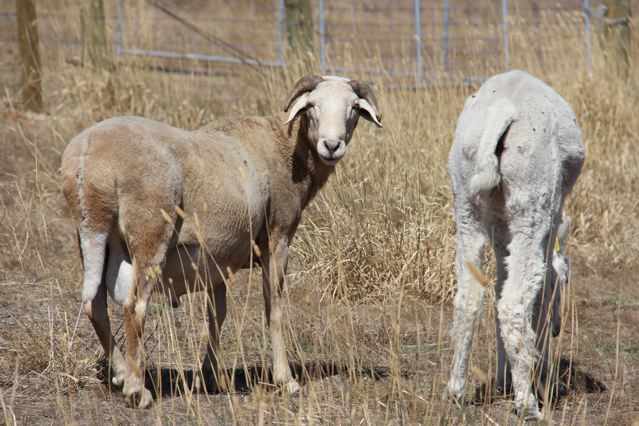
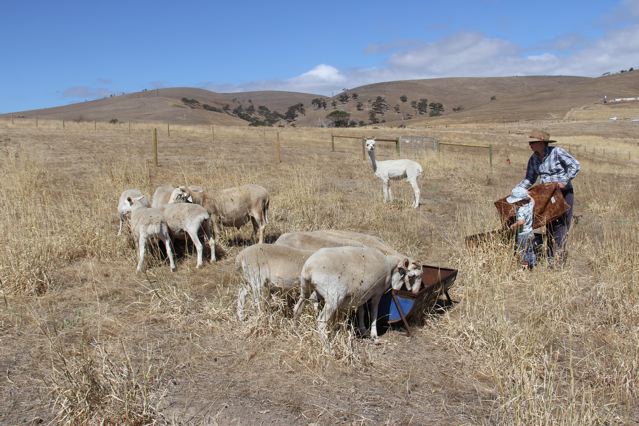
Tolstoy apparently called spring “the time of plans and projects”. Now a year into our sheep project, we’ve begun tweaking our grazing practices in an effort to manage our pasture more effectively. We’ve increased our flock size through both breeding and the acquisition of some hardy, desert-adapted damara sheep, brought in from a dusty paddock outside Nuriootpa to replace the ageing and increasingly delicate Wiltshire Horn matriarchs. The existing flock hasn’t exactly embraced the new arrivals, there’s plenty of bleating and foot-stomping. You could cut the tension with a knife when we pour out the sheep nuts. Among the damaras is Manchego, our new ram. Looking at Pecorino’s legacy, it’s clear he has big hooves to fill.

Continue reading →

Book review: Going ‘Feral’ with George Monbiot

05 Thursday Nov 2015

Posted by Joel in ecology, regeneration, reviews, trees, waterways

≈ Leave a comment

Tags

books, ecology, farm, history, livestock, revegetation, southwestern Fleurieu

17160008Our experience and vision for Yarnauwi has always sat in a tension between the wild and the cultivated. On one hand, we’re seeking to restore habitat long altered, while on the other, we’re determined to cultivate food, through both livestock and horticulture. It’s hard to say if one holds priority over the other, and, at risk of lurching into cliche, we try to ‘listen to the land’. Connor Stedman’s Essay on Soil in the 2015 Greenhorns’ New Farmer’s Almanac offers ideas that resonated with us, writing that to know how to be a steward of a landscape, “…it’s not enough to know the land as it is now. We need to dig below the recent surface and go deeper – find the older ecological and cultural stories of a place. It’s the wildlands that hold these stories, and it’s these lands that will return them to us if we know where to look and how to listen. An agrarian economy needs to tend, restore, and engage in a deep relationship with the wild as well as with the planted field” (2015, p. 35).

Stedman’s assertions provide a concise summary of our motivations for obsessing over the past ecological history of our particular patch, and theorising about the patterns that might’ve governed the landscape before colonisation. Fixated as we are on what was here before, there’s much to delight in in George Monbiot’s Feral: Rewilding the land, sea and human life (Penguin, 2013). In it, Monbiot confronts what he describes as ‘ecological boredom’ brought about by the absence of the wild, and asserts the need to ‘rewild’ our landscapes. His vision of rewilding is not one of meticulous restoration of past habitats, but rather letting landscapes return to their own ecological stability. Continue reading →

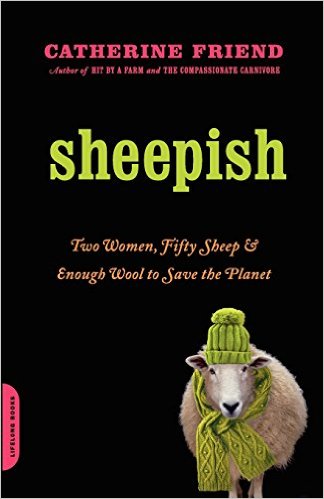
Book Review: “Sheepish: two women, fifty sheep & enough wool to save the planet”

19 Monday Oct 2015

Posted by sophie in livestock, reviews

≈ Leave a comment

Tags

books, farm, Fleurieu, livestock, sheep

sheepishcover

“The primary purpose of many small farms is to provide an opportunity for open spaces, fresh air, scenic landscape, privacy, peacefulness, or other unique qualities of rural life. Others are looking for a good place to raise a family … Others farm because they want to live close to nature; many are stewards of the land by choice, because stewardship gives purpose and meaning to their lives. For them, farming is an expression of spirituality.”
– John Ikerd

I wanted to read a memoir about women farming, as I often feel intimidated about participating in male-dominated farming in Australia. But in many ways it’s probably just the usual intimidation felt by city-dwellers feeling our way in completely new territory – it has certainly improved over time as we’ve made connections with local contractors, neighbours, shopkeepers and felt more part of the local community.

I came across this light memoir by Catherine Friend, about a female couple who run a 50 acre farm in Minnesota, USA (same size as ours!). They run about 50 sheep, as well as a menagerie of other animals, and sell their meat and wool commercially. Lambing season for them involves about 100 little white bundles sproinging around the place, which is my idea of heaven, including many bottle-fed lambs from ewes dropping twins, triplets, and quadruplets. Continue reading →

The drop: lambing season begins!

27 Sunday Sep 2015

Posted by Joel in livestock, planning

≈ 2 Comments

Tags

alpacas, farm, lamb, livestock, seasons, sheep, southwestern Fleurieu, spring

IMG_6982

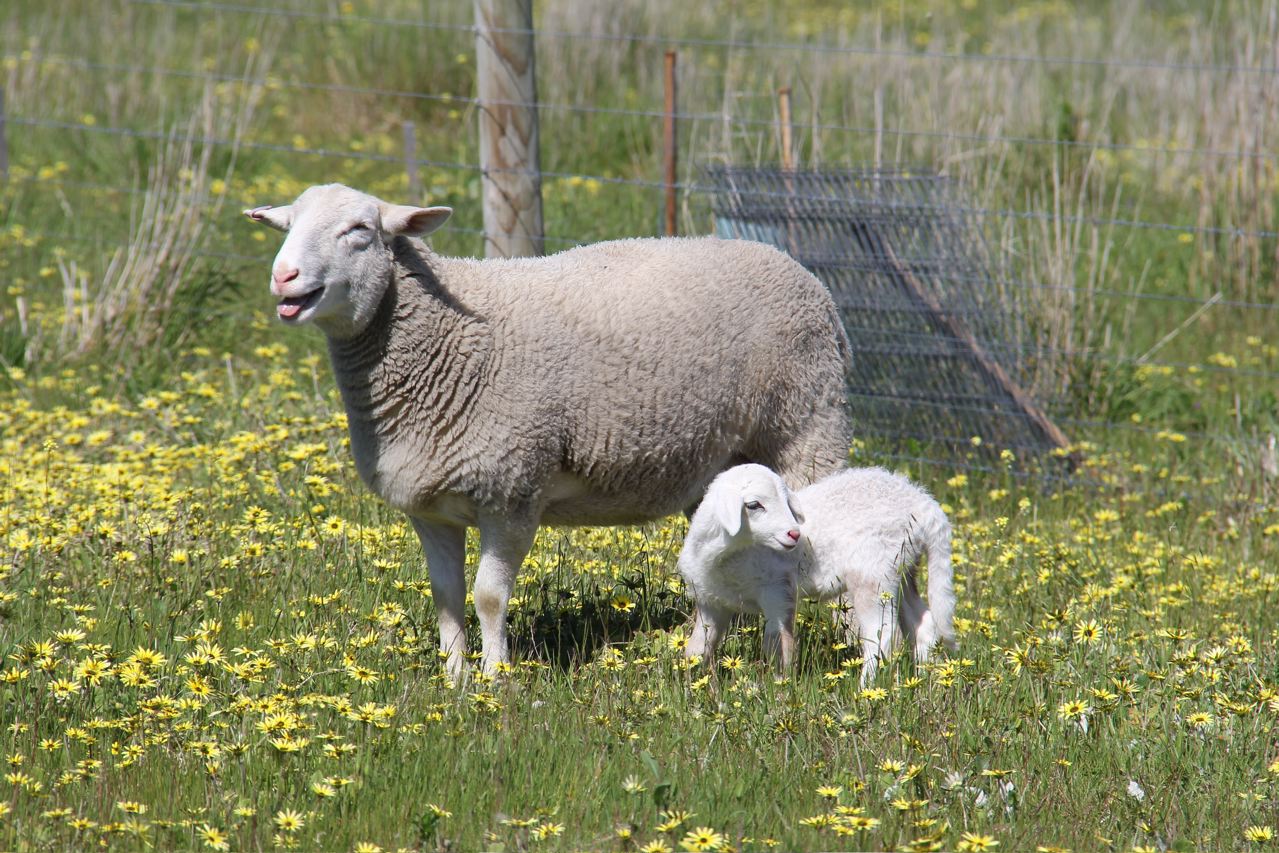
A young ram lamb takes shelter with its mother.

After weeks of expecting a lamb at any moment, the season has begun with five dropping at once! Fathered by the late, great Damara x Dorper ram Pecorino (sheepish in all but his appetites, he came to an untimely end after over-doing it on lupins), these little crossbreeds have a distinct Damara bearing and appearance, with their floppy ears and dappled coats. While the alpacas typically have an adolescent aloofness, now that there are lambs about they’ve switched into vigilant mode, keeping a close eye on their young charges and leading the flock to water and fresh pasture.

IMG_6974

After starting the flock with Wiltshire Horns, we found that this breed didn’t exactly relish our pre-treed (ie. open, windswept and exposed) environs, so we’ve started breeding the flock towards hardier, less selective grazers like the Dorper and Damara that also offer a yield in meat and hides. So with last year’s lambs being Wiltshire Horn x Dorper, these are all of the above, but mostly Dorper. As with virtually every aspect of this farming project, it’s an experiment!

IMG_6970

Continue reading →

Plastic-Free July: Making a feed-bag picnic rug

20 Monday Jul 2015

Posted by Joel in art & craft, diy, livestock

≈ 5 Comments

Tags

art, craft, farm, livestock, picnics, Plastic-free July, recycling, reuse, southwestern Fleurieu, waste

IMG_6556

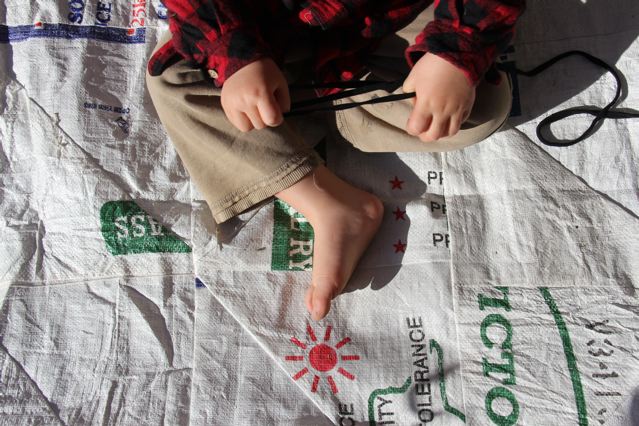
Asher tests out the upcycled feed-bag picnic blanket

Over the last couple of years we’ve assembled an impressive collection of woven polypropylene sacks. Typically used as bags for stock feed or pasture seed, in the spirit of Plastic-Free July, I thought it was time to put these single-use plastics to use and upcycle them into a patchwork, water-proof picnic blanket.

IMG_6552

Asher demonstrates correct operating procedure, also showing the heavier backing.

Continue reading →

Farm hack: Making a sheep working race

11 Saturday Jul 2015

Posted by Joel in diy, livestock

≈ 3 Comments

Tags

building, design, farm, fencing, hack, livestock, Plastic-free July, recycling, reuse, sheep, southwestern Fleurieu, waste, winter

IMG_6533

One of our hoggets, sizing up the new facilities.

We’re great fans of temporary. Not aiming for permanence tends to mean that ideas can be trialled inexpensively, can be easily changed and that learning from failure can be quick and low-impact. In that spirit, as we develop the sheep enterprise of the farm, we’ve tried to keep things low-key. For yards, we use locally-made portable panels, but when working closely with sheep, we found the mesh sides problematic due to the ease with which horns or feet can become entangled. In more established circumstances, yards would have a working race for such a purpose, but the cost of a manufactured race can be steep. It was time to get out the tools and make our own.

IMG_6530

The ‘new’ working race in position, with sheep, also in position. As a further refinement, we need to attach bracing to the far end to help it stand up to the inevitable knocks and bumps.

Continue reading →

Landscape history and future planning

30 Thursday Apr 2015

Posted by Joel in ecology, history, planning

≈ 9 Comments

Tags

design, ecology, erosion, farm, history, kangaroos, livestock, permaculture, planning, revegetation, soil, southwestern Fleurieu, trees, water, waterways

Recently we’ve been obsessing a bit about the history of our landscape (here, here, and even here, for example). It comes as the consequence of the last few years of reading and thinking about how Australia’s landscape and water systems have changed over time, but we hope it’s not purely an intellectual exercise. Understanding how our landscape was 200 years ago acts as a good guide for planning its future potential and limitations. By attempting to unravel the threads of actions and consequences that have reshaped these hills and valleys over the last couple of centuries, we can also not just address symptoms (such as treating an erosive headcut with a Zuni Bowl), but can also have a go at working on the causes of dysfunction in our soil, water and ecosystems. A lofty goal, but as Wes Jackson quips, “if your life’s work can be accomplished in your lifetime, you’re not thinking big enough!”

Landscape History - New Page

This spaghetti-and-meatballs flowchart is our first go at representing what might have happened in our neighbourhood over the last 180-odd years, compiled from reading, observations, historical records and discussions. It provides us with a list of things to do as we attempt to address elements of this (for example, in this year’s tree planting, we’re inoculating our seedlings with beneficial fungi to restore mycorrhizal networks). We expect this chart to be tweaked, adjusted and rewritten over time as we discover new ideas or revise our assumptions. Perhaps a next step might be to construct a sequel that shows how we might attempt to improve some of this stuff.

Are there connections, consequences or other things we’ve missed, overstated or got plain wrong? We’d love to hear your thoughts and ideas.

The Whole Beast: harvesting hides

19 Thursday Mar 2015

Posted by Joel in art & craft, livestock

≈ 5 Comments

Tags

craft, farm, livestock, reuse, sheep, southwestern Fleurieu

IMG_5994When we took our sheep to be slaughtered towards the end of last year, in the spirit of using the whole beast, we asked the meatworks if we could keep the skins. Wiltshire Horns are not renowned for their hides, and while the abattoir workers looked at us a little askance, they played along. As soon as the animals were killed, we drove the skins across to Port Elliot, where tanner Tony Scott salted them and enthusiastically took us on a tour of his tannery, one of the few surviving such establishments in Australia.

IMG_5989

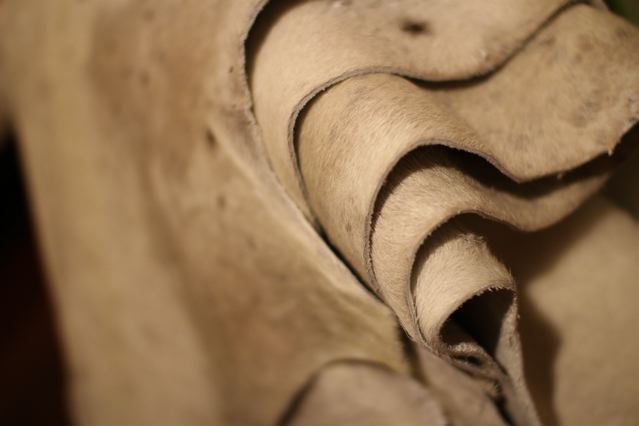
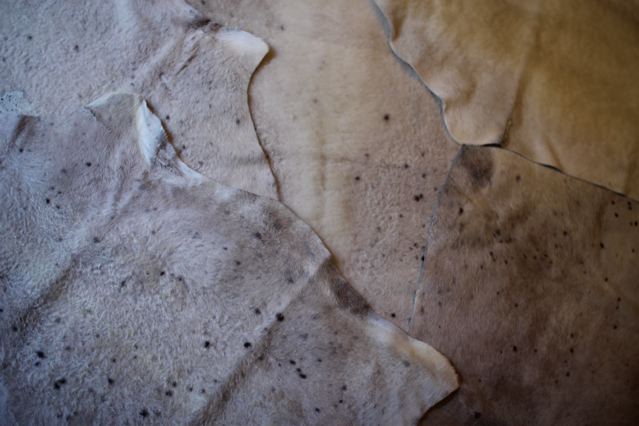
This week a package arrived from Port Elliot. Inside were the skins, transformed from their dusty, paddock hue: the lamb skins soft and creamy, the elder beasts a light, dappled grey with black spots. While there’s no doubt that draping one’s home in animal hides brings with it a whiff of hillbilly, it’s also deeply satisfying to use as much as we can of our animals.

IMG_5988

As an experimental run, most of these skins are already accounted for, but if you would like first pick on future hide harvests, let us know.

Ram update: The Pecorino Support Group

08 Sunday Mar 2015

Posted by Joel in livestock

≈ 6 Comments

Tags

farm, livestock, sheep, southwestern Fleurieu, summer

IMG_5784

Pecorino, with new BFF Ernesto the Alpaca

A few weeks ago, Pecorino, our new Damara-Dorper cross ram arrived at the farm. Initially, he seemed a little coy, intimidated by all from the alpacas to last year’s lambs. Within even a week, it was clear that he was becoming enculturated into the flock, following their cues to move to new pasture, and joining the usual welcoming committee whenever we come to visit.

IMG_5788

Friendship is parallel grazing. Note Pecorino’s fat-tail, a Damara characteristic, it’s the camel’s hump of the sheep world.

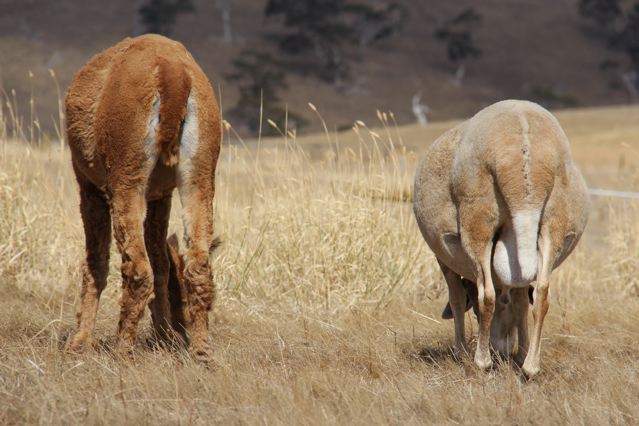
Now, Pecorino’s assembled something of a support group around himself, composed of alpacas Fidel and Ernesto and a wether lamb. They tend to remain aloof of the rest of the flock, grazing a little away from the rest. While other sheep-farming pals tell us that this is not uncommon, we’re genuinely amazed to see how Pecorino’s robust desert breeding is exhibited in his grazing habits. Where the Wiltshire Horns hurry for shelter at the first glimmer of sunlight and sit panting until a cloud covers the sun again, Pecorino and his clique munch on, apparently regardless of temperature, and far less selectively than the others. Now all we need is for him to start sharing those genes around.

IMG_5782

Pecorino joins the party.

Maintain the rain! Piecing together the past to imagine a future

05 Thursday Mar 2015

Posted by Joel in ecology, history, planning, regeneration, trees, waterways

≈ 2 Comments

Tags

art, ecology, erosion, farm, history, livestock, photography, planning, revegetation, seasons, soil, southwestern Fleurieu, summer, trees, water, waterways, winter

It’s been a dry year on the Fleurieu Peninsula. After the inundation of 2013, 2014’s rainfall came in almost 200mm shy of the year before, and about 100mm short of the average. By February 2015, the dam had receded to a few centimetres of sludge, and the water carter had come to top up the stock water tanks. While there’s no doubt that the Fleurieu Peninsula has had the Mediterranean pattern of dry summers and cool, wet winters for some time, recently I’ve begun to wonder whether this pattern has shifted towards greater aridity as successive land-uses have cleared the landscape.

Curruckalinga, looking over St. Vincent’s Gulf, 1846, George French Angas, depicting a mosaic of woodland and open grassland. From the description: “This view is taken from the rocky hills near Mr Kemmis’s Station, to the northward of Rapid Bay … The undulating appearance of the country here represented, together with the singular manner in which the trees are dotted about in all directions over the landscape … principally ‘casuarinae’ or she-oak, with ‘eucalyptus’.” From the collection of the State Library of South Australia, B15276/33.

At the time of European colonisation, the Fleurieu Peninsula was most likely covered with a mosaic of woodland, forest and grasslands, maintained through Aboriginal burning and land management practices. In his paper on the discovery and settlement of the Fleurieu (1986), Rob Linn draws from the diaries of settlers in his descriptions of the landscape of the South Western Fleurieu. Writing in 1838, William Giles described the landscape around Rapid Bay, as “a most beautiful valley, the soil of great depth covered with most luxuriant herbage … on the sides of these hills we found plenty of keep for sheep, and wherever the grass had been burnt in these places it was looking beautifully verdant … fine land, excellent water, plenty of timber …” This was echoed by John Stephens in 1839, describing the “country from Cape Jervis upwards” as “very picturesque” and “well-timbered” (Linn 1986). Continue reading →

← Older posts
Newer posts →

Yarnauwi on Etsy

Enter your email address to follow this blog and receive notifications of new posts by email.

Join 223 other subscribers

What We’re Writing About

alpacas annual report art art and craft bees before and after birds books building cheese climate change craft damara design downloads ecology embroidery erosion etsy events farm fencing fire Fleurieu Fleurieu Coast Fleurieu Peninsula food fungi future hack hiking history illustration insects kangaroos leather leathercraft linoprint livestock logo nursery permaculture photography picnics planning Plastic-free July printing propagation rain recipes recycling regeneration regenerative agriculture reuse revegetation sea seasons seeds shed sheep sheepskins shop soil southwestern Fleurieu summer textiles tour tractor trees ute waste water waterways winter zones

Meta

  • Create account
  • Log in
  • Entries feed
  • Comments feed
  • WordPress.com

Blog at WordPress.com.

  • Subscribe Subscribed
    • Yarnauwi Farm
    • Join 223 other subscribers
    • Already have a WordPress.com account? Log in now.
    • Yarnauwi Farm
    • Subscribe Subscribed
    • Sign up
    • Log in
    • Report this content
    • View site in Reader
    • Manage subscriptions
    • Collapse this bar
 

Loading Comments...