• About
  • Anacotilla: History & Hearsay
  • Junk: A Curated Collection
  • Resources
  • Species List
  • Yarnauwingga and beyond

Yarnauwi Farm

~ Fleurieu Peninsula, South Australia

Yarnauwi Farm

Tag Archives: design

Landscape history and future planning

30 Thursday Apr 2015

Posted by Joel in ecology, history, planning

≈ 9 Comments

Tags

design, ecology, erosion, farm, history, kangaroos, livestock, permaculture, planning, revegetation, soil, southwestern Fleurieu, trees, water, waterways

Recently we’ve been obsessing a bit about the history of our landscape (here, here, and even here, for example). It comes as the consequence of the last few years of reading and thinking about how Australia’s landscape and water systems have changed over time, but we hope it’s not purely an intellectual exercise. Understanding how our landscape was 200 years ago acts as a good guide for planning its future potential and limitations. By attempting to unravel the threads of actions and consequences that have reshaped these hills and valleys over the last couple of centuries, we can also not just address symptoms (such as treating an erosive headcut with a Zuni Bowl), but can also have a go at working on the causes of dysfunction in our soil, water and ecosystems. A lofty goal, but as Wes Jackson quips, “if your life’s work can be accomplished in your lifetime, you’re not thinking big enough!”

Landscape History - New Page

This spaghetti-and-meatballs flowchart is our first go at representing what might have happened in our neighbourhood over the last 180-odd years, compiled from reading, observations, historical records and discussions. It provides us with a list of things to do as we attempt to address elements of this (for example, in this year’s tree planting, we’re inoculating our seedlings with beneficial fungi to restore mycorrhizal networks). We expect this chart to be tweaked, adjusted and rewritten over time as we discover new ideas or revise our assumptions. Perhaps a next step might be to construct a sequel that shows how we might attempt to improve some of this stuff.

Are there connections, consequences or other things we’ve missed, overstated or got plain wrong? We’d love to hear your thoughts and ideas.

Book review: Restoring rivers with ‘Let the Water Do the Work’

26 Sunday Apr 2015

Posted by Joel in ecology, regeneration, reviews, waterways

≈ 3 Comments

Tags

books, design, ecology, erosion, farm, permaculture, soil, southwestern Fleurieu, water, waterways

1950-ltwdtw-i

Weirdly, one of the elements we found appealing about our property was the erosion. In a fit of masochistic optimism, we were excited by the prospect of working to restore a degraded landscape to a level of ecological function, of seeing gully walls stabilised with plants and creeklines resounding with a froggy chorus. As we’ve explored the best strategies for managing and restoring these sections of the property, the advice we’ve received has often tended towards paying someone to think about it and do the work for us, purchasing expensive, industrially produced tools and materials, and utilising heavy machinery, all of which bring with them a substantial price tag. This disturbed us, because it seems to suggest that land restoration is the domain of those with cash to splash, and that those people or places without the necessary resources may just have to resign themselves to the continued collapse of their landscapes.

Thankfully, we came across the work of the likes of Craig Sponholtz, Brad Lancaster, Bill Zeedyk and Van Clothier, and in Australia, Cam Wilson and Peter Bennett. In their work, these thinkers and practitioners of water management and restoration, offer a radically different approach to watershed restoration. While they don’t flinch from the importance of technical understanding, they cultivate strategies that are based in the thoughful observation of those who are connected to a landscape, that utilise locally available materials, and that draw on community power to create modest interventions that can be tweaked over time. Rather than advising that landowners simply save up and pay an expert, their work seeks to empower communities to manage, monitor and maintain water in their landscapes through accessible, practical and locally-adaptable erosion control and water harvesting responses. In his foreword to Zeedyk and Clothier’s book Let the Water Do the Work, Courtney White articulates the characteristics of this approach: it is evidence-based, its affordability and relative simplicity make it accessible, it is based in ‘soft engineering’, challenging “the dominant paradigms of river and creek restoration”, it requires “humility, attentiveness and patience”, operating at the pace of the ecosystem, and finally, it’s at a human scale, flourishing with the participation of community, that offers “joy in companionship, in learning together, and sharing knowledge.” Continue reading →

Observe and Interact: Strategies for Learning the Landscape

20 Monday Apr 2015

Posted by Joel in ecology, planning, regeneration

≈ 1 Comment

Tags

design, ecology, farm, fencing, permaculture, planning, revegetation, soil, southwestern Fleurieu

The following article was developed while preparing to host a forthcoming farm tour for the Southern Fleurieu Permaculture Group on applying permaculture principles in property planning. You can view a printable version, including an updated One-Page Place Assessment here.

doc20150407084803_001

After several years working in and advocating for sustainable food systems, in November 2012, we purchased 19 hectares of grazing land near Second Valley, 80 kilometres south of Adelaide. Our vision for the property is to cultivate a diverse, small farm that meets a large proportion of household food and energy needs as well as an income through direct marketing. With integrated forestry, grazing, revegetation and horticulture, we hope to develop Yarnauwi as an experiment in viable, sustainable small farming for the Fleurieu Peninsula. Farm enterprises and elements will be stacked to perform multiple functions and increase profitability, and will be developed at an economically and personally appropriate pace.

For our first couple of years, we’ve spent a great deal of our time trying to engage in thoughtful observation, learning the rhythms and patterns of the landscape. As we’ve tried to reconcile our own impatience to get things done with the pace of the climate and the land, we’ve adopted Wes Jackson’s assertion that “if your life’s work can be accomplished in your lifetime, you’re not thinking big enough.” It’s a reminder to be patient, to acknowledge that ecological systems have their own sense of time, and that many of the intentions of our planning may only be experienced by our grandchildren. Continue reading →

Upcycling a farm sign

15 Sunday Mar 2015

Posted by Joel in art & craft, diy

≈ 8 Comments

Tags

art, craft, design, farm, fencing, logo, recycling, reuse, southwestern Fleurieu

IMG_5895Now that we have a new entry to the property, it was time to knock together a sign announcing the property’s name. In August 2014, we were granted the name Yarnauwi by Kaurna Warra Pintyanthi, a property name that both describes the landscape (“bald (hills) water”), and references the traditional meeting ground Yarnauwingga just beyond the back fence.

In the spirit of our intentions for the property, the sign is entirely constructed from materials salvaged from around the farm: a surviving piece of corrugated iron and timbers seasoned in the mud and sun of the gully floors. The text and logo are stencilled with spray-paint. The rather wonky nature of the timbers made it tricky to hang, but we’re reasonably confident it’s level-ish. Give it a honk next time you’re passing!

Farm hack: reusing livestock water

08 Sunday Feb 2015

Posted by Joel in diy, livestock, regeneration

≈ Leave a comment

Tags

design, farm, livestock, recycling, reuse, revegetation, sheep, summer, water, waterways

IMG_5738

The new Trough Hose Outlet Mark 2 (aka. THOM2), in position.

When our livestock are moved into the next paddock, or the trough needs a clean, the contents, up to 450 litres of water, are dumped into the pasture. While we’ve tended to hold a ‘survival-of-the-fittest’ mentality for our tree planting, we couldn’t help but feel that this water could be better directed on nearby seedlings. So, a little while ago, we whipped up our first attempt at a stock trough water diverter that would do just this.  Continue reading →

Testing water quality

27 Tuesday Jan 2015

Posted by Joel in ecology, planning, regeneration, tools, waterways

≈ Leave a comment

Tags

design, ecology, farm, permaculture, planning, seasons, southwestern Fleurieu, summer, water, waterways

IMG_5573

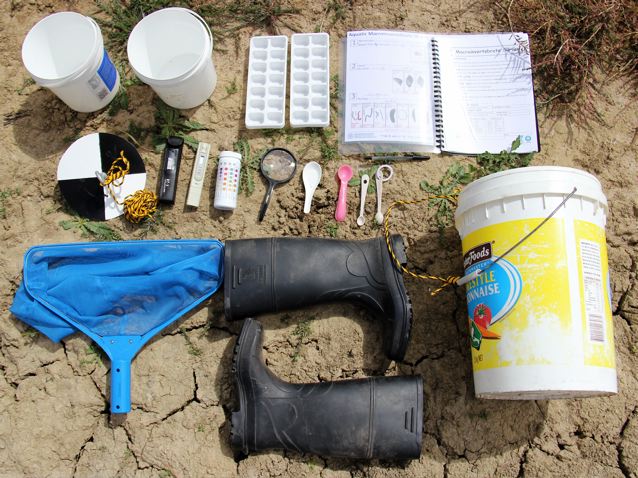
The DIY water testing kit, including big buckets, little buckets, ice-cube trays, teaspoons, magnifying glass, pH strips, homemade Secchi disk, EC meter, pool net, boots, ID charts and recording sheets. If you have a toddler in attendance, you may consider a change of clothes for yourself and toddler.

Inspired by permaculture’s commitment to observation, over the last couple of years, we’ve become enthusiastic/compulsive gatherers of data about our farm. Everything we can think of to measure, we’ve tried to measure. Now, as we scale up our interventions, we can begin to track our impact and refine our management accordingly. As part of this, we’ve started a seasonal water quality testing program to monitor changes in the quality of our catchment as we revegetate the catchment and manage grazing more intensively.

We’ve assembled our own water testing kit, all stored conveniently in a secondhand mayo bucket from the local chip shop. Using this, there are a few characteristics we’ll test seasonally:

  • salinity and temperature (both tested using an EC (Electrical Conductivity) Meter from your friendly local hydroponics vendor),
  • pH (tested using pool pH strips from the hardware shop),
  • turbidity is a measure of the amount of solids suspended in the water (measured with a DIY Secchi disk or turbidity tube),
  • macroinvertebrate populations, the presence and composition of which is also an indicator of pollution levels (gathered with buckets and nets, and sorted with teaspoons into ice-cube trays).

Continue reading →

New artwork: Cape Willoughby, Kangaroo Island

28 Sunday Dec 2014

Posted by Joel in art & craft, diy, exploring

≈ 9 Comments

Tags

art, craft, design, water

CapeWilloughbyWeb

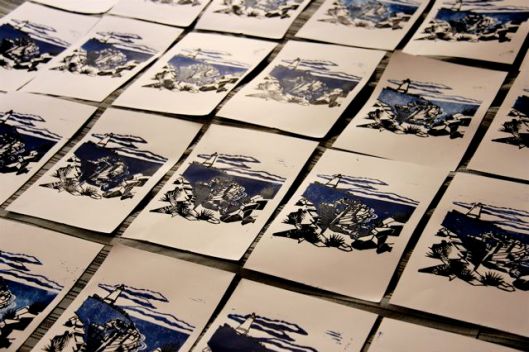
Cape Willoughby, 2014, two-colour lino print, Joel Catchlove

As part of my current experimentation with linocuts, here’s a two-colour imagining of Cape Willoughby, Kangaroo Island, inspired by a visit earlier in 2014. I need to work on my registration to make sure the prints line up more precisely!

IMG_5341

Prints drying.


The Farm Year in Review: 2014

18 Thursday Dec 2014

Posted by Joel in events, livestock, planning, regeneration

≈ 6 Comments

Tags

design, ecology, events, farm, fencing, food, hiking, livestock, permaculture, planning, propagation, revegetation, seasons, sheep, southwestern Fleurieu, summer, tractor, water, winter, zones

2014 was a year where the dry season came early and stayed late. It seemed as if the rain barely had a chance to soften the ground and throw up some soursobs before our clay soils began to crack again and the pasture browned off. Despite this, after two years observing the rhythms of this patch of ground, I feel like we’re becoming more resilient and optimistic: where previously we despaired at every lost seedling, now we celebrate every survivor.

shingleback

Summer: a shingleback lizard soaks up some sunshine.

In the spirit of permaculture, this year also marks a transition from our observational period towards beginning to implement infrastructure for a sustainable farming enterprise. With fencing and water infrastructure for livestock, our appreciation of the need for water only deepens, and despite its challenges, we’ve learnt to stop worrying and love winter.

Continue reading →

Help get Village Greens growing!

24 Monday Nov 2014

Posted by Joel in events, food

≈ Leave a comment

Tags

design, events, farm, Fleurieu, logo, market garden, permaculture, seeds, soil, vegetables, Village Greens

Logo_Horizontal_1440

I’ve recently been working with Village Greens, a dream-team of young growers and permaculturalists, developing their logo and crowd-funding video. They’re establishing a sustainable, human-scale market garden in Aldinga, on the southern rim of Adelaide, and the northern expanse of the Fleurieu Peninsula. One of the ring leaders, Nat Wiseman, is a great friend of our farm, and has hauled junk or scythed thistles on more than one occasion!

The Village Greens team have negotiated access to an acre of land in the Aldinga Arts EcoVillage, and with their wealth of experience and enthusiasm are poised to transform it into a thriving market garden. Their crowd-funding campaign has kicked off and they’re currently seeking support to meet one-off infrastructure costs so they can get growing. Check out how you can support them here. Continue reading →

Fencing Phase 2: Rotational Grazing and Zoning

06 Thursday Nov 2014

Posted by Joel in livestock, planning, regeneration

≈ 3 Comments

Tags

design, farm, fencing, kangaroos, livestock, permaculture, planning, revegetation, sheep, southwestern Fleurieu, zones

IMG_5287_2

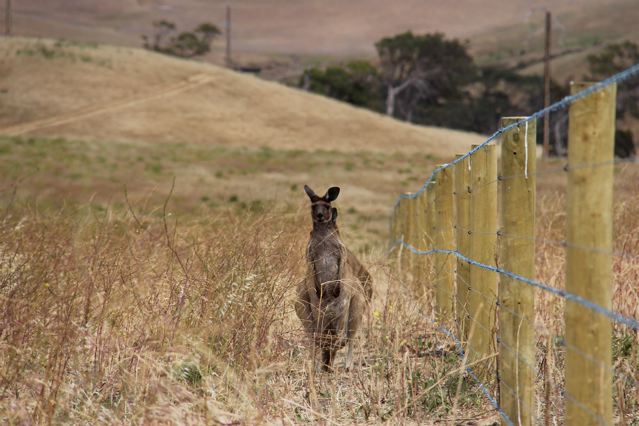
A new fence and a kangaroo. Neither are particularly concerned about each other.

A year or so ago, we celebrated the first phase of fencing on the farm: defining our ‘wilderness zones’ by carving out seven-ish hectares of erosion gully, remnant vegetation and waterlogging for regeneration. We commented at the time at how much a few posts and wire redefines a sense of space. Now we’ve almost completed all of the major fencing for the property. What began as essentially one vast, 20-odd hectare paddock, has now been reshaped into 8 smaller paddocks, together with 3 revegetation zones/habitat corridors. Continue reading →

← Older posts
Newer posts →

Yarnauwi on Etsy

Enter your email address to follow this blog and receive notifications of new posts by email.

Join 223 other subscribers

What We’re Writing About

alpacas annual report art art and craft bees before and after birds books building cheese climate change craft damara design downloads ecology embroidery erosion etsy events farm fencing fire Fleurieu Fleurieu Coast Fleurieu Peninsula food fungi future hack hiking history illustration insects kangaroos leather leathercraft linoprint livestock logo nursery permaculture photography picnics planning Plastic-free July printing propagation rain recipes recycling regeneration regenerative agriculture reuse revegetation sea seasons seeds shed sheep sheepskins shop soil southwestern Fleurieu summer textiles tour tractor trees ute waste water waterways winter zones

Meta

  • Create account
  • Log in
  • Entries feed
  • Comments feed
  • WordPress.com

Blog at WordPress.com.

  • Subscribe Subscribed
    • Yarnauwi Farm
    • Join 223 other subscribers
    • Already have a WordPress.com account? Log in now.
    • Yarnauwi Farm
    • Subscribe Subscribed
    • Sign up
    • Log in
    • Report this content
    • View site in Reader
    • Manage subscriptions
    • Collapse this bar
 

Loading Comments...