Fleurieu Foliage: River red gum (Eucalyptus camaldulensis)

Tags

, , , , , , , , , , ,

IMG_5468

After shedding two-thirds of its branches last year, one of our giant red gums is now a forest of new shoots.

As the two remnant trees on our farm, River red gums (Eucalyptus camaldulensis) hold a special place in our hearts. Our red gums are bent and stretch up the hillside away from the prevailing winds. Red gums are not unique to the Fleurieu however, in fact, their high level of adaptability means that they have a distribution across Australia, most commonly occurring on floodplains and waterways as well as throughout higher rainfall regions.

IMG_5466

Not dead yet! After apparently dying in an unusually dry winter and spring, this year-old red gum seedling has re-sprouted from its base after receiving about 10mm of rain over several weeks.

With red gums as a significant species in the past ecosystem of our property, they’ve been a clear choice for revegetation. When planting, we’re constantly inspired by their resilience. I’ve heard it said that red gum roots grow at a centimetre a day, which puts them at over three-and-a-half metres a year. If it’s true, then it’s an indicator of their startling ability to find water and nutrients. We’ve been amazed by some of our red gums that have shot to almost 1.5 metres after a couple of years in the ground, but also by their apparent capacity for dormancy. Some seedlings will sit in dry, cracked clay soil for months on end, leaves green but not growing. Then, with a decent rain, they burst into new growth. Likewise, others appear to have died, leaving nothing but a dry stick until the opening rains of autumn when they reshoot from the ground, sending out a profusion of leaves and spindly branches. We’ve noticed some other plants behave similarly – the occasional melaleuca or acacia for example – but none so consistently and successfully resurrect themselves as the red gum.

Continue reading

Visions of the Past: historical photos of Anacotilla

Tags

, , , , , , , ,

4567. Anacotilla Bridge

Anacotilla Bridge on Main South Road, with Lorna Kelly (riding side saddle), E.C. and G.F. Kelly (c1896). Image courtesy of the Yankalilla & District Historical Society.

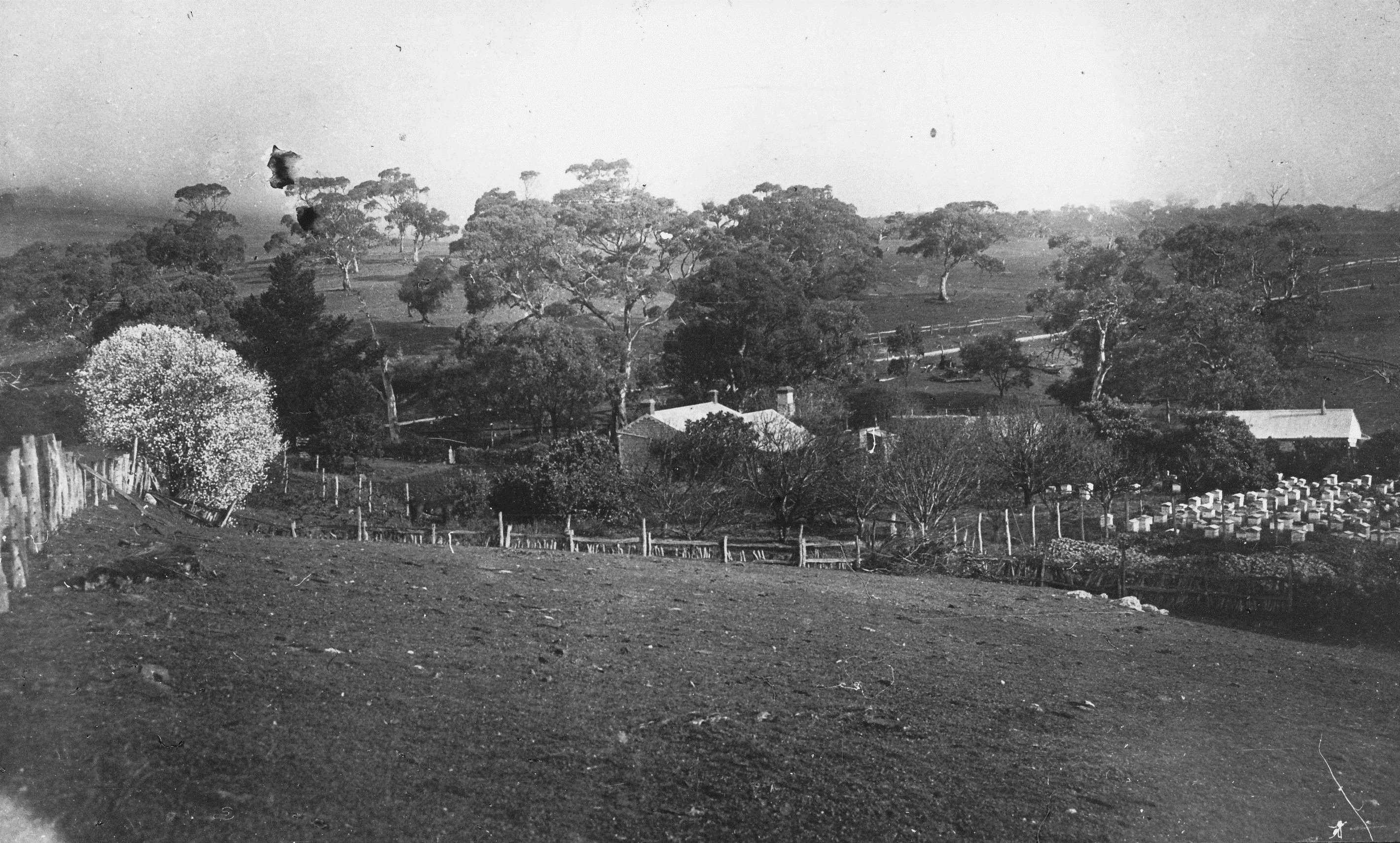
Our farm, Yarnauwi, is one lot of the once expansive Anacotilla pastoral property. Just over the ridge, in the Anacotilla river valley, are the old workers’ cottages, and on the hillside opposite, the sprawling homestead and outbuildings. We’ve recently been corresponding with the Yankalilla and District Historical Society about our interest in the property’s history, and they shared with us a number of photographs from the late 1800s onwards.

4563. Anacotilla

“Anacotilla”, Second Valley, home of A.C. Kelly in the 1880s. Image courtesy of the Yankalilla & District Historical Society.

IMG_5348

The Anacotilla cottage and outbuildings, 2014, viewed from Main South Road, near Paradise Drive. While the cottage has undergone substantial additions and renovations, the original two-room dwelling still exists at its centre.

Continue reading

Alpaca makeover: our first shearing

Tags

, , , , , , ,

IMG_5478

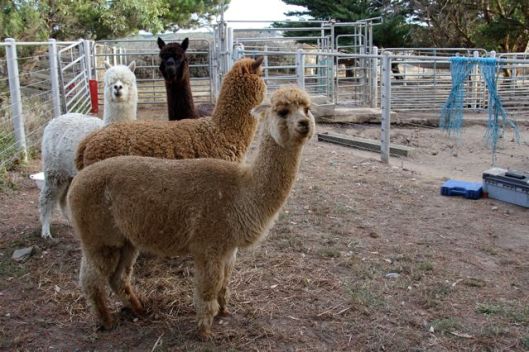
The before shot: full-coated alpacas from Yarnauwi and Whistling Pig mingle before their makeover.

Our alpacas Fidel and Ernesto have tolerated the heat for some weeks now, so there was general celebration when their shearing day arrived. Unfortunately, it also happened to be a searing, humid afternoon when we attempted to load them onto the trailer to transport them down the road to Delamere’s stunning Whistling Pig Farm where the shearers would meet us and clip our respective animals. In the past, we’ve thought of Fidel and Ernesto as compliant, if a little aloof, but that afternoon, with the sun beating down, they flatly refused to step aboard the trailer. We bribed, cajoled, pushed and persuaded in every way we could think of, but they just sat down in the grass, leaned against the trailer tailgate, and ignored us. Thankfully, the shearers were passing, and in a matter of seconds had them aboard on their way to Whistling Pig.

IMG_5483

Ernesto takes a professional interest in Fidel’s trim. 

Continue reading

A moveable sheep shelter: the sequel

Tags

, , , , , , , , ,

IMG_5448

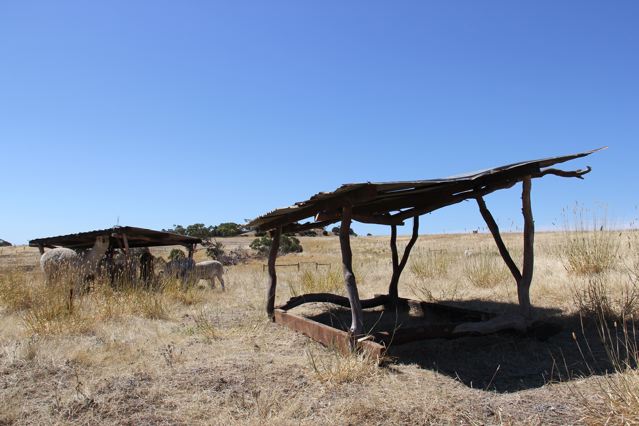
With recent temperatures climbing into the 40s (about 107 degrees Fahrenheit), and tree-induced shade still a few years away, we’ve constructed another moveable sheep shelter to ensure our sheep and alpacas have a cooler place to recline on the most hostile of days.

IMG_5444

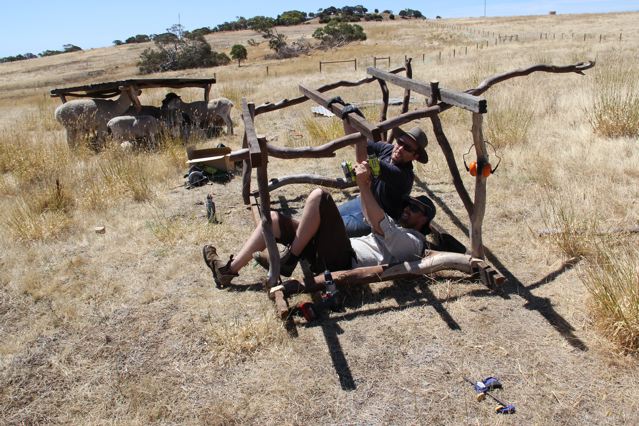
Employing the off-grid carpentry prowess of Jeremy and Pete, we knocked up the second shelter to the same rough plan as the original: salvaged hardwood for a sled base, allowing it to be dragged from pasture to pasture, fallen redgum for uprights, and tin reclaimed from the gullies for the roof. The previous life of the tin means that a hole is already cut for the installation of a pot-belly stove, should the sheep find one that fits their budget. This sheep shelter also includes a perch, should passing birds need a break while searching for a tree. Continue reading

The Farm Year in Review: 2014

Tags

, , , , , , , , , , , , , , , , , , ,

2014 was a year where the dry season came early and stayed late. It seemed as if the rain barely had a chance to soften the ground and throw up some soursobs before our clay soils began to crack again and the pasture browned off. Despite this, after two years observing the rhythms of this patch of ground, I feel like we’re becoming more resilient and optimistic: where previously we despaired at every lost seedling, now we celebrate every survivor.

shingleback

Summer: a shingleback lizard soaks up some sunshine.

In the spirit of permaculture, this year also marks a transition from our observational period towards beginning to implement infrastructure for a sustainable farming enterprise. With fencing and water infrastructure for livestock, our appreciation of the need for water only deepens, and despite its challenges, we’ve learnt to stop worrying and love winter.

Continue reading

Life and Death

Tags

, , ,

Our first lambing season has come to an end, with four boy and four girl lambs gracing our paddocks. All our ewes birthed successfully and recovered well for which we are proud (none were first-time mothers). Our two alpacas have done a great job at keeping foxes away from the lambs, making this freaky high pitched ululation when even a small elderly house dog sets foot on the property in a car with its owner! We’ve kept mothers and lambs together so that mothers can pass on their nutritional wisdom, and to self-wean whenever they choose to.

Asha, Simon and Joel wrangle lambs in our moveable sheepyards

Even though we completed an excellent NRM sheep course, we’ve had to largely teach ourselves how to do a range of lambing operations. We’ve docked all the tails, given two rounds of vaccinations, tagged their ears, and castrated the boys (this was a real challenge!) Thanks to Simon, Asha and Rob who were guest sheep wranglers at various points, and without whom we would have struggled to complete the jobs.
Continue reading

The Fleurieu in the 50s and 60s: A Second Time at Second Valley

Tags

, , ,

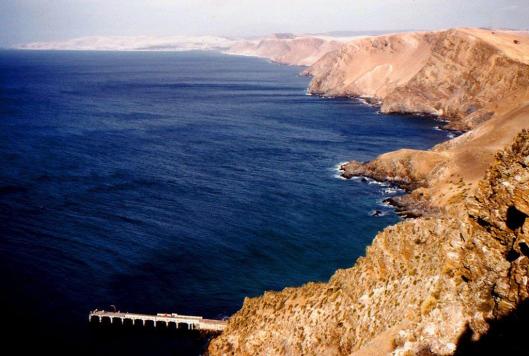
Second Valley jetty, looking north towards Normanville.

Second Valley jetty in the 1960s, looking north towards Normanville. 

In this special guest post, Joel’s dad Jeff Catchlove shares some of his memories and photographs from camping trips to the South-Western Fleurieu in the 1950s and 60s.

Second Valley has always been close to my heart. I’ve just turned 70 and reminiscence is inevitable. Our childhood was unencumbered – most of us were poor, though we didn’t know it. There was no TV but we just as eagerly listened to Biggles, Hop Harrigan, the Goons and Hancock’s Halfhour on ‘the wireless’. We also played outdoors every day, both at school and at home. Children’s books were limited to Enid Blyton, Captain W E Johns and Eagle or Daily Mail Annuals. We dressed in suits to go to ‘town’ on the trolley bus or train and the family acquired its first car when we were ten or so years old. That revolutionised the possibilities of where we could go as a family. Our FJ Holden quickly ushered in trips to Mt Gambier, the Great Ocean Rd, even Queensland so my dad and we could visit his Air Force mates again.

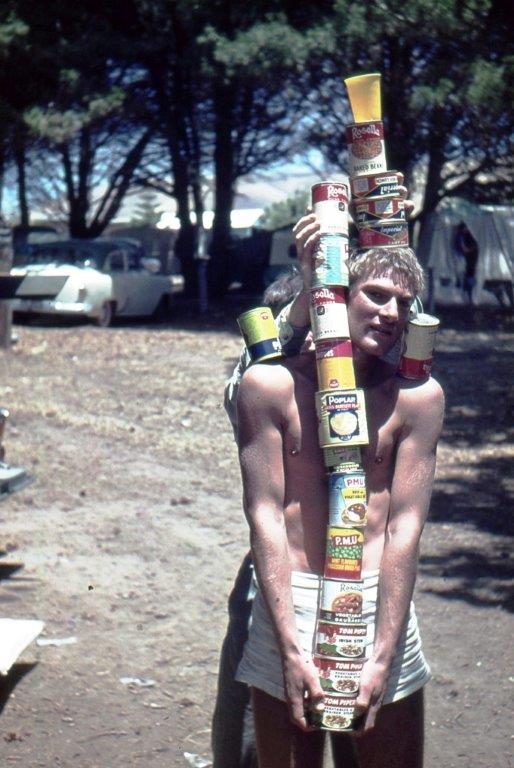
Camping at Second Valley in the 1960s, with a week's worth of rations.

Camping at Second Valley in the 1960s, complete with a week’s worth of rations.

Continue reading