New Flock on the Block

Tags

, , , , , , ,

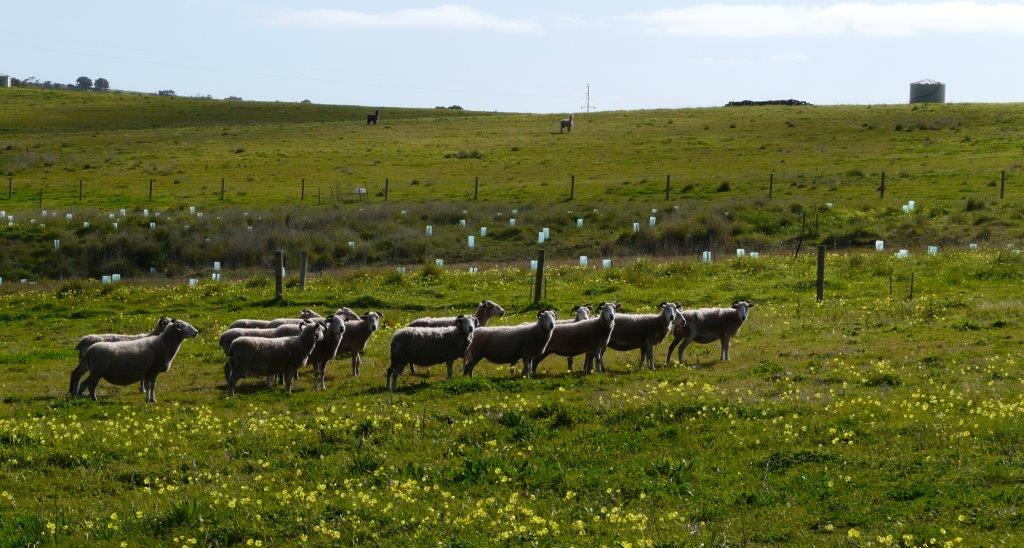
The new flock of Wiltshire Horns, watched from afar by the alpacas.

The new flock of Wiltshire Horns, watched from afar by the alpacas.

Just as the last rays of sunlight slipped below the cliffs, Asher and I arrived at the block with the final trailer-load of livestock. It had been a massive day of zig-zagging across the southern Fleurieu, transporting our small flock of Wiltshire Horn sheep and alpacas from Hindmarsh Valley to the farm. Driving along Range Road in the late afternoon light, we did our best to not think of the wedge-tailed eagles picking over the lambs as some kind of omen. Continue reading

Fleurieu Foliage: Scented sundew (Drosera whittakeri)

Tags

, , , , , , ,

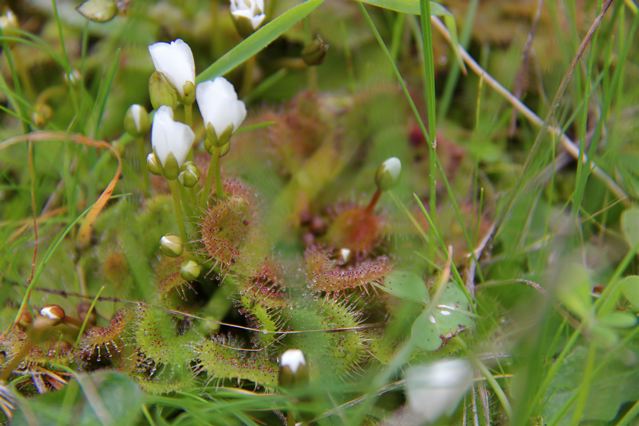
This is the first instalment in an occasional series celebrating different plants of the Fleurieu, particularly those that we spot or try to reintroduce to the farm. It’s also a way for us to map and share our research and discoveries as we observe the regeneration of our property.

sundew

During our recent winter tree-planting extravaganza, Sean, one of our dedicated tree-planters, discovered a patch of Scented sundews (Drosera whittakeri), in the damp, mossy undergrowth around the gullies. With its distinctive white flowers, once we’d spotted one cluster, we discovered more in similar damp pockets. Continue reading

The Second Annual TBC Tree-planting Extravaganza

Tags

, , , , , , , , , , ,

The 'before' photo: 800 new plants in position. Stay tuned over the next 20 years for the 'after' shot.

The ‘before’ photo: 800 new plants in position. Stay tuned over the next 20 years for the ‘after’ shot.

Over the weekend of the 12-13 July, around 30 dedicated volunteers descended on TBC for our annual tree-planting fiesta. Over two days, we managed to plant some 800 locally indigenous plants in the two ‘wilderness zones’, kick-starting their transition back to pink- and red-gum woodland. The first area was planted outwards from the former Bee House (currently tree-planter snack dispensary and rain shelter) with around 600 plants selected to address the water-logging in the area and to revegetate in and around erosion gullies. The second area saw the planting of around 200 plants, radiating from the existing remnant redgums. Once again these plants were selected to address water-logging and erosion as well as provide shelter to adjacent paddocks. Over the following week, we dodged thunderstorms and icy squalls to add another 150 or so plants, with about 200ish to go! Continue reading

Fleurieu Stile

Tags

, , , , , , , ,

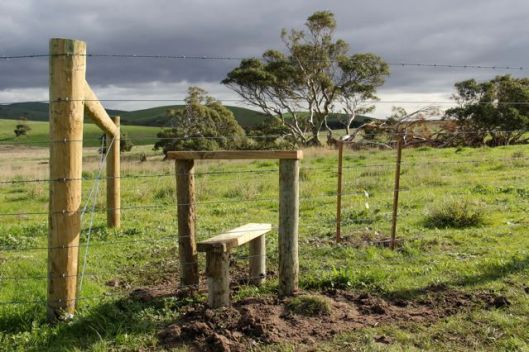
Stile Design #1, the crossed tread option.

Stile Design #1, the crossed tread option.

Fences are amazing things. They totally reshape the way you think about a landscape by cutting it into smaller, yet still expansive, rooms. They alter the movement patterns of humans and other animals and we’ve very quickly discovered the bits where, far from any gate, we’re regularly having to launch ourselves between strands of high-tensile barbed wire. With a bit of research, we came up with a couple of simple designs for stiles allowing easy pedestrian access at high-traffic points. Continue reading

Birds of the Block embroidery project

Tags

, , , ,

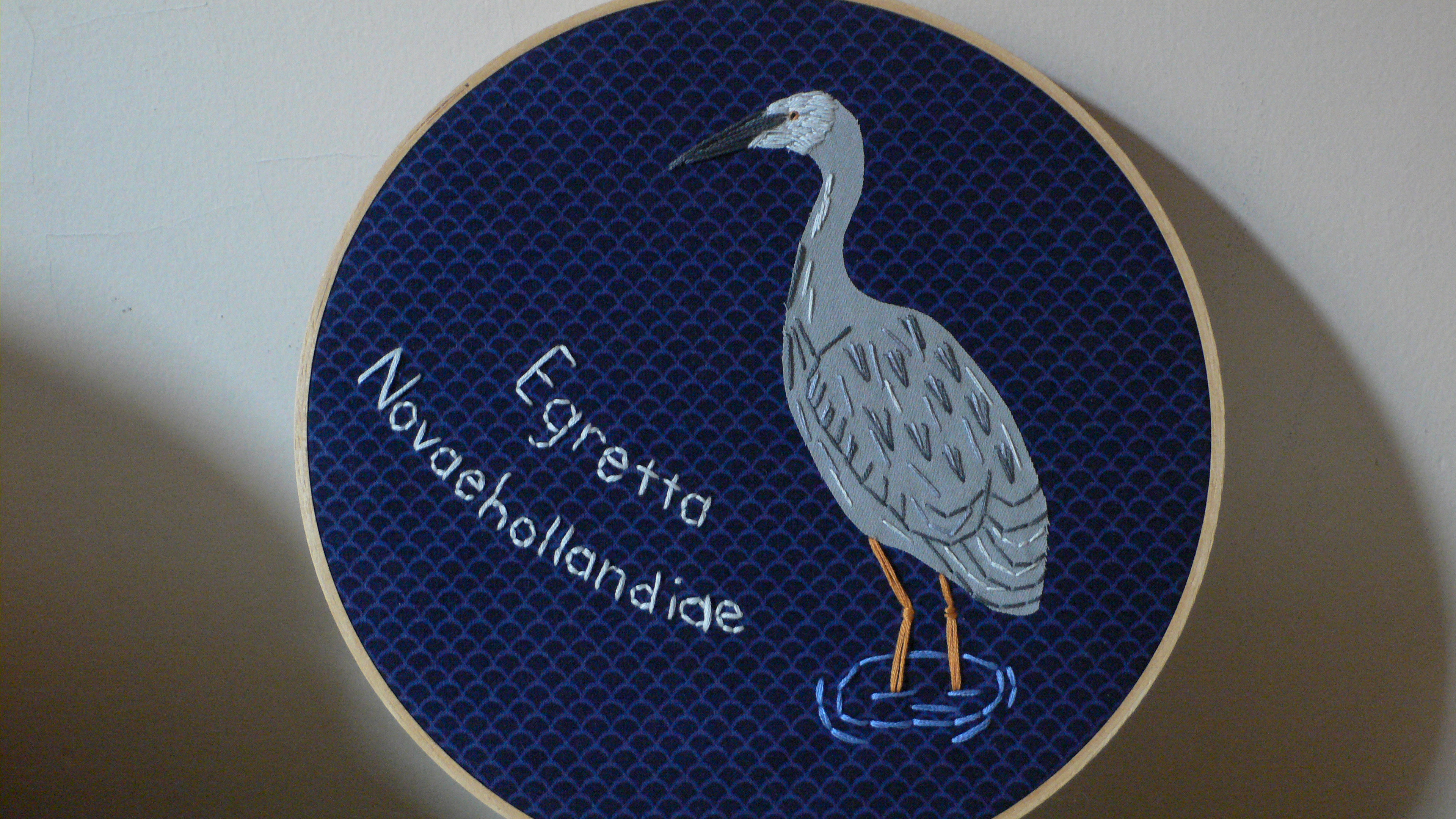
White-faced Heron, May 2014

White-faced Heron, May 2014

A tradition has officially started now that I’ve done it twice. Each year, in honour of Joel’s birth, I shall embroider a different bird species found on our property to add to a home wall gallery. Joel asked what the criteria is for birds to be selected: they have to be interesting, native, and not commonly found in the city (even though they can be common on the Fleurieu). I can’t bring myself to embroider pigeons or magpies, though we have plenty of both. The idea is that I shall never run out of birds to embroider, as more and more birds will flock to our property as it becomes ever more diverse and abundant! The key bird species we are hoping to attract at the moment are yellow-tailed black cockatoos (which currently fly straight over and go and eat pine nuts in the pine trees in the Second Valley beach carpark) and the little finches we see hanging out in the Wirrina reveg area just across our back fence line. So stay tuned for next year’s installation!

Stubble Quail, May 2013

Stubble Quail, May 2013


Propagating Oaks 1: Germination

Tags

, , , , , , , ,

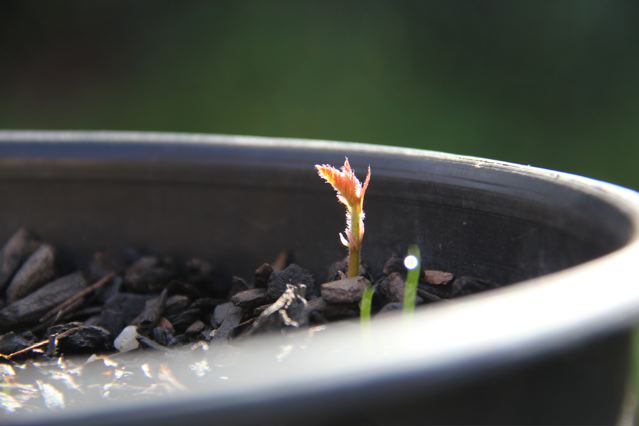
An English oak seedling (Quercus robur) reachers towards the winter sun.

An English oak seedling (Quercus robur) reaches towards the winter sun.

Back in autumn, we gathered freshly fallen acorns from the base of a row of massive old English oaks (Quercus robur). Inspired by the dehesa agroforestry systems of Spain and Portugal, we’ve often pondered how a livestock-grazed oak plantation could work on the property. Acorns for pigs, and perhaps even human consumption, timber for the use of our great-great-grandchildren, and in the meantime, a carpet of fallen leaves offering organic matter for composting and mulch. So, with some bags of acorns and few containers of the topsoil and leaf litter from around the parent oaks, we set to propagating them.

We mixed the leaf litter and gathered topsoil in with our potting medium, hoping to inoculate our own medium with beneficial fungi, and then planted the acorns. We planted some close to the surface, and others about an acorn-width deep. After about eight weeks of being kept damp and left in the late autumn-early winter sun, they began sending their first shoots upwards, red furry things with a cluster of jagged leaves at the top. The depth of the acorn doesn’t seem to have had any bearing on their readiness to propagate. Once they’ve all emerged and are about 8-10 cm tall, we’ll carefully thin them, planting out excess strong specimens to their own pots until we have one decent plant per pot.
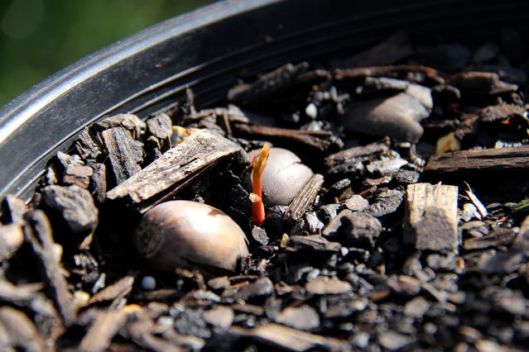
Grow little seedling, grow!

Grow little seedling, grow!

Propagating feijoas

Tags

, , , , , ,

The take-away container propagation method. Place cleaned seed on a damp cloth, replace lid, and leave in a warm place.

The take-away container propagation method. Place cleaned seed on a damp cloth, replace lid, and leave in a warm place.

The feijoa (Acca sellowiana, aka. Feijoa sellowiana) is one of those underrated suburban fruit trees that is often (perhaps unwittingly) grown around Adelaide backyards and little eaten. The varieties I’ve come across most often have offered grey-green torpedoes with a sharp, pineapple tang and a somewhat gritty texture. In the height of feijoa season, we were given a paper bag full of a variety I’d not encountered before. The skin was thin enough to bite a chunk out of and the flesh silky(ish) and smooth. Continue reading

Farm Hack: Nursery tables

Tags

, , , , , , , ,

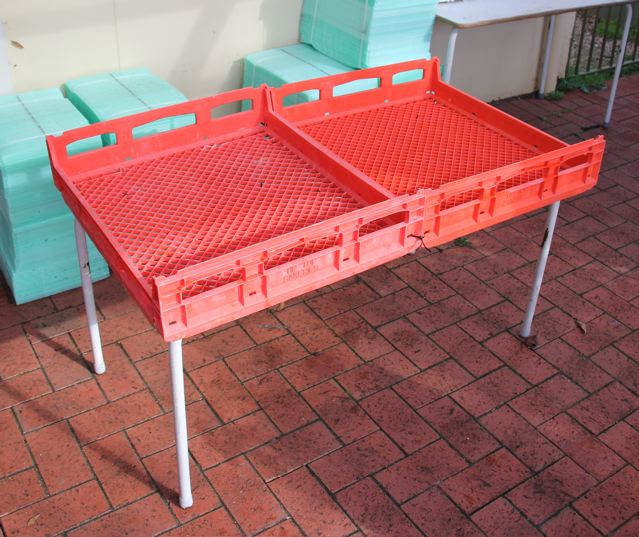
nurserytableOur passion for growing trees has in many ways outstripped our capacity to grow them, and so our growing space has become overrun with foam containers balancing precariously on the edges of hard rubbish chairs, bricks and scraps of wood. Some months ago, we claimed some old school tables from a local school’s throw-out pile, and thought they might be good for more growing space. Predictably, the manufactured timber tops very quickly fattened in the moisture, buckled and then started getting slimy.

Continue reading