Farm hack: stock trough hose outlet

Tags

, , , , , , ,

IMG_5325Every week or so we empty our stock troughs, sometimes for cleaning, sometimes to shift it into a new paddock or location to prevent the soil getting bared out. As dry springs like this one remind us, water is precious. The dam fills in winter, we pump up to the tanks, then try to gravity feed the stock troughs from spring until the rains come again. When it came to empty the troughs, we tried some judicious bucketing onto nearby seedlings, but that’s long and arduous when you have 450 litres to decant.  Continue reading

Regeneration: Two years of practising patience

Tags

, , , , , , , , , , , , , ,

IMG_5332

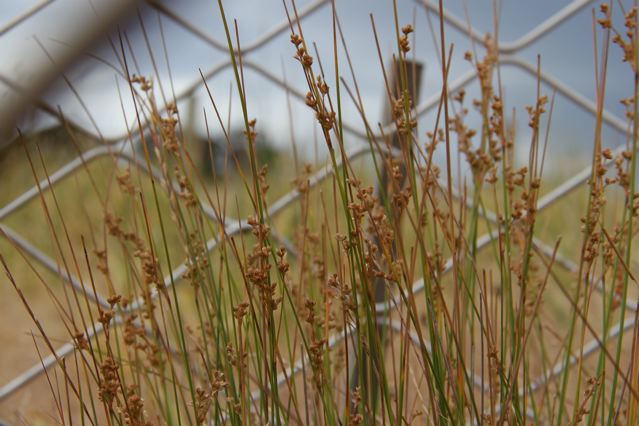
Some might consider Shark-mesh overkill for allowing rushes to regenerate.

In our first year of working on the farm, we really tried to practise the permaculture principle of long and thoughtful observation, but it always competed with our own impatience to see change. In that first flurry of clearing gullies and planting seedlings, I remember trawling the internet for before-and-after shots of other people’s reveg projects: something to help imagine a future for the block. Seasoned tree-planters told us we’d see real change in five years, the optimistic suggested three, others, fifteen.

PycnanthaRegen

Self-regenerating golden wattle (Acacia pycnantha) after two years, and protection from kangaroos. This wattle was one of four trees present on the entire property in 2012.

Now at the two year mark, we are noticing change. Removing cattle and fencing sensitive areas has allowed a fuzz of groundcover to begin growing over the barest of gullies. Fences have reoriented deer and kangaroo movement and grazing patterns. Some seedlings planted in the cold, soggy winter of 2013 appeared to die, but then surprised us by resprouting and growing at a cracking pace the following autumn. Other plants that were repeatedly pruned back to their tree-guard height by roos have invested their growing energy into roots and woody stems.

Continue reading

Fencing Phase 2: Rotational Grazing and Zoning

Tags

, , , , , , , , , ,

IMG_5287_2

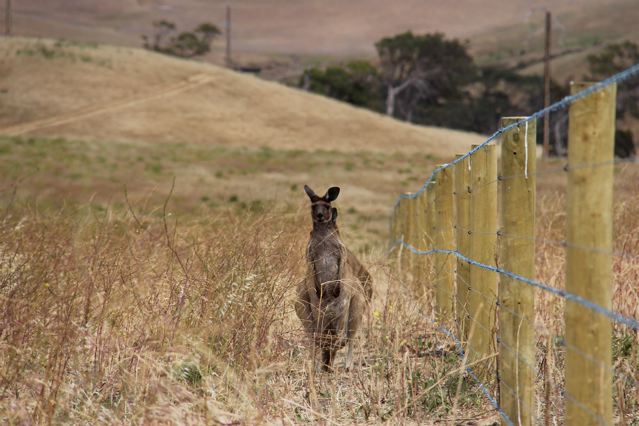
A new fence and a kangaroo. Neither are particularly concerned about each other.

A year or so ago, we celebrated the first phase of fencing on the farm: defining our ‘wilderness zones’ by carving out seven-ish hectares of erosion gully, remnant vegetation and waterlogging for regeneration. We commented at the time at how much a few posts and wire redefines a sense of space. Now we’ve almost completed all of the major fencing for the property. What began as essentially one vast, 20-odd hectare paddock, has now been reshaped into 8 smaller paddocks, together with 3 revegetation zones/habitat corridors. Continue reading

How many swallows make a summer?

Tags

, , , , , , ,

welcomeswallowFlocks of Welcome Swallows (Hirundo neoxena) have been hunting on our farm for months now, spiralling around us as we work, then resting as a group along the fences. They are amazingly acrobatic hunters, plucking insect prey from the air in circles and dives. Apparently, swallows need to eat their own body weight every day to maintain their health. While they weigh only 10 grams, this can mean they can eat up to 400 times a day (approximately every two minutes) to ensure their sprightliness.

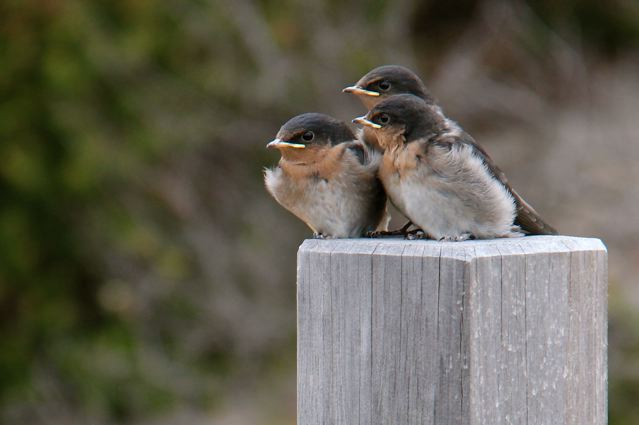
Young welcome swallows huddle together at Seal Bay, Kangaroo Island (October 2014).

Young welcome swallows huddle together at Seal Bay, Kangaroo Island (October 2014).

Over the last month or so, we’ve spotted swallows hunting over the dam on a couple of occasions. They circle, dive and appear to be plucking prey from just below the surface of the water. If they are hunting sub-surface prey, according to birder Jennifer Spry, this is a largely undocumented phenomenon. These photos are a little too indistinct to say for sure, but interesting nonetheless! Continue reading

Small mysteries: A year in bugs

Tags

, , , , , , , ,

As part of our record-keeping, in the almost-two-years since we bought Yarnauwi we’ve tried to document the natural phenomena we observe season by season. At the end of each year, we go back over our journals and add what we’ve discovered to the records of the previous year. Over time, we hope, we’ll get a much more complex understanding of the ecological patterns that occur in our landscape, as well as the changes that may occur as a result of our activities.

Already, in the short time we’ve been on the block, we’ve noted shifts in the populations and presence of certain plants and creatures. While we often overlook insects, when looking back through our photos and notes, we realised that we have actually been observing their more subtle role through the seasons: the sudden chorus of crickets after the opening rains, or the way the grass flickers with grasshoppers in late summer. In their honour, here’s a year in bugs. Representing less than a couple of years of observation, it’s far from authoritative, but perhaps it offers the beginnings of a pattern.

Autumn

IMG_4085

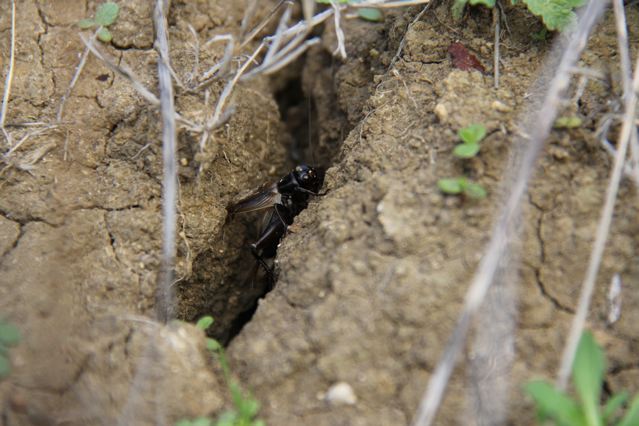
Crickets sing from the cracked soil after the first flush of rains.

IMG_2396

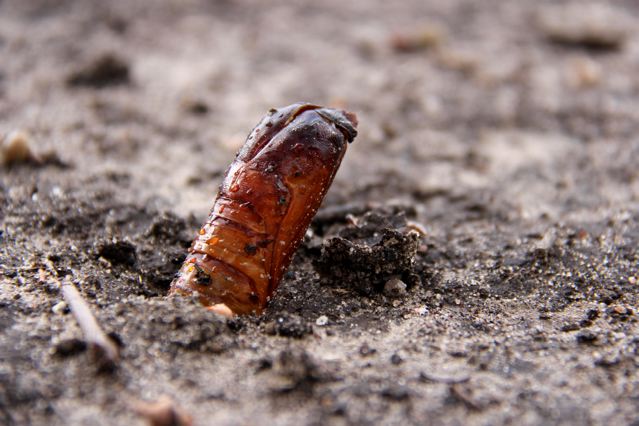
Bardi grubs (Rain moth pupae) emerge from the soil around the River red gums following the first rains.

Continue reading

Fleurieu Seascapes

Tags

, , , , , ,

Sun and rain, Winter 2014

Sun and rain, Winter 2014

Watching the light shift across the hills is one of the great pleasures of being on the South Western Fleurieu, and it’s further enhanced by proximity to the sea. On our journeys around the region, we’re regularly exposed to the changes of light over the ocean as the road hooks coastward at places like Lady Bay or Sellicks, or hiking along the cliffs and coast around Second Valley. Summer offers a starkness to the ocean and sky, but I’ve come to love the way sea and sky diffuse together in the winter. Here’s some of what we’ve seen.

IMG_3916

Continue reading

A moveable sheep shelter

Tags

, , , , , , , , , , ,

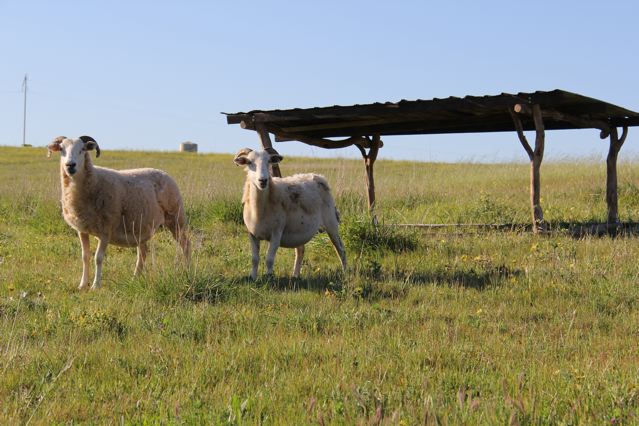
The moveable sheep shelter in fresh pasture.

The moveable sheep shelter in fresh pasture.

While the name Trees, Bees and Cheese might suggest otherwise, one thing we’re short on is trees. So with the arrival of sheep, and now lambs, we’ve tried to get in before summer with a sheep shade-shelter. With our soon-to-be-complete subdivision of the property into smaller paddocks, we thought we’d build a moveable shelter that would allow us to rotate it from paddock to paddock with the flock, rather than building seven or eight smaller structures. Continue reading

Yarnauwi: A Kaurna name for the farm

Tags

, , , , ,


New-KWP-logo_ed200px

In August 2014, Kaurna Warra Pintyanthi granted us the name Yarnauwi to describe the landscape of our farm. We approached Kaurna Warra Pintyanthi, a body of Kaurna people and linguists dedicated to the revival of the Kaurna language, for a property name as a way of acknowledging the enduring connection of the Kaurna nation with the landscape of the South Western Fleurieu.

Bald hills

Continue reading