Tags
art, farm, photography, seasons, southwestern Fleurieu, water
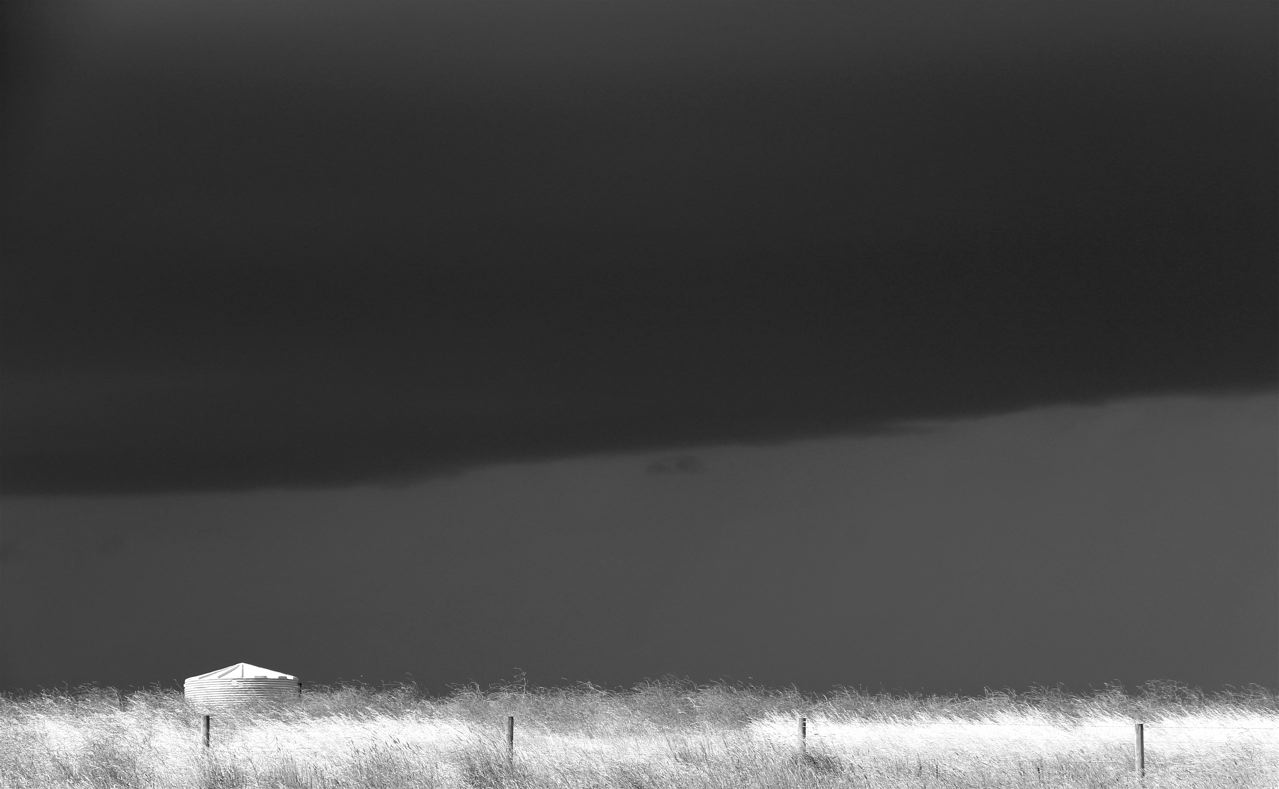
Another thunderstorm passes by.

01 Monday Dec 2014
Posted in art & craft, ecology
Tags
art, farm, photography, seasons, southwestern Fleurieu, water
Another thunderstorm passes by.
23 Sunday Nov 2014
Posted in diy
 Every week or so we empty our stock troughs, sometimes for cleaning, sometimes to shift it into a new paddock or location to prevent the soil getting bared out. As dry springs like this one remind us, water is precious. The dam fills in winter, we pump up to the tanks, then try to gravity feed the stock troughs from spring until the rains come again. When it came to empty the troughs, we tried some judicious bucketing onto nearby seedlings, but that’s long and arduous when you have 450 litres to decant. Continue reading
10 Friday Oct 2014
Tags
birds, ecology, farm, photography, seasons, southwestern Fleurieu, summer, water
 Flocks of Welcome Swallows (Hirundo neoxena) have been hunting on our farm for months now, spiralling around us as we work, then resting as a group along the fences. They are amazingly acrobatic hunters, plucking insect prey from the air in circles and dives. Apparently, swallows need to eat their own body weight every day to maintain their health. While they weigh only 10 grams, this can mean they can eat up to 400 times a day (approximately every two minutes) to ensure their sprightliness.
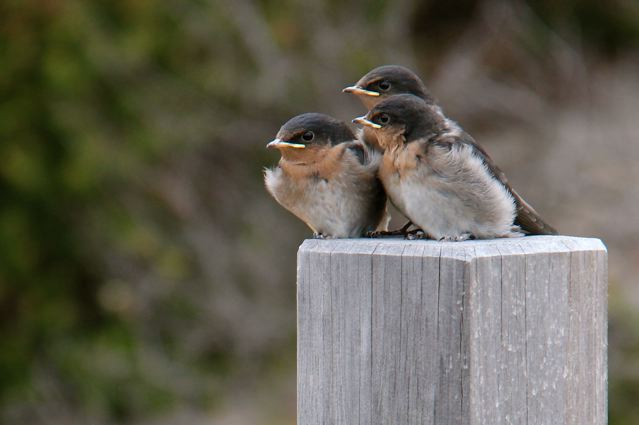
Young welcome swallows huddle together at Seal Bay, Kangaroo Island (October 2014).
Over the last month or so, we’ve spotted swallows hunting over the dam on a couple of occasions. They circle, dive and appear to be plucking prey from just below the surface of the water. If they are hunting sub-surface prey, according to birder Jennifer Spry, this is a largely undocumented phenomenon. These photos are a little too indistinct to say for sure, but interesting nonetheless! Continue reading
25 Thursday Sep 2014
Posted in art & craft, ecology
Tags
art, photography, seasons, southwestern Fleurieu, summer, water, winter

Sun and rain, Winter 2014
Watching the light shift across the hills is one of the great pleasures of being on the South Western Fleurieu, and it’s further enhanced by proximity to the sea. On our journeys around the region, we’re regularly exposed to the changes of light over the ocean as the road hooks coastward at places like Lady Bay or Sellicks, or hiking along the cliffs and coast around Second Valley. Summer offers a starkness to the ocean and sky, but I’ve come to love the way sea and sky diffuse together in the winter. Here’s some of what we’ve seen.

20 Saturday Sep 2014
Posted in events, regeneration

In August 2014, Kaurna Warra Pintyanthi granted us the name Yarnauwi to describe the landscape of our farm. We approached Kaurna Warra Pintyanthi, a body of Kaurna people and linguists dedicated to the revival of the Kaurna language, for a property name as a way of acknowledging the enduring connection of the Kaurna nation with the landscape of the South Western Fleurieu.

23 Wednesday Apr 2014
Posted in ecology
 A couple of months after the central third of our biggest remnant red gum crashed to earth, I climbed into the centre of the fallen limbs to try to remove some timber for erosion control structures. I was surrounded by the faint, constant pattering of distant rain. The tree was rustling, but no wind moved the leaves. I put my ear to the boughs and realised the sound was coming from inside, exhaling as the timber dried and cracks slowly opened in the bark. Meanwhile, in the leaf litter below, the spiders and beetles delight in the thick undergrowth of their new canopy. Continue reading
22 Tuesday Apr 2014
Posted in ecology, planning, regeneration, waterways
Tags
design, ecology, erosion, planning, seasons, soil, southwestern Fleurieu, summer, water, waterways
One of the first interventions we made on the property was trying out some very rough erosion control on this scoured patch on our boundary. Earthworks from recent fencing had disturbed the soil and invited headcuts to form. With help from Pete and Freya, we tentatively set up a couple of lo-fi erosion strategies, informed by the work of Watershed Artisans (formerly Dryland Solutions) and Brad Lancaster, both of whom we’ve gushed about before. We reshaped the main headcut to soften the overflow, and positioned some kind of mutant One Rock Dam/Zuni Bowl at an intersection between two small headcuts – not something I’d do again. We also positioned a One Rock Dam on contour above the entire area in an effort to slow and disperse water flow.

A scoured, erosive patch, December 2012.
22 Tuesday Apr 2014

‘Pipe Dream’: useful for passing time in the late 1980s, not that useful for planning livestock systems.
One of our key milestones in the development of the property this year was the establishment of a watering system for livestock. Having a watering system supports our fencing of the farm dam and waterways for habitat regeneration and also allows us to more intensively manage the movement and impact of livestock through rotational grazing. While we’re still the furthest thing from expert, with the advice and support of our neighbours, we managed to knock together a watering system that works. In researching and developing our own plans, we found an absence of basic information on setting up stock systems, so the ideas below are a few of the things we learnt or found useful in planning a system for our own context and landscape. They are just one perspective in informing your own planning, and shouldn’t be read as an endorsement of any particular way of doing things.
30 Sunday Mar 2014
Posted in ecology, planning, regeneration, waterways
Tags
books, design, ecology, permaculture, planning, revegetation, seasons, soil, southwestern Fleurieu, trees, water, waterways
Brad Lancaster’s books on Rainwater Harvesting would have to be among the most consistently inspiring books we own. Two volumes into his trilogy on Rainwater Harvesting for Drylands and Beyond, Lancaster combines accumulated community wisdom with permaculture principles to produce lavishly illustrated, practical and highly accessible manuals for managing water in urban and rural environments. Consistent with permaculture thinking, Lancaster urges land managers to spend time observing the season patterns of the landscape to more effectively design for sustainable, integrated water management. One method of doing this is to compile a One Page Place Assessment, drawing together essential climatic and ecological information about your particular location.
Our first year has been one of spreadsheets, mapping out our seasonal observations and activities, and the One Page Place Assessment concept is a elegant way of compiling climatic data from Second Valley and the surrounding area. We’ve finally completed the first version of a place assessment for our property, with much of the data drawn from Bureau of Meteorology stations nearby (Myponga Reservoir being the furthest). While we have tailored information to our particular location, we hope it will be of use to other landowners in the region. We have also referenced information sources so others can draw on the same resources in exploring their own area.
You can download our One Page Place Assessment here. Continue reading
19 Wednesday Mar 2014
Tags
bees, books, design, ecology, food, permaculture, planning, revegetation, seeds, soil, trees, water
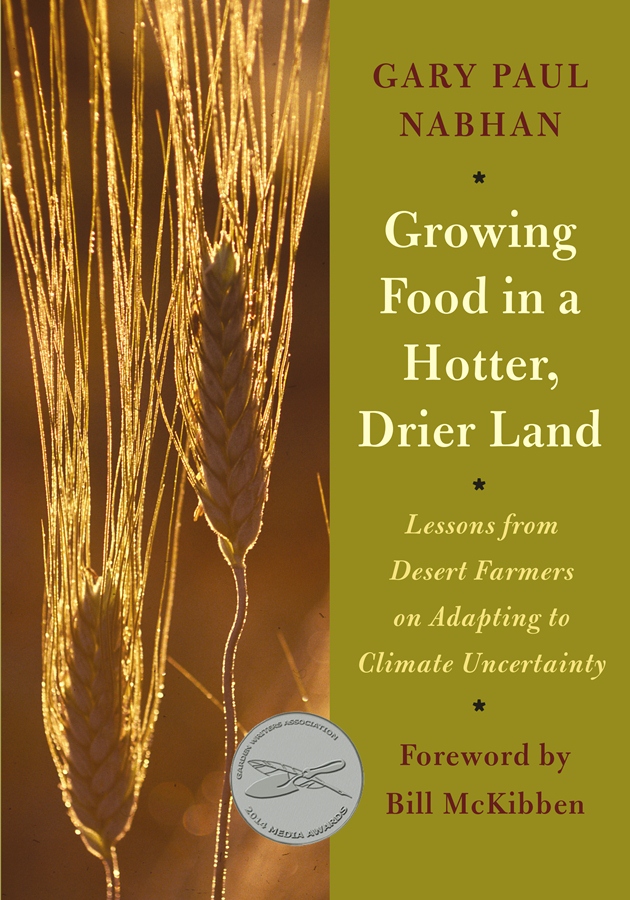 Years before there was talk of locavores and 100-mile-diets and omnivore’s dilemmas, I came upon Gary Nabhan’s book Coming Home to Eat, a personal account of his experiences striving to solely eat food produced in his home bioregion of the US-Mexican borderlands in southern Arizona. His observations as renowned desert ecologist and ethno-botanist redefined how I thought about food and sustainability and accompanied me on my own sustainable food explorations for years after.
I get the feeling that his latest book, Growing Food in a Hotter, Drier Land: Lessons from Desert Farmers on Adapting to Climate Uncertainty (Chelsea Green, 2013), may be another companion for us in our adventures on the farm. While Growing Food is as practical as its title suggests, it is permeated by Nabhan’s respect for the insights of cultures deeply connected to the land, and his belief that communities connected to their bioregion are the most resilient in the face of environmental change. Continue reading
 Yarnauwi Farm