• About
  • Anacotilla: History & Hearsay
  • Junk: A Curated Collection
  • Resources
  • Species List
  • Yarnauwingga and beyond

Yarnauwi Farm

~ Fleurieu Peninsula, South Australia

Yarnauwi Farm

Tag Archives: revegetation

The First Phase of Fencing: Marking Zone 5

17 Tuesday Dec 2013

Posted by Joel in ecology, livestock, planning, regeneration, waterways

≈ 3 Comments

Tags

building, ecology, erosion, fencing, kangaroos, livestock, permaculture, planning, revegetation, trees, waterways, zones
IMG_3241

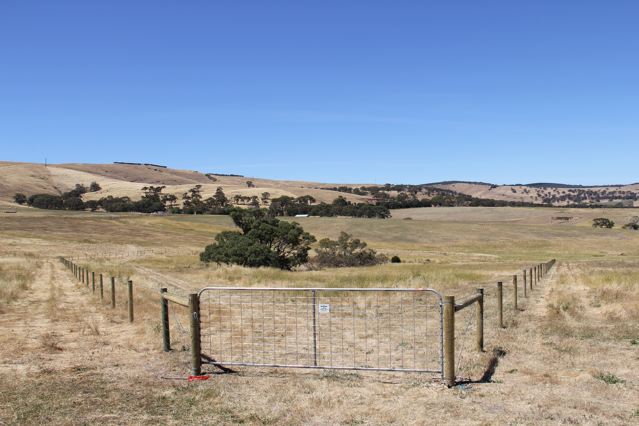
The gate into the top end of the northern revegetation area

While our impact on this landscape has been pretty minimal so far, with the completion of our first phase of fencing, we’ve begun more major infrastructure works. We’ve started by fencing off two big chunks of ground encircling the erosion gullies, surrounding them with a roughly 20-metre buffer zone for future woodland regeneration.

IMG_3231

Neat knots

In a permaculture sense, these patches of ground will be our Zone 5, our minimal-management ‘wilderness’ zones, designed for habitat and ecosystem services such as erosion and salinity control and water filtration. Abutting our western boundary they form a link with the creeks and swamps that feed the Congeratinga River. With these zones now marked onto the landscape we can plan outwards towards zones of increasing management intensity. Continue reading →

Learning the land with ‘The Biggest Estate on Earth’

12 Saturday Oct 2013

Posted by Joel in ecology, regeneration, reviews

≈ 4 Comments

Tags

books, ecology, history, kangaroos, permaculture, revegetation, soil, trees

In The Biggest Estate on Earth (Allen & Unwin, 2011), historian Bill Gammage describes a detailed vision of Aboriginal land management prior to European colonisation of Australia. While many Australians have a broad sense that “fire-stick farming” was (and is) a tool used by Aboriginal people, The Biggest Estate on Earth begins to fathom how finely tuned Aboriginal fire use was. With fire as one of a suite of tools, Aboriginal people across the Australian continent carved the landscape into a mosaic of ecosystems, each harbouring plants and animals of differing sensitivity to fire, each maintained to maximise ecological diversity and each nested within the other to increase the ease of hunting or harvesting. For Gammage, Aboriginal land management across the continent was directed by three main principles: “ensure that all life flourishes; make plants and animals abundant, convenient and predictable”; and to “think universal, act local”. Continue reading →
Our first wet winter

01 Sunday Sep 2013

Posted by Joel in ecology, events, planning, regeneration

≈ 3 Comments

Tags

erosion, events, photography, revegetation, seasons, trees, winter

IMG_2852_2_3

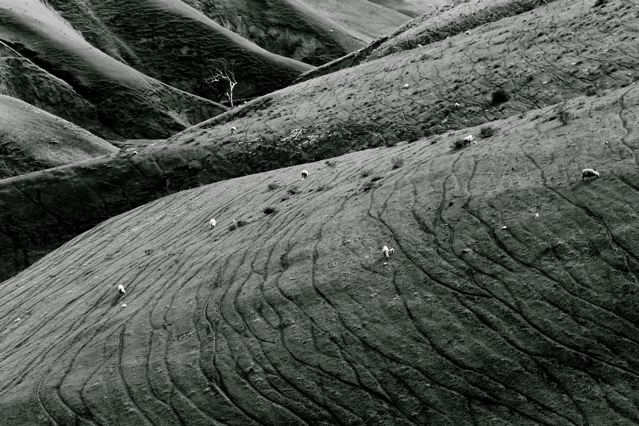
Sheep figuring out the contour, near Sellicks.

I feel like I’ve never really understood winter until this year. When the first rains came, they came hard, revealing slippery, sticky mud and rivulets in unexpected places. The average June rainfall for Second Valley is around 90mm. This year the Bureau of Meteorology recorded over 200mm, and the nearby district of Parawa scored a record-breaking 266mm. Long-dormant erosion gullies were reawoken, creek banks slumped, and everywhere there was the sound of dripping. Now, the days are clearing, the sun has bite and already the kangaroos have joeys in pouch. Here’s some highlights from the wet season. Continue reading →

The trials of tree-planting: ideas for roo-proofing reveg

01 Sunday Sep 2013

Posted by Joel in ecology, planning, regeneration, waterways

≈ 2 Comments

Tags

ecology, erosion, kangaroos, planning, revegetation, seasons, soil, trees, waterways, winter

IMG_2942

Kangaroos: so cute, yet so merciless.

One of winter’s most exciting prospects was the chance to get some trees in the ground. Our strategy for revegetation has been to try to build islands of vegetation in the most vulnerable areas, with the view to expanding them outwards until they connect up. We were aware that the kangaroos would take an interest, but just how much of an interest we were unprepared for.
Continue reading →

After the rain: erosion control after 6 months

11 Tuesday Jun 2013

Posted by Joel in diy, ecology, regeneration, waterways

≈ Leave a comment

Tags

ecology, erosion, kangaroos, revegetation, soil, trees, water, waterways, winter

IMG_2573

A Juncus seed head on one of the ridgelines.

With a landscape scarred with a history of erosion, and soil associations that the CSIRO SoilMapp discusses in the most nervous of tones, we’d been apprehensive about this season’s heavy rains. After two days of constant downpours, the water sat on the surface, filled every hollow and started to run in strange new flow patterns along the most unexpected of ridgelines. Neighbours told us they hadn’t seen rain like that for some years, and that erosion headcuts had been reawakened all through the surrounding valleys.

IMG_2179

IMG_2537

Zephyr Creek before and after: now with less car bodies and more trees!

It was a relief to see that our improvised erosion control strategies (use local materials; slow water flow with rock, fallen timber or mulch; always work on contour; get plants in the ground) had all worked to some degree. Indeed, areas where we had made an intervention, however minor, fared much better than areas without. After the dryness of summer it was unexpectedly thrilling to see water flow, vegetation spring up around the branches we stacked across drainage lines, and most of all, creek banks where we’d removed car bodies didn’t slump and be carried off into the neighbouring paddock.

Continue reading →

Trees, cheese and breeze

10 Monday Jun 2013

Posted by sophie in ecology, regeneration, waterways

≈ Leave a comment

Tags

ecology, erosion, kangaroos, revegetation, trees, waterways

IMG_2532_2

Last weekend we got in the first of (hopefully) many rounds of tree plantings. The ground was soaked after a full two days of rain, the clay soft and pliable, perfect for slipping in the planned 250 trees in several exposed areas of the property where rubbish extraction has opened the now-cleared banks up to more erosion. A team of weather-trusting family and friends came along for the adventure, some planting trees for the first time, others professional tree planters. Continue reading →

The ethics of junk clearing and erosion control

26 Friday Apr 2013

Posted by Joel in diy, regeneration, waterways

≈ 1 Comment

Tags

erosion, permaculture, planning, reuse, revegetation, soil, trees, water, waterways, winter

We’re celebrating the clean-up of what we call Zephyr Creek, after the 1960s Ford that was wedged at the bottom of the gully. Through the work of a local metal removalist, and a bit of time scrabbling in the mud, most of the major rubbish from the creek has been extracted. Inspired by the amazing work on rainwater harvesting and riparian restoration of Brad Lancaster and organisations like the Quivera Coalition, we’ve implemented our own rustic brand of erosion control. It’s not too pretty, but it is inexpensive (free, in fact) to build and maintain, uses available resources and is easy to alter depending on its effectiveness.

IMG_2179IMG_2247IMG_2400– Going, going, gone!

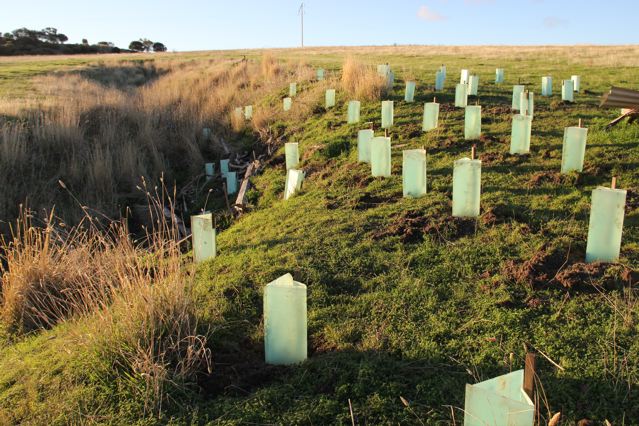
After clearing the rubbish from the creek, we used an A-Frame to measure and mark the contours at two points in the steep bank. We hammered stakes at regular intervals, then built up leaky terraces using scrap construction timber from the gully itself and fallen tree branches. Some of the loose soil promptly settled behind the barriers, and in a few weeks will be planted out with indigenous plants to further stabilise the area.

Continue reading →

The first golden summer

02 Saturday Mar 2013

Posted by Joel in diy, planning, regeneration

≈ 2 Comments

Tags

ecology, events, kangaroos, photography, planning, recycling, revegetation, seeds, soil, summer, trees, waste

Another hot dawn breaks

Another hot dawn breaks

While the sun still has some sting left in it, we’ve now completed our first official summer working with the block. When we settled the contract in late November, we began drafting a phased plan for actions to take over the 2012/13 period and beyond. We intended the first year (at least) to be primarily a process of observing and auditing the property, learning what we can about what is here, what has been and what is possible.

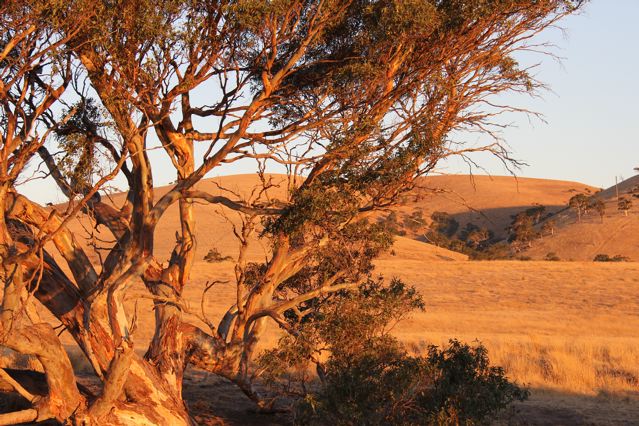
Golden afternoon light on the big red gum and the hills beyond

Golden afternoon light on the big red gum and the hills beyond

Continue reading →

Junk mining: one tonne gone…

17 Sunday Feb 2013

Posted by Joel in diy, regeneration, waterways

≈ 4 Comments

Tags

ecology, erosion, recycling, reuse, revegetation, soil, waste, water, waterways

If anyone asks, we're "agisting ponies". This terrifying rocking horse oversees one of the rubbish piles.

If anyone asks, we’re “agisting ponies”. This terrifying rocking horse oversees one of the rubbish piles.

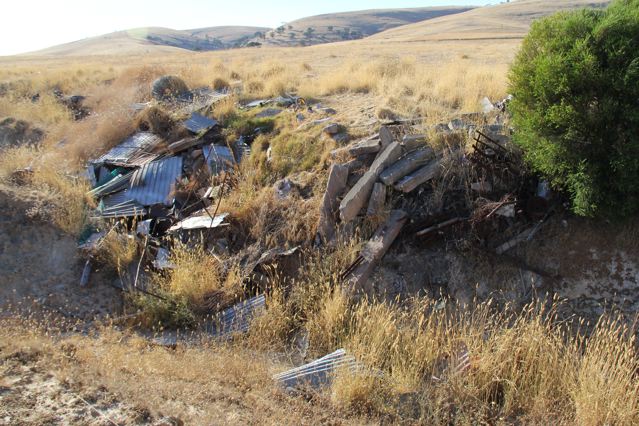
As we’ve noted in our curated collection of farm-found rubbish, the largely idyllic setting of the property masks a narrow badland of erosion gullies repopulated with human trash. It’s bizarre sifting through it, a process of contemporary archaeology that often strays towards the forensic as we imagine the human story behind the array of objects gradually becoming swallowed beneath sediment and phalaris grass.

Work in progress (17/2/12)

Work in progress (17/2/12).

One of our missions is to clear the large rubbish from the gullies, increasing their habitat value and allowing us to more effectively address erosion and revegetation, while also allowing for the reuse and recycling of the accumulated items. On a blazing February morning, we helped a local scrap dealer begin to extract recyclable metal from one of the most dramatically eroded gullies. In an hour and a half we had well over a tonne of metal, in the form of a deep freeze (packed with coral, rainbow-coloured aquarium stones and empty tins of bourbon and cola), two washing machines, an electric oven and stove, a motorbike, three BMX bikes, an exercise bike, venetian blinds, chook wire, corrugated iron, steel tubing, downpipes, engine parts, metal drums, wheel rims and homemade farm machinery. Continue reading →

Sheoak Geometry

18 Friday Jan 2013

Posted by Joel in art & craft, diy

≈ Leave a comment

Tags

art, design, downloads, ecology, erosion, revegetation, seeds, trees

SheoakPodThe Drooping Sheoak (Allocasuarina verticillata) is a cracker of a tree and is quickly becoming one of our favourites. It produces the favoured cone for nibbling by the iconic black cockatoo, its prodigious needle dropping is excellent for protecting the soil and contributing to erosion control. The name Sheoak was apparently once ‘Shee-oak’, the ‘Shee’ referring to the sound of the wind blowing through a sheoak grove. The oak of the name refers to the tree’s fine-grained timber, making it excellent for turning. According to Primary Industries and Resources SA, the sheoak is also the “Rolls Royce” of firewoods, burning hot and leaving little ash. We also love it because of its generosity with seed and its ready germination.

Drooping sheoak pods releasing their winged seed.

Drooping sheoak pods releasing their winged seed.

In the delirium of seed collection, I started sketching sheoak cones, a process that has now evolved into the designs below. I’ve tried to reference the colours of both the developing cones and the distinctive grey-green foliage in these designs. Perhaps one day they’ll evolve into textile or wallpaper prints, but for now, they’re available for free download below as iPad and iPhone wallpapers. Let me know which one you like best!

sheoakpatterns Continue reading →

← Older posts
Newer posts →

Yarnauwi on Etsy

Enter your email address to follow this blog and receive notifications of new posts by email.

Join 223 other subscribers

What We’re Writing About

alpacas annual report art art and craft bees before and after birds books building cheese climate change craft damara design downloads ecology embroidery erosion etsy events farm fencing fire Fleurieu Fleurieu Coast Fleurieu Peninsula food fungi future hack hiking history illustration insects kangaroos leather leathercraft linoprint livestock logo nursery permaculture photography picnics planning plants Plastic-free July printing propagation rain recycling regeneration regenerative agriculture reuse revegetation sea seasons seeds shed sheep sheepskins shop soil southwestern Fleurieu stiles summer textiles tractor trees ute waste water waterways winter zones

Meta

  • Create account
  • Log in
  • Entries feed
  • Comments feed
  • WordPress.com

Blog at WordPress.com.

  • Subscribe Subscribed
    • Yarnauwi Farm
    • Join 223 other subscribers
    • Already have a WordPress.com account? Log in now.
    • Yarnauwi Farm
    • Subscribe Subscribed
    • Sign up
    • Log in
    • Report this content
    • View site in Reader
    • Manage subscriptions
    • Collapse this bar
 

Loading Comments...