• About
  • Anacotilla: History & Hearsay
  • Junk: A Curated Collection
  • Resources
  • Species List
  • Yarnauwingga and beyond

Yarnauwi Farm

~ Fleurieu Peninsula, South Australia

Yarnauwi Farm

Tag Archives: livestock

Fencing Phase 2: Rotational Grazing and Zoning

06 Thursday Nov 2014

Posted by Joel in livestock, planning, regeneration

≈ 3 Comments

Tags

design, farm, fencing, kangaroos, livestock, permaculture, planning, revegetation, sheep, southwestern Fleurieu, zones

IMG_5287_2

A new fence and a kangaroo. Neither are particularly concerned about each other.

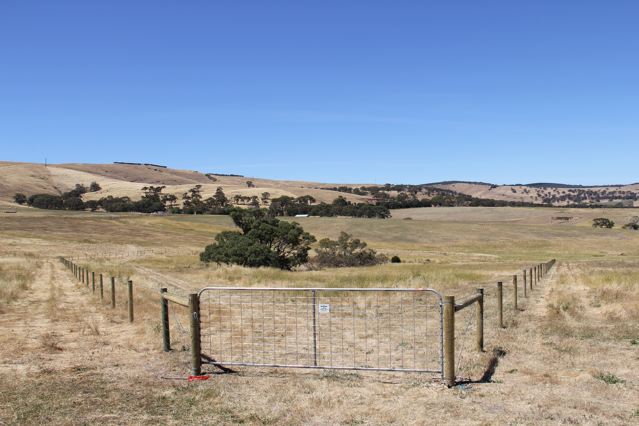
A year or so ago, we celebrated the first phase of fencing on the farm: defining our ‘wilderness zones’ by carving out seven-ish hectares of erosion gully, remnant vegetation and waterlogging for regeneration. We commented at the time at how much a few posts and wire redefines a sense of space. Now we’ve almost completed all of the major fencing for the property. What began as essentially one vast, 20-odd hectare paddock, has now been reshaped into 8 smaller paddocks, together with 3 revegetation zones/habitat corridors. Continue reading →

A moveable sheep shelter

22 Monday Sep 2014

Posted by Joel in diy, livestock, planning, trees

≈ 2 Comments

Tags

building, design, farm, fencing, hack, livestock, recycling, reuse, sheep, southwestern Fleurieu, summer, trees

The moveable sheep shelter in fresh pasture.

The moveable sheep shelter in fresh pasture.

While the name Trees, Bees and Cheese might suggest otherwise, one thing we’re short on is trees. So with the arrival of sheep, and now lambs, we’ve tried to get in before summer with a sheep shade-shelter. With our soon-to-be-complete subdivision of the property into smaller paddocks, we thought we’d build a moveable shelter that would allow us to rotate it from paddock to paddock with the flock, rather than building seven or eight smaller structures. Continue reading →

Sheep update: It’s a girl!

10 Wednesday Sep 2014

Posted by Joel in food, livestock

≈ Leave a comment

Tags

farm, food, livestock, sheep, southwestern Fleurieu

The new lamb takes a kip in the grass.

Taking a kip.

With the last blast of winter, our small flock has had its first new birth. Both ewe and lamb are healthy, with the mother appropriately protective of her new charge, huffing and hoof-stomping whenever we wander too close and carefully keeping apart from the flock. Continue reading →

New Flock on the Block

27 Wednesday Aug 2014

Posted by Joel in livestock

≈ 3 Comments

Tags

alpacas, farm, fencing, kangaroos, livestock, planning, sheep, southwestern Fleurieu

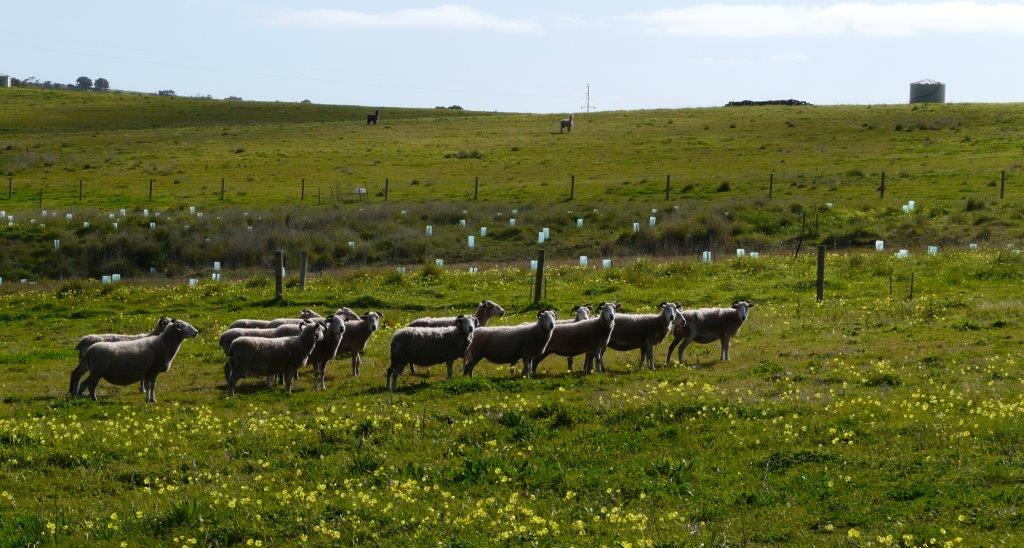
The new flock of Wiltshire Horns, watched from afar by the alpacas.

The new flock of Wiltshire Horns, watched from afar by the alpacas.

Just as the last rays of sunlight slipped below the cliffs, Asher and I arrived at the block with the final trailer-load of livestock. It had been a massive day of zig-zagging across the southern Fleurieu, transporting our small flock of Wiltshire Horn sheep and alpacas from Hindmarsh Valley to the farm. Driving along Range Road in the late afternoon light, we did our best to not think of the wedge-tailed eagles picking over the lambs as some kind of omen. Continue reading →

Propagating Oaks 1: Germination

02 Wednesday Jul 2014

Posted by Joel in diy, livestock, planning, propagation, trees

≈ Leave a comment

Tags

food, livestock, nursery, permaculture, planning, propagation, seeds, trees, winter

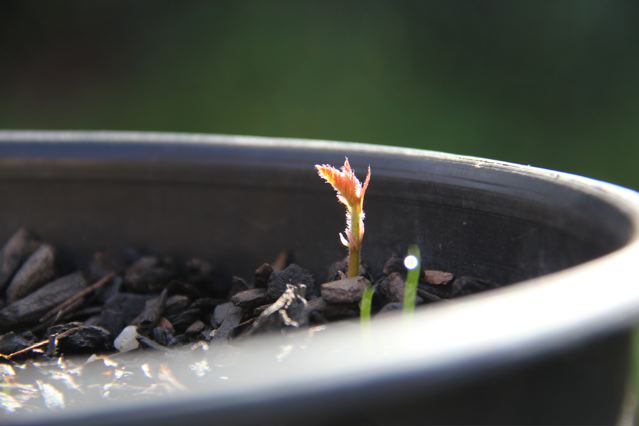
An English oak seedling (Quercus robur) reachers towards the winter sun.

An English oak seedling (Quercus robur) reaches towards the winter sun.

Back in autumn, we gathered freshly fallen acorns from the base of a row of massive old English oaks (Quercus robur). Inspired by the dehesa agroforestry systems of Spain and Portugal, we’ve often pondered how a livestock-grazed oak plantation could work on the property. Acorns for pigs, and perhaps even human consumption, timber for the use of our great-great-grandchildren, and in the meantime, a carpet of fallen leaves offering organic matter for composting and mulch. So, with some bags of acorns and few containers of the topsoil and leaf litter from around the parent oaks, we set to propagating them.

We mixed the leaf litter and gathered topsoil in with our potting medium, hoping to inoculate our own medium with beneficial fungi, and then planted the acorns. We planted some close to the surface, and others about an acorn-width deep. After about eight weeks of being kept damp and left in the late autumn-early winter sun, they began sending their first shoots upwards, red furry things with a cluster of jagged leaves at the top. The depth of the acorn doesn’t seem to have had any bearing on their readiness to propagate. Once they’ve all emerged and are about 8-10 cm tall, we’ll carefully thin them, planting out excess strong specimens to their own pots until we have one decent plant per pot.
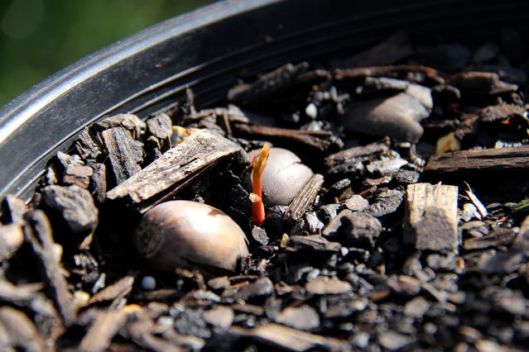
Grow little seedling, grow!

Grow little seedling, grow!

Uses for tyres: livestock shelters

24 Thursday Apr 2014

Posted by Joel in diy, livestock, planning

≈ 2 Comments

Tags

building, design, livestock, permaculture, planning, recycling, reuse, southwestern Fleurieu, waste

IMG_3345

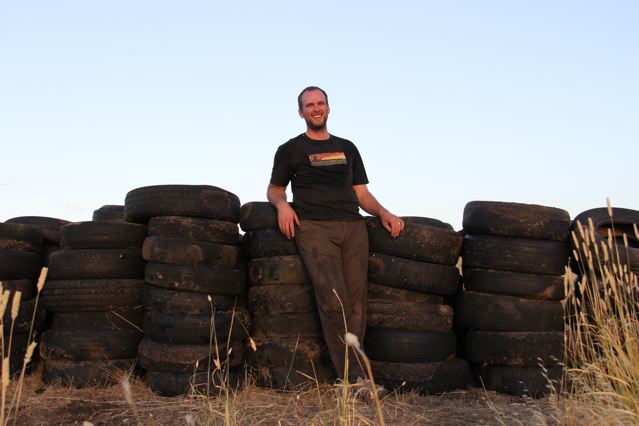
Pete, lifter of heavy things, Employee of the Month

Earlier in the year, our friend Pete decided that the time was right to haul the last clump of tyres from Zephyr Creek. It was about 8 o’clock at night, and after a cursory glance, he predicted that there “couldn’t be more than 30 or 40 in there.” Almost 200 tyres later, Pete had earnt his “Employee of the Month” status, and with assistance from Will, had built a respectable tyre mound on the edge of the creek. Thanks. I think.

IMG_3965

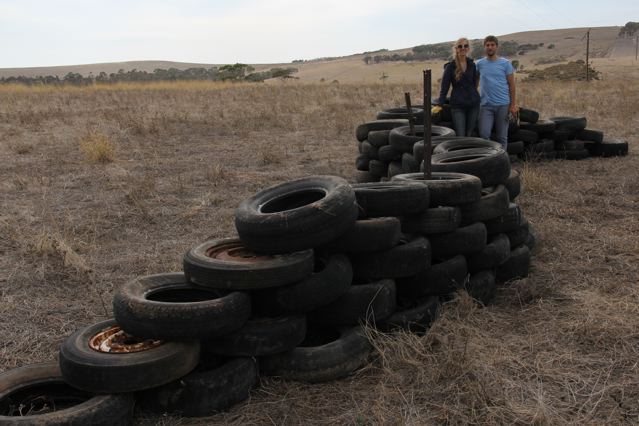
The elegant, sinuous form of a tyre sheep shelter, modelled by tyrechitects Abi and Shane.

The patch buried under tyres is slated for revegetation this winter, so we couldn’t leave the tyres there indefinitely, nor could we afford their disposal fees, nor could we find any earthship or go-kart track builders interested in taking them off our hands. So after pondering them for a while, we settled on Option E: using them to construct sheep shelters. Continue reading →

Pipe Dreams: How to set up a watering system for stock

22 Tuesday Apr 2014

Posted by Joel in diy, livestock, planning, waterways

≈ 2 Comments

Tags

building, design, livestock, planning, seasons, southwestern Fleurieu, summer, water, winter

‘Pipe Dream’: useful for passing time in the late 1980s, not that useful for planning livestock systems.

One of our key milestones in the development of the property this year was the establishment of a watering system for livestock. Having a watering system supports our fencing of the farm dam and waterways for habitat regeneration and also allows us to more intensively manage the movement and impact of livestock through rotational grazing. While we’re still the furthest thing from expert, with the advice and support of our neighbours, we managed to knock together a watering system that works. In researching and developing our own plans, we found an absence of basic information on setting up stock systems, so the ideas below are a few of the things we learnt or found useful in planning a system for our own context and landscape. They are just one perspective in informing your own planning, and shouldn’t be read as an endorsement of any particular way of doing things.

Continue reading →

Been & Gone: The Hive Takes Flight

19 Sunday Jan 2014

Posted by Joel in livestock

≈ Leave a comment

Tags

bees, food, livestock, revegetation, summer

A couple of weeks ago, we checked the hive and all seemed well. We found the queen, the bees were busy and on opening the hive there was the seductive scent of honey. The colony had spent weeks drawing out the honeycomb on the hive frames, and seemed to be just beginning to lay a good pattern of brood (young).

IMG_3250

Spot the queen

There were a few ants that seemed to be making a nuisance of themselves. The bees would try to expel them from the hive, while the ants would cling on to their legs and wings pulling them off-balance. After a little research, we thought we’d apply cinnamon, a widely recommended treatment for ant problems. The bees were irritated by it, and the ants unmoved. Next, we constructed a hive stand with the intention of putting the legs in tins of oil as a physical barrier for the ants, but unfortunately for us, it was too late. Continue reading →

The First Phase of Fencing: Marking Zone 5

17 Tuesday Dec 2013

Posted by Joel in ecology, livestock, planning, regeneration, waterways

≈ 3 Comments

Tags

building, ecology, erosion, fencing, kangaroos, livestock, permaculture, planning, revegetation, trees, waterways, zones

IMG_3241

The gate into the top end of the northern revegetation area

While our impact on this landscape has been pretty minimal so far, with the completion of our first phase of fencing, we’ve begun more major infrastructure works. We’ve started by fencing off two big chunks of ground encircling the erosion gullies, surrounding them with a roughly 20-metre buffer zone for future woodland regeneration.

IMG_3231

Neat knots

In a permaculture sense, these patches of ground will be our Zone 5, our minimal-management ‘wilderness’ zones, designed for habitat and ecosystem services such as erosion and salinity control and water filtration. Abutting our western boundary they form a link with the creeks and swamps that feed the Congeratinga River. With these zones now marked onto the landscape we can plan outwards towards zones of increasing management intensity. Continue reading →

The Bee House

03 Sunday Nov 2013

Posted by Joel in diy, livestock

≈ 7 Comments

Tags

bees, building, design, livestock, permaculture, recycling, reuse, seasons, trees, water

DPP_0004_2When we first dug the post holes for the bee house, it was winter. It was a clear, sunny day, but only 30cm underground it was a river. Now, the soil has hardened again and already cracks are forming where the sun has touched between the tussocks. It is the time of insects: the long grass shimmers with the darting of grasshoppers and butterflies, the red gums are awash with ants and centipedes uncurl in dark, hidden places. It’s a good time to introduce our first livestock – bees – and to finally complete their shelter: the Bee House. Continue reading →

Newer posts →

Yarnauwi on Etsy

Enter your email address to follow this blog and receive notifications of new posts by email.

Join 223 other subscribers

What We’re Writing About

alpacas annual report art art and craft bees before and after birds books building cheese climate change craft damara design downloads ecology embroidery erosion etsy events farm fencing fire Fleurieu Fleurieu Coast Fleurieu Peninsula food fungi future hack hiking history illustration insects kangaroos leather leathercraft linoprint livestock logo nursery permaculture photography picnics planning Plastic-free July printing propagation rain recipes recycling regeneration regenerative agriculture reuse revegetation sea seasons seeds shed sheep sheepskins shop soil southwestern Fleurieu summer textiles tour tractor trees ute waste water waterways winter zones

Meta

  • Create account
  • Log in
  • Entries feed
  • Comments feed
  • WordPress.com

Blog at WordPress.com.

  • Subscribe Subscribed
    • Yarnauwi Farm
    • Join 223 other subscribers
    • Already have a WordPress.com account? Log in now.
    • Yarnauwi Farm
    • Subscribe Subscribed
    • Sign up
    • Log in
    • Report this content
    • View site in Reader
    • Manage subscriptions
    • Collapse this bar
 

Loading Comments...