
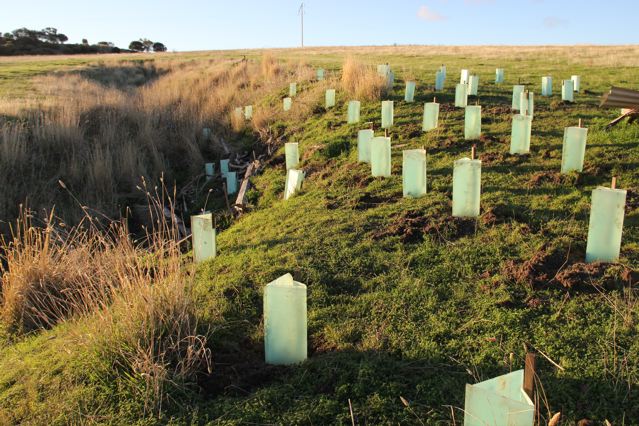
 November marks one year since we began our relationship with this patch of soil, grass and rusty car parts. If the permaculture imperative is to obtain a yield, then the yields of this first year have been largely intangible, but no less real. It has been a year of observing and learning about the land, ourselves and what we can do here. I remember emotions I was feeling about this project a year ago, and I think my terror has been mostly balanced by a sense of calm. Where 12 months ago I was overwhelmed by the scale of our ignorance, now, our ignorance is still largely intact, but I’m more confident in our collective abilities as a family, nested within a community, to unravel the challenges we face. Continue reading
A Year on the Block
27 Wednesday Nov 2013
Posted in ecology, planning, regeneration
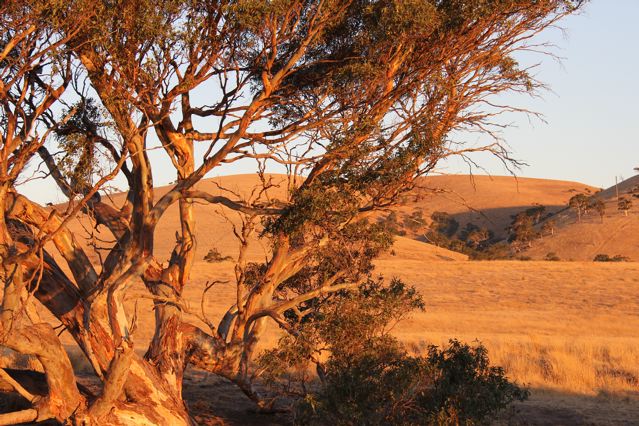
 In The Biggest Estate on Earth (Allen & Unwin, 2011), historian Bill Gammage describes a detailed vision of Aboriginal land management prior to European colonisation of Australia. While many Australians have a broad sense that “fire-stick farming” was (and is) a tool used by Aboriginal people, The Biggest Estate on Earth begins to fathom how finely tuned Aboriginal fire use was. With fire as one of a suite of tools, Aboriginal people across the Australian continent carved the landscape into a mosaic of ecosystems, each harbouring plants and animals of differing sensitivity to fire, each maintained to maximise ecological diversity and each nested within the other to increase the ease of hunting or harvesting. For Gammage, Aboriginal land management across the continent was directed by three main principles: “ensure that all life flourishes; make plants and animals abundant, convenient and predictable”; and to “think universal, act local”.






 Yarnauwi Farm