• About
  • Anacotilla: History & Hearsay
  • Junk: A Curated Collection
  • Resources
  • Species List
  • Yarnauwingga and beyond

Yarnauwi Farm

~ Fleurieu Peninsula, South Australia

Yarnauwi Farm

Tag Archives: erosion

Erosion control: 15 months on

22 Tuesday Apr 2014

Posted by Joel in ecology, planning, regeneration, waterways

≈ Leave a comment

Tags

design, ecology, erosion, planning, seasons, soil, southwestern Fleurieu, summer, water, waterways

One of the first interventions we made on the property was trying out some very rough erosion control on this scoured patch on our boundary. Earthworks from recent fencing had disturbed the soil and invited headcuts to form. With help from Pete and Freya, we tentatively set up a couple of lo-fi erosion strategies, informed by the work of Watershed Artisans (formerly Dryland Solutions) and Brad Lancaster, both of whom we’ve gushed about before. We reshaped the main headcut to soften the overflow, and positioned some kind of mutant One Rock Dam/Zuni Bowl at an intersection between two small headcuts – not something I’d do again. We also positioned a One Rock Dam on contour above the entire area in an effort to slow and disperse water flow.

IMG_1970

A scoured, erosive patch, December 2012.

Continue reading →

Travels in Inter-Tussock Space: Planning for Woodland

10 Monday Mar 2014

Posted by Joel in ecology, planning, regeneration

≈ 3 Comments

Tags

design, ecology, erosion, kangaroos, permaculture, planning, revegetation, seeds, soil, southwestern Fleurieu, trees, waterways, zones

We’ve seeded our last 150 tubes in preparation for planting in a few months time. When the rains come, we’ll have over 1000 plants ready to go. Most are destined for the regeneration areas we’ve fenced around the waterways, but a few others are non-indigenous livestock fodder plants, timber trees and food plants we’ve raised from seed and cuttings to begin developing other zones around the farm.

IMG_3579

It’s a Pink Gum Woodland, it just doesn’t know it yet.

Late in 2013, along with a posy of other plant nerds, we attended a workshop with botanist Ann Prescott (author of It’s Blue with Five Petals) to explore ideas behind revegetation for habitat. We walked through remnant woodland in the hills above Yankalilla, and tried to imagine how our farm might have looked 180 years ago. Continue reading →

Clearing the Junk (aka. Ute-based Art)

19 Sunday Jan 2014

Posted by Joel in art & craft, regeneration, waterways

≈ Leave a comment

Tags

art, erosion, history, recycling, reuse, ute, waste, waterways

IMG_3569_2

“Tangents in the landscape” (detail), 2014, mixed media installation, fencing wire, ratchet straps and Holden Rodeo ute

A day spent hauling junk out of gullies can put you in a philosophical mood. When we first purchased this property, we were drawn to the erosion gullies filled with generations of farm rubbish with a kind-of masochistic fascination. After a year of hauling, stacking and shunting loads to the dump or recycling depot, today we loaded up our ute with the final bundles of unruly and ancient fencing wire.

IMG_3413

Bye-bye horror horse!

The most recent round of dump trips has also been momentous in that it finally marks the banishment of a terrifying, rusted and threadbare rocking horse from the property. The horror horse, wedged between rusted 44-gallon drums stuffed with irrigation pipe and topped with a decaying mattress, formed one in a series of mobile art installations mounted on the back of the ute, displayed for a brief, one-time-only journey between our block and the Yankalilla dump. A number of more conceptual, minimalist pieces followed shortly after, composed of snarls of fencing wire of assorted vintage. Continue reading →

The First Phase of Fencing: Marking Zone 5

17 Tuesday Dec 2013

Posted by Joel in ecology, livestock, planning, regeneration, waterways

≈ 3 Comments

Tags

building, ecology, erosion, fencing, kangaroos, livestock, permaculture, planning, revegetation, trees, waterways, zones

IMG_3241

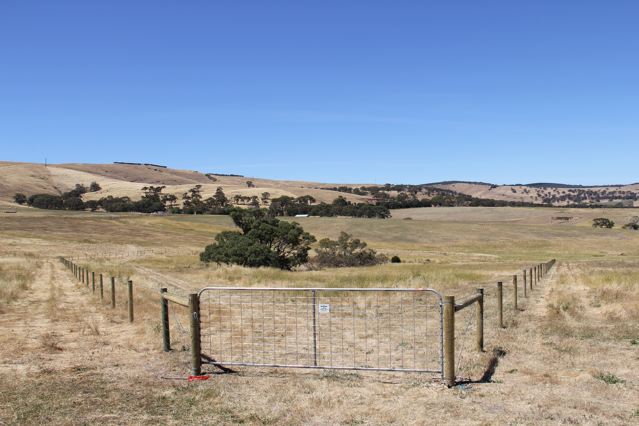
The gate into the top end of the northern revegetation area

While our impact on this landscape has been pretty minimal so far, with the completion of our first phase of fencing, we’ve begun more major infrastructure works. We’ve started by fencing off two big chunks of ground encircling the erosion gullies, surrounding them with a roughly 20-metre buffer zone for future woodland regeneration.

IMG_3231

Neat knots

In a permaculture sense, these patches of ground will be our Zone 5, our minimal-management ‘wilderness’ zones, designed for habitat and ecosystem services such as erosion and salinity control and water filtration. Abutting our western boundary they form a link with the creeks and swamps that feed the Congeratinga River. With these zones now marked onto the landscape we can plan outwards towards zones of increasing management intensity. Continue reading →

A Year on the Block

27 Wednesday Nov 2013

Posted by Joel in ecology, planning, regeneration

≈ 2 Comments

Tags

bees, design, ecology, erosion, history, kangaroos, permaculture, planning, seasons

TBC2013November marks one year since we began our relationship with this patch of soil, grass and rusty car parts. If the permaculture imperative is to obtain a yield, then the yields of this first year have been largely intangible, but no less real. It has been a year of observing and learning about the land, ourselves and what we can do here. I remember emotions I was feeling about this project a year ago, and I think my terror has been mostly balanced by a sense of calm. Where 12 months ago I was overwhelmed by the scale of our ignorance, now, our ignorance is still largely intact, but I’m more confident in our collective abilities as a family, nested within a community, to unravel the challenges we face. Continue reading →

Our first wet winter

01 Sunday Sep 2013

Posted by Joel in ecology, events, planning, regeneration

≈ 3 Comments

Tags

erosion, events, photography, revegetation, seasons, trees, winter

IMG_2852_2_3

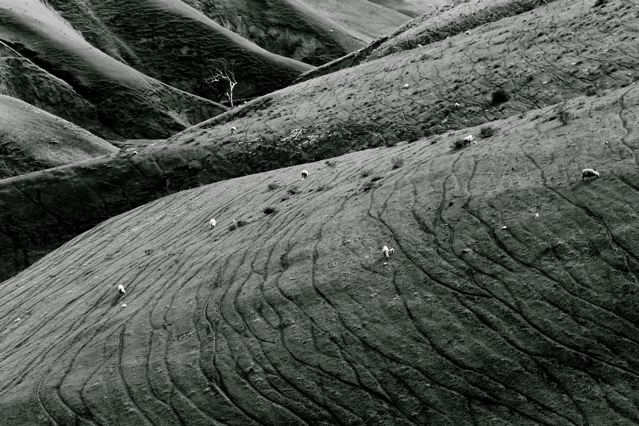
Sheep figuring out the contour, near Sellicks.

I feel like I’ve never really understood winter until this year. When the first rains came, they came hard, revealing slippery, sticky mud and rivulets in unexpected places. The average June rainfall for Second Valley is around 90mm. This year the Bureau of Meteorology recorded over 200mm, and the nearby district of Parawa scored a record-breaking 266mm. Long-dormant erosion gullies were reawoken, creek banks slumped, and everywhere there was the sound of dripping. Now, the days are clearing, the sun has bite and already the kangaroos have joeys in pouch. Here’s some highlights from the wet season. Continue reading →

The trials of tree-planting: ideas for roo-proofing reveg

01 Sunday Sep 2013

Posted by Joel in ecology, planning, regeneration, waterways

≈ 2 Comments

Tags

ecology, erosion, kangaroos, planning, revegetation, seasons, soil, trees, waterways, winter

IMG_2942

Kangaroos: so cute, yet so merciless.

One of winter’s most exciting prospects was the chance to get some trees in the ground. Our strategy for revegetation has been to try to build islands of vegetation in the most vulnerable areas, with the view to expanding them outwards until they connect up. We were aware that the kangaroos would take an interest, but just how much of an interest we were unprepared for.
Continue reading →

After the rain: erosion control after 6 months

11 Tuesday Jun 2013

Posted by Joel in diy, ecology, regeneration, waterways

≈ Leave a comment

Tags

ecology, erosion, kangaroos, revegetation, soil, trees, water, waterways, winter

IMG_2573

A Juncus seed head on one of the ridgelines.

With a landscape scarred with a history of erosion, and soil associations that the CSIRO SoilMapp discusses in the most nervous of tones, we’d been apprehensive about this season’s heavy rains. After two days of constant downpours, the water sat on the surface, filled every hollow and started to run in strange new flow patterns along the most unexpected of ridgelines. Neighbours told us they hadn’t seen rain like that for some years, and that erosion headcuts had been reawakened all through the surrounding valleys.

IMG_2179

IMG_2537

Zephyr Creek before and after: now with less car bodies and more trees!

It was a relief to see that our improvised erosion control strategies (use local materials; slow water flow with rock, fallen timber or mulch; always work on contour; get plants in the ground) had all worked to some degree. Indeed, areas where we had made an intervention, however minor, fared much better than areas without. After the dryness of summer it was unexpectedly thrilling to see water flow, vegetation spring up around the branches we stacked across drainage lines, and most of all, creek banks where we’d removed car bodies didn’t slump and be carried off into the neighbouring paddock.

Continue reading →

Trees, cheese and breeze

10 Monday Jun 2013

Posted by sophie in ecology, regeneration, waterways

≈ Leave a comment

Tags

ecology, erosion, kangaroos, revegetation, trees, waterways

IMG_2532_2

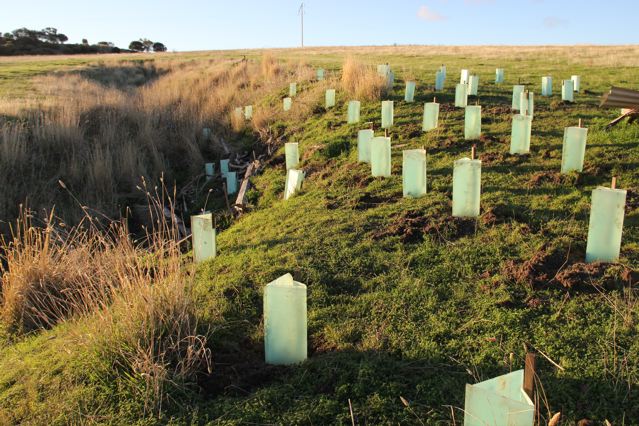
Last weekend we got in the first of (hopefully) many rounds of tree plantings. The ground was soaked after a full two days of rain, the clay soft and pliable, perfect for slipping in the planned 250 trees in several exposed areas of the property where rubbish extraction has opened the now-cleared banks up to more erosion. A team of weather-trusting family and friends came along for the adventure, some planting trees for the first time, others professional tree planters. Continue reading →

The ethics of junk clearing and erosion control

26 Friday Apr 2013

Posted by Joel in diy, regeneration, waterways

≈ 1 Comment

Tags

erosion, permaculture, planning, reuse, revegetation, soil, trees, water, waterways, winter

We’re celebrating the clean-up of what we call Zephyr Creek, after the 1960s Ford that was wedged at the bottom of the gully. Through the work of a local metal removalist, and a bit of time scrabbling in the mud, most of the major rubbish from the creek has been extracted. Inspired by the amazing work on rainwater harvesting and riparian restoration of Brad Lancaster and organisations like the Quivera Coalition, we’ve implemented our own rustic brand of erosion control. It’s not too pretty, but it is inexpensive (free, in fact) to build and maintain, uses available resources and is easy to alter depending on its effectiveness.

IMG_2179IMG_2247IMG_2400– Going, going, gone!

After clearing the rubbish from the creek, we used an A-Frame to measure and mark the contours at two points in the steep bank. We hammered stakes at regular intervals, then built up leaky terraces using scrap construction timber from the gully itself and fallen tree branches. Some of the loose soil promptly settled behind the barriers, and in a few weeks will be planted out with indigenous plants to further stabilise the area.

Continue reading →

← Older posts
Newer posts →

Yarnauwi on Etsy

Enter your email address to follow this blog and receive notifications of new posts by email.

Join 223 other subscribers

What We’re Writing About

alpacas annual report art art and craft bees before and after birds books building cheese climate change craft damara design downloads ecology embroidery erosion etsy events farm fencing fire Fleurieu Fleurieu Coast Fleurieu Peninsula food fungi future hack hiking history illustration insects kangaroos leather leathercraft linoprint livestock logo nursery permaculture photography picnics planning plants Plastic-free July printing propagation rain recycling regeneration regenerative agriculture reuse revegetation sea seasons seeds shed sheep sheepskins shop soil southwestern Fleurieu stiles summer textiles tractor trees ute waste water waterways winter zones

Meta

  • Create account
  • Log in
  • Entries feed
  • Comments feed
  • WordPress.com

Blog at WordPress.com.

  • Subscribe Subscribed
    • Yarnauwi Farm
    • Join 223 other subscribers
    • Already have a WordPress.com account? Log in now.
    • Yarnauwi Farm
    • Subscribe Subscribed
    • Sign up
    • Log in
    • Report this content
    • View site in Reader
    • Manage subscriptions
    • Collapse this bar
 

Loading Comments...