
 Our experience and vision for Yarnauwi has always sat in a tension between the wild and the cultivated. On one hand, we’re seeking to restore habitat long altered, while on the other, we’re determined to cultivate food, through both livestock and horticulture. It’s hard to say if one holds priority over the other, and, at risk of lurching into cliche, we try to ‘listen to the land’. Connor Stedman’s Essay on Soil in the 2015 Greenhorns’ New Farmer’s Almanac offers ideas that resonated with us, writing that to know how to be a steward of a landscape, “…it’s not enough to know the land as it is now. We need to dig below the recent surface and go deeper – find the older ecological and cultural stories of a place. It’s the wildlands that hold these stories, and it’s these lands that will return them to us if we know where to look and how to listen. An agrarian economy needs to tend, restore, and engage in a deep relationship with the wild as well as with the planted field” (2015, p. 35).
Stedman’s assertions provide a concise summary of our motivations for obsessing over the past ecological history of our particular patch, and theorising about the patterns that might’ve governed the landscape before colonisation. Fixated as we are on what was here before, there’s much to delight in in George Monbiot’s Feral: Rewilding the land, sea and human life (Penguin, 2013). In it, Monbiot confronts what he describes as ‘ecological boredom’ brought about by the absence of the wild, and asserts the need to ‘rewild’ our landscapes. His vision of rewilding is not one of meticulous restoration of past habitats, but rather letting landscapes return to their own ecological stability. Continue reading


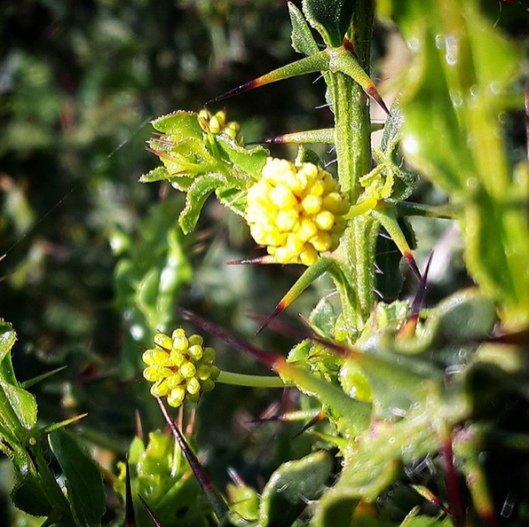 We recently celebrated the appearance of our first blossoms on the wattles planted in our revegetation area. At almost three years old, this Acacia paradoxa has offered a few tentative blooms and while it’s a modest showing, we’re absurdly excited about it. It marks a shift in our ‘wilderness’ zones, from plants that we’ve cultivated and maintained towards plants that have survived through dry years and the appetites of kangaroos, to become plants that are beginning to thrive and reproduce independently.



 Yarnauwi Farm