• About
  • Anacotilla: History & Hearsay
  • Junk: A Curated Collection
  • Resources
  • Species List
  • Yarnauwingga and beyond

Yarnauwi Farm

~ Fleurieu Peninsula, South Australia

Yarnauwi Farm

Category Archives: planning

Farming with young children

02 Tuesday Aug 2016

Posted by Joel in planning, regeneration, tools

≈ 8 Comments

Tags

children, farm, Fleurieu Coast, hiking, kangaroos, permaculture, photography, southwestern Fleurieu, trees

IMG_8221One of our motivations for seeking land beyond the city was the hope that it would support our children to develop a deep connection with a particular patch of ground. Of course, in imagination, it’s all pretty easy: self-directed kids building cubbies in the golden light of late afternoon, climbing trees and constructing dams. In truth, it sometimes feels like masochism.

There are so many things we could have done (and are now trying to do), that would have made the first years of working with Yarnauwi easier. Our restorative ambitions meant that we chose a piece of land that, while superbly located, is highly exposed and has been much abused over the last almost-two centuries. It brings with it endless challenge, and the need for constant monitoring and intervention. The weather sometimes feels defined by the kind of driving winds that take water tanks for excursions around the farm. There’s always work to be done, and sometimes it feels like you’re working without progress, in an environment that can be hostile to weather-beaten, outdoorsy adults, let alone toddlers.

IMG_7155

Mother and child, with mother and child.

Continue reading →

Winter and the One Rock Dams: erosion control after the rain

24 Sunday Jul 2016

Posted by Joel in ecology, planning, regeneration, waterways

≈ 4 Comments

Tags

before and after, ecology, erosion, farm, Fleurieu Coast, one rock dam, planning, reuse, seasons, soil, southwestern Fleurieu, water, waterways, winter
IMG_8265

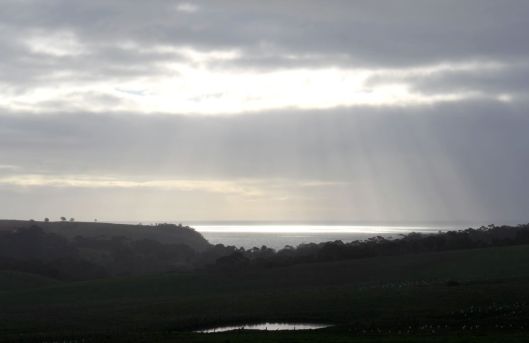
Rain, and a full dam.

By late July this year we’ve already exceeded our entire rainfall for 2015, and for now, the rain shows no signs of abating. This is fantastic news for our revegetation efforts, and our dam is now almost full for the first time in two years. With heavy rains – we managed to top 100mm (4 inches) in a single day – it’s also a chance to test the effectiveness of the erosion control strategies we’ve employed.

With significant erosion in some key areas of the property, we’ve worked to adapt erosion control strategies such as those practised by Bill Zeedyk and Craig Sponholtz (see April’s Waterway Restoration workshop/working bee and our Resources page for more information). In particular, we’ve constructed Zuni bowls, for arresting headcuts, and One Rock Dams, to slow water flow, catch sediment and gradually lift the floor of erosion gullies. After the recent deluge, we toured the works to see how we went. The Zuni bowls have had mixed success: those in relative stable locations have been effective, those in dispersive soils have been unpredictable. The One Rock Dams (ORDs) have been generally successful, if swamped by sediment!

The impact of 100mm of rain in one day is significant: exposed areas lose significant amounts of soil (some areas of gully floor had almost 30cm of freshly deposited sediment), and areas of dispersive soil go berserk, collapsing in all directions. For some of these areas, we’re continually seeking further advice, but for those we can manage, we monitor and tweak over time, and try to “let the water do the work” in healing the landscape.
Continue reading →

Matching trees to tricky spots

25 Saturday Jun 2016

Posted by Joel in ecology, planning, propagation, regeneration, trees

≈ Leave a comment

Tags

ecology, erosion, farm, Fleurieu Coast, permaculture, revegetation, seasons, seeds, soil, southwestern Fleurieu, trees, water

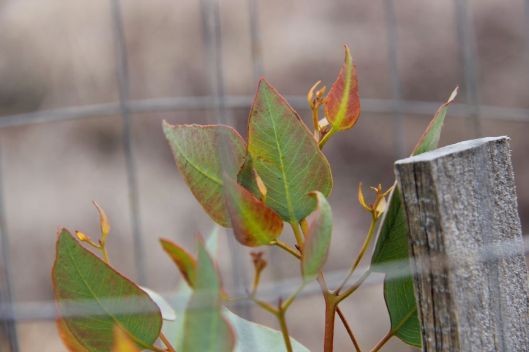
IMG_7914

Eucalyptus occidentalis, a hardy, salinity and waterlogging tolerant timber and bee forage WA species, putting on new growth despite a dry year.

For the first couple of years of tree planting, we adopted a pretty haphazard approach, planting a bit of everything everywhere, and waiting to see what would stick. It took only a couple of months to highlight which areas offered the conditions for revegetation at a respectable pace, and which did not. Some patches only appeared to support certain species, others seemed to support nothing at all. The challenge has been to work out why. For enthusiastic amateurs like us, the working out comes through plenty of observation, plenty of reading and plenty of research.

IMG_7870

One persistently hostile area of the farm offers saline, slaking, seasonally waterlogged clay with tunneling and cracks you could lose a child down.

For some areas on our farm, vegetation is a valuable indicator, plants like sea barley grass (Hordeum marinum) suggests mild salinity, and, in our case, seasonal waterlogging. In others, aspect and soil type present challenges. Three years of tree planting and walks through local bushland have also given us a sense of which local species might suit which locations. We keep trying new configurations in the same places, and also try to mimic the natural process of succession by planting hardy pioneers first, then waiting for them to establish shelter and canopy before adding others. As the balance of the landscape has changed through clearing, cultivation and the associated effects of erosion, shifting water tables and changes in nutrients and soil biology, many of the species that may have dominated a couple of centuries ago no longer tolerate certain areas of the block. Likewise, some areas that may have been conducive to vegetation when woodland was already present, once cleared, they seem to be hostile to its re-establishment: for example, a north-facing corridor of grey, cracking clay that has resisted our affections for two years now. Continue reading →

The Fourth Annual Tree Planting Extravaganza!

20 Monday Jun 2016

Posted by Joel in ecology, events, planning, regeneration, trees

≈ 5 Comments

Tags

ecology, farm, Fleurieu Coast, kangaroos, revegetation, seasons, sheep, soil, southwestern Fleurieu, trees, winter

IMG_8069

Reforesting the Fleurieu, one tree(guard) at a time.

Over the June long weekend, once again our loyal crew of tree-planters descended on Yarnauwi for the fourth year of tree planting. This year we planted 600 plants, local species associated with pink and red gum woodlands.

IMG_8095

The 2016 Crew

After 3 years of planting, many patches of seedlings are now well established, and on rainfall only they’re slowly growing into the landscape. Our mission for this year was to fill in some unplanted spaces, trace windbreaks and corridors between islands of vegetation, replant tricky spots with specially selected vegetation and to expand some of our successful woodlots. Spots that we cleared junk from earlier in the year were planted out, and areas of erosion control will also be planted with sedges and reeds this season. Continue reading →

Exploring the Fleurieu’s climate future

20 Saturday Feb 2016

Posted by Joel in ecology, livestock, planning, regeneration, reviews, waterways

≈ 2 Comments

Tags

books, climate change, design, ecology, farm, future, livestock, permaculture, planning, southwestern Fleurieu, water

Handbook
2PercentSolutions

We’ve recently read a couple of books that have served as a catalyst to revisit what a future climate scenario might be like for the Fleurieu Peninsula, and how we can ensure the greatest resilience for our patch of ground. The books are two practical volumes on climate change, the first The Handbook: Surviving and Living with Climate Change, by Jane Rawson and James Whitmore, is a tour of practical household and community strategies for adapting to climate change in Australia. The second, Two Percent Solutions for the Planet: 50 low-cost, low-tech, nature-based practices for combatting hunger, drought and climate change, is a farming and land restoration-focussed collection of case studies collected by Quivira Coalition co-founder, Courtney White. For readers that may’ve grown weary of the political inertia around climate change, not to mention the vast scale of the problem, the practical, household-, community- or farm-scale focus of both books offers a practical way of re-engaging with the climate challenge. Two Percent Solutions serves as an optimistic companion read to the sometimes gloomy vibe of The Handbook, with its strategies offering scope for both climate mitigation and adaptation. Continue reading →

The Yarnauwi Farm Annual Report 2015

13 Wednesday Jan 2016

Posted by Joel in diy, events, livestock, planning, regeneration, trees

≈ 5 Comments

Tags

annual report, design, ecology, farm, livestock, permaculture, planning, revegetation, seasons, sheep, soil, southwestern Fleurieu, trees

You can view a printable version of this Annual Report here.

IMG_5895

We’re now three years into the Yarnauwi project. With all of our major water and fencing infrastructure in place, 2015 was a year of consolidating and refining our planting and grazing systems, and continuing to restore habitat while also developing income streams. Once again, we thank you for your support this year, whether that’s been planting trees, purchasing meat, hauling junk, offering advice or just being generally encouraging! We feel enormously privileged to have such a supportive community of family, friends and neighbours contributing to the restoration and development of this patch of ground. Continue reading →

Local Adventures: Kalamunda Native Forest Reserve

13 Sunday Dec 2015

Posted by Joel in ecology, exploring, history, livestock, planning, regeneration

≈ 4 Comments

Tags

ecology, farm, photography, revegetation, seasons, southwestern Fleurieu, summer, trees


IMG_7317

Looking towards Yankalilla Hill and The Gorge, Normanville from the northeastern corner of Kalamunda Native Forestry Reserve. The radio masts of Yankalilla Hill (the cliffs above Lady Bay) are just visible on the left of the photograph.

We pulled in at gate MH18, 50 metres from the summit of Mount Hayfield at the northern end of Mount Hayfield Road (off Springs Road, from Range Road). Through the pine plantations we could see flashes of sky and the brown paddocks stretching off to the north. It’s up in the highlands here, and where it’s not grazing land or forestry plantations, there’s still patches of native forest, the most significant of which is the Kalamunda Native Forest Reserve, part of the Second Valley Forest complex.

Continuing our research into the ecology of the Fleurieu, we’ve been looking for examples of what our own landscape might have looked like before clearing to help guide our regeneration efforts. Of the three local forest reserves, Kalamunda seemed like a good fit. Perched above Yankalilla, Kalamunda is a fragment of the kind of woodlands which were present across the Fleurieu.

IMG_7290

Walking through the pines

Continue reading →

The time of plans and projects

23 Monday Nov 2015

Posted by Joel in ecology, livestock, planning, regeneration, trees

≈ 2 Comments

Tags

damara, ecology, farm, kangaroos, livestock, photography, planning, revegetation, seasons, sheep, southwestern Fleurieu, summer, trees, waterways

IMG_7113

Grain fields at Aldinga, and drying hills

It seems like summer comes sooner and sooner. Winter was short, and so dry that the dam never progressed beyond a puddle, then the sun was back, the grass grew for a moment then was baked dry again by an early heatwave. The northern faces of the hills turned a bleached gold, then quickly the green haze on the south sides followed. And we’re back, heading into the hot season again, settling into a holding pattern of heat and dormancy until the opening rains.

IMG_7058

North faces baked dry in the first heat

Tolstoy apparently called spring “the time of plans and projects”. Now a year into our sheep project, we’ve begun tweaking our grazing practices in an effort to manage our pasture more effectively. We’ve increased our flock size through both breeding and the acquisition of some hardy, desert-adapted damara sheep, brought in from a dusty paddock outside Nuriootpa to replace the ageing and increasingly delicate Wiltshire Horn matriarchs. The existing flock hasn’t exactly embraced the new arrivals, there’s plenty of bleating and foot-stomping. You could cut the tension with a knife when we pour out the sheep nuts. Among the damaras is Manchego, our new ram. Looking at Pecorino’s legacy, it’s clear he has big hooves to fill.

Continue reading →

The drop: lambing season begins!

27 Sunday Sep 2015

Posted by Joel in livestock, planning

≈ 2 Comments

Tags

alpacas, farm, lamb, livestock, seasons, sheep, southwestern Fleurieu, spring

IMG_6982

A young ram lamb takes shelter with its mother.

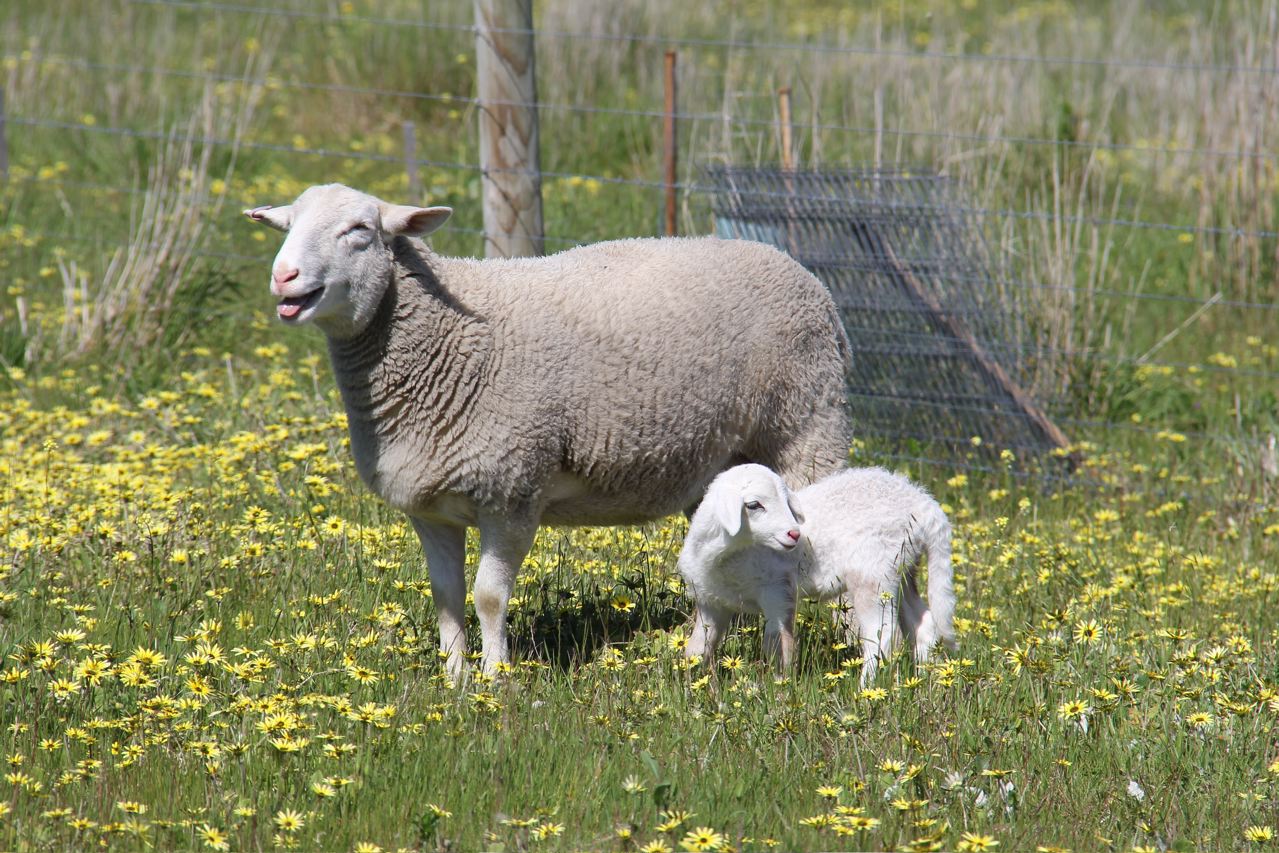
After weeks of expecting a lamb at any moment, the season has begun with five dropping at once! Fathered by the late, great Damara x Dorper ram Pecorino (sheepish in all but his appetites, he came to an untimely end after over-doing it on lupins), these little crossbreeds have a distinct Damara bearing and appearance, with their floppy ears and dappled coats. While the alpacas typically have an adolescent aloofness, now that there are lambs about they’ve switched into vigilant mode, keeping a close eye on their young charges and leading the flock to water and fresh pasture.

IMG_6974

After starting the flock with Wiltshire Horns, we found that this breed didn’t exactly relish our pre-treed (ie. open, windswept and exposed) environs, so we’ve started breeding the flock towards hardier, less selective grazers like the Dorper and Damara that also offer a yield in meat and hides. So with last year’s lambs being Wiltshire Horn x Dorper, these are all of the above, but mostly Dorper. As with virtually every aspect of this farming project, it’s an experiment!

IMG_6970

Continue reading →

Seeing the forest for the trees: piecing together past ecology

21 Monday Sep 2015

Posted by Joel in ecology, planning, regeneration, trees

≈ 6 Comments

Tags

ecology, farm, planning, revegetation, seasons, soil, southwestern Fleurieu, trees

IMG_6958

Tall stringybark forest, Deep Creek Conservation Park, southwestern Fleurieu Peninsula.

It’s a preoccupation of ours to develop our understanding of the historic ecology of the farm. We’ve pored over books such as Mangroves to Mallee (Berkinshaw 2009), and The Native Forest and Woodland Vegetation of South Australia (Boomsma & Lewis), but their listings of different plant associations were often bewildering as we tried to nut out which was the best fit for our patch of ground. We had some information about climate, and a basic knowledge of soils, but only limited local remnant vegetation to refer to for an idea of what might’ve been here before colonisation. Our property has a couple of old red gums, but little sense of what the landscape might have looked like two hundred years ago. Early advice we received suggested that our landscape was once “pink gum woodland”, yet most of the initial pink gums we planted died. Having a sense of how our landscape was in the past not only assists our success in habitat regeneration, but also offers insight into how our landscape works in general.

We’ve looked at historical photographs, and they seemed to confirm our sense that there were once more trees than there are now, but by the late 1800s they already depict a deforested landscape. Through early colonial accounts we’ve also pieced together a rough picture of what the landscape may have been like, with a particular focus on how water may have been managed in the vegetation and soil. We’ve even brainstormed a sequence of events for how the landscape may have changed between colonisation and now, but what we lacked was local ecological detail. It was time to go back to the library, this time to trawl through past ecological studies of the region. With many written in the early 20th century, the papers we found articulate connections between soils, rainfall and then-living memory of plant communities throughout the Mount Lofty Ranges.

SpechtVegetationMap

Vegetation Map of the Mount Lofty Ranges and Murraylands, from Specht 1972

Continue reading →

← Older posts
Newer posts →

Yarnauwi on Etsy

Enter your email address to follow this blog and receive notifications of new posts by email.

Join 223 other subscribers

What We’re Writing About

alpacas annual report art art and craft bees before and after birds books building cheese climate change craft damara design downloads ecology embroidery erosion etsy events farm fencing fire Fleurieu Fleurieu Coast Fleurieu Peninsula food fungi future hack hiking history illustration insects kangaroos leather leathercraft linoprint livestock logo nursery permaculture photography picnics planning Plastic-free July printing propagation rain recipes recycling regeneration regenerative agriculture reuse revegetation sea seasons seeds shed sheep sheepskins shop soil southwestern Fleurieu summer textiles tour tractor trees ute waste water waterways winter zones

Meta

  • Create account
  • Log in
  • Entries feed
  • Comments feed
  • WordPress.com

Blog at WordPress.com.

  • Subscribe Subscribed
    • Yarnauwi Farm
    • Join 223 other subscribers
    • Already have a WordPress.com account? Log in now.
    • Yarnauwi Farm
    • Subscribe Subscribed
    • Sign up
    • Log in
    • Report this content
    • View site in Reader
    • Manage subscriptions
    • Collapse this bar
 

Loading Comments...