
 A little while ago, some very generous friends offered us an old tractor that wasn’t suitable for their needs. We took delivery of the 1960s McCormick International Harvester A414 a few months ago, and while it mostly seemed to work, shortly after arriving some hydraulic lines blew-out, leaving the tractor unmovable. We contacted a couple of local mechanics to come out and have a look, generally receiving a response along the lines of “Fix it yourself.” While I’m not sure about how that works for them as a business model, it’s definitely in the spirit of the tractor, designed to be maintained, fixed and customised indefinitely with the assistance of a manual and some creativity.
 After several weekends of tinkering, evenings of poring over manuals and the occasional visit to auto-parts shops, the mighty A414 roared into life. It handles like an ocean liner, sounds like a freight train and gets from 0-10km/h in a time comparable to the entire Jurassic Era, but boy, that slasher sliced through the dry grass of next winter’s reveg plantings like only spinning steel can. Continue reading




 In The Biggest Estate on Earth (Allen & Unwin, 2011), historian Bill Gammage describes a detailed vision of Aboriginal land management prior to European colonisation of Australia. While many Australians have a broad sense that “fire-stick farming” was (and is) a tool used by Aboriginal people, The Biggest Estate on Earth begins to fathom how finely tuned Aboriginal fire use was. With fire as one of a suite of tools, Aboriginal people across the Australian continent carved the landscape into a mosaic of ecosystems, each harbouring plants and animals of differing sensitivity to fire, each maintained to maximise ecological diversity and each nested within the other to increase the ease of hunting or harvesting. For Gammage, Aboriginal land management across the continent was directed by three main principles: “ensure that all life flourishes; make plants and animals abundant, convenient and predictable”; and to “think universal, act local”.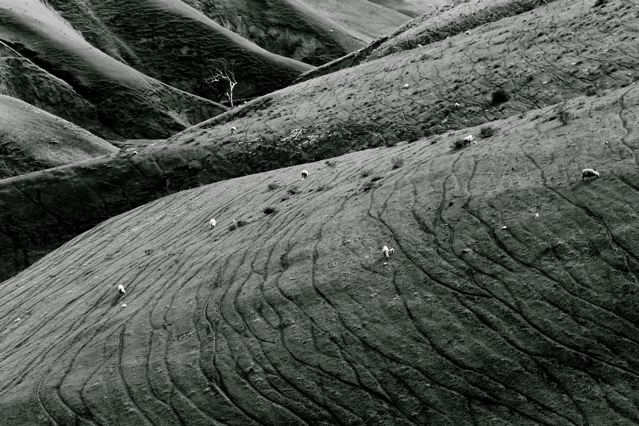


 Yarnauwi Farm