• About
  • Anacotilla: History & Hearsay
  • Junk: A Curated Collection
  • Resources
  • Species List
  • Yarnauwingga and beyond

Yarnauwi Farm

~ Fleurieu Peninsula, South Australia

Yarnauwi Farm

Tag Archives: books

Fleurieu Foliage: River red gum (Eucalyptus camaldulensis)

19 Monday Jan 2015

Posted by Joel in ecology, propagation, regeneration

≈ 5 Comments

Tags

bees, books, ecology, farm, nursery, propagation, revegetation, seasons, southwestern Fleurieu, summer, trees, water

IMG_5468

After shedding two-thirds of its branches last year, one of our giant red gums is now a forest of new shoots.

As the two remnant trees on our farm, River red gums (Eucalyptus camaldulensis) hold a special place in our hearts. Our red gums are bent and stretch up the hillside away from the prevailing winds. Red gums are not unique to the Fleurieu however, in fact, their high level of adaptability means that they have a distribution across Australia, most commonly occurring on floodplains and waterways as well as throughout higher rainfall regions.

IMG_5466

Not dead yet! After apparently dying in an unusually dry winter and spring, this year-old red gum seedling has re-sprouted from its base after receiving about 10mm of rain over several weeks.

With red gums as a significant species in the past ecosystem of our property, they’ve been a clear choice for revegetation. When planting, we’re constantly inspired by their resilience. I’ve heard it said that red gum roots grow at a centimetre a day, which puts them at over three-and-a-half metres a year. If it’s true, then it’s an indicator of their startling ability to find water and nutrients. We’ve been amazed by some of our red gums that have shot to almost 1.5 metres after a couple of years in the ground, but also by their apparent capacity for dormancy. Some seedlings will sit in dry, cracked clay soil for months on end, leaves green but not growing. Then, with a decent rain, they burst into new growth. Likewise, others appear to have died, leaving nothing but a dry stick until the opening rains of autumn when they reshoot from the ground, sending out a profusion of leaves and spindly branches. We’ve noticed some other plants behave similarly – the occasional melaleuca or acacia for example – but none so consistently and successfully resurrect themselves as the red gum.
Continue reading →

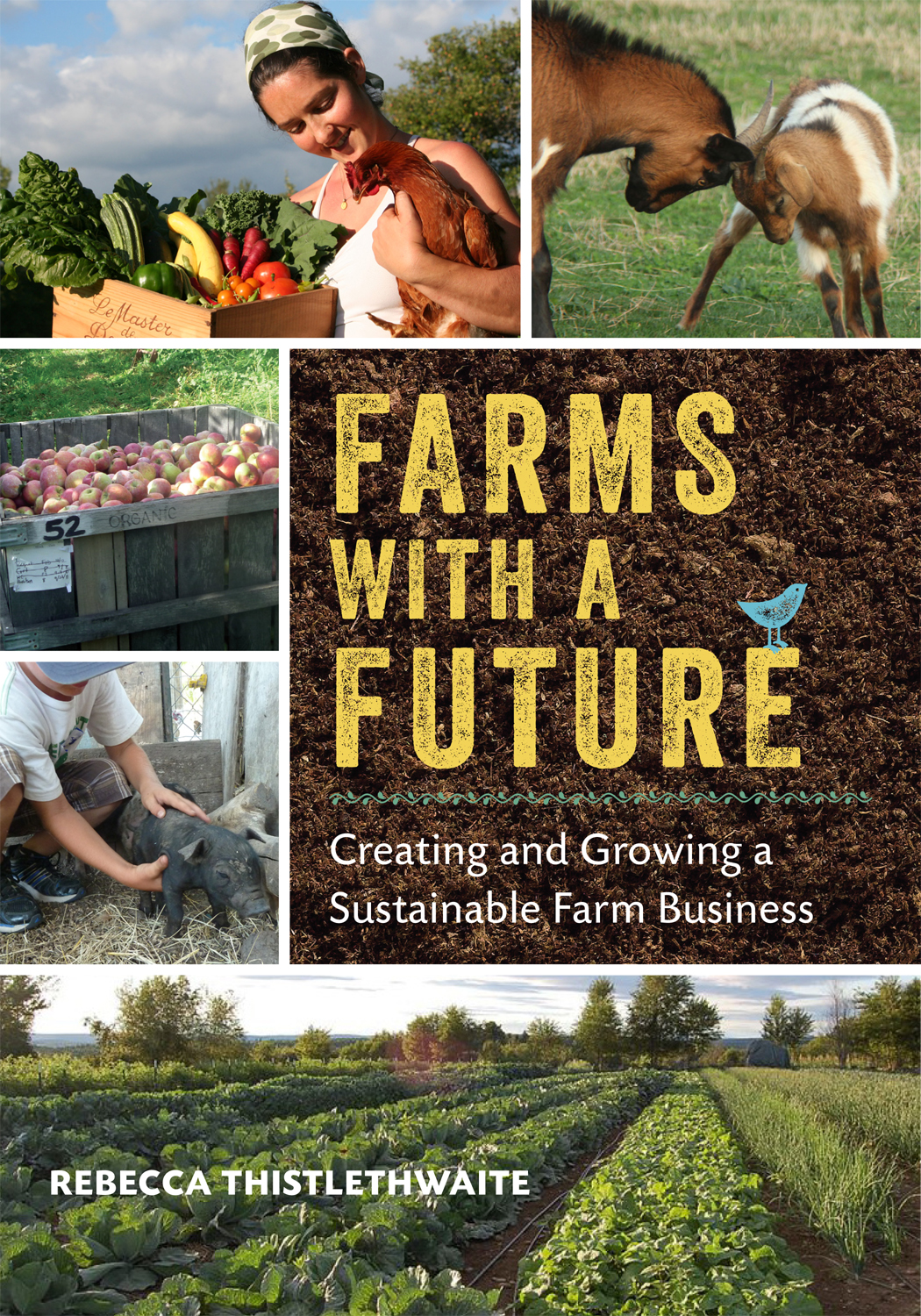
Book Review: Growing a sustainable farm with ‘Farms with a Future’

28 Monday Apr 2014

Posted by Joel in planning, reviews

≈ Leave a comment

Tags

books, permaculture, planning

In her book Farms with a Future (Chelsea Green, 2012), American small farm consultant, sometime-homesteader and former family rancher Rebecca Thistlethwaite offers a brisk, yet detailed, guide to building and running a sustainable farm business. Writing on a range of essential topics including marketing, land access, finance and business planning, equipment, soil and water management, record-keeping and human resources her writing is concise and targeted, supported by her own experiences together with a selection of excellent case studies describing how the principles outlined are expressed in the real world. Each chapter offers a discussion of key issues and strategies for sustainable farms, a case study and summary of short, sharp “Take Home Messages” drawn from the text. While it is necessarily written for a North American audience, and some US-focussed sections on regulation or financing can be skipped over, there is still much here to inspire Australian readers. Continue reading →

A One-Page Place Assessment for TBC Farm, Second Valley

30 Sunday Mar 2014

Posted by Joel in ecology, planning, regeneration, waterways

≈ 2 Comments

Tags

books, design, ecology, permaculture, planning, revegetation, seasons, soil, southwestern Fleurieu, trees, water, waterways

Brad Lancaster’s books on Rainwater Harvesting would have to be among the most consistently inspiring books we own. Two volumes into his trilogy on Rainwater Harvesting for Drylands and Beyond, Lancaster combines accumulated community wisdom with permaculture principles to produce lavishly illustrated, practical and highly accessible manuals for managing water in urban and rural environments. Consistent with permaculture thinking, Lancaster urges land managers to spend time observing the season patterns of the landscape to more effectively design for sustainable, integrated water management. One method of doing this is to compile a One Page Place Assessment, drawing together essential climatic and ecological information about your particular location.

Our first year has been one of spreadsheets, mapping out our seasonal observations and activities, and the One Page Place Assessment concept is a elegant way of compiling climatic data from Second Valley and the surrounding area. We’ve finally completed the first version of a place assessment for our property, with much of the data drawn from Bureau of Meteorology stations nearby (Myponga Reservoir being the furthest). While we have tailored information to our particular location, we hope it will be of use to other landowners in the region. We have also referenced information sources so others can draw on the same resources in exploring their own area.

You can download our One Page Place Assessment here. Continue reading →

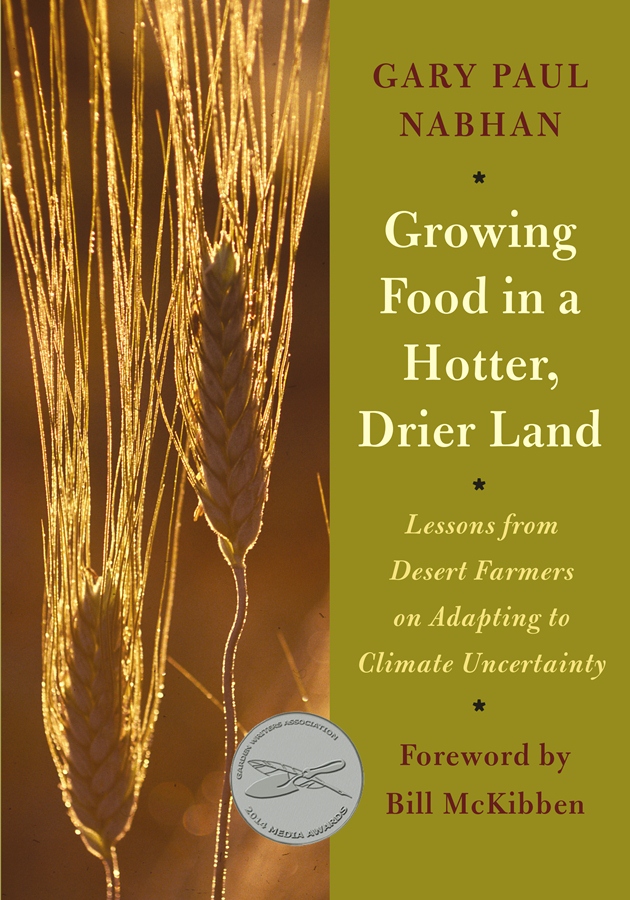
Book Review: Embracing an arid future in “Growing Food in a Hotter, Drier Land”

19 Wednesday Mar 2014

Posted by Joel in ecology, planning, reviews

≈ Leave a comment

Tags

bees, books, design, ecology, food, permaculture, planning, revegetation, seeds, soil, trees, water

Years before there was talk of locavores and 100-mile-diets and omnivore’s dilemmas, I came upon Gary Nabhan’s book Coming Home to Eat, a personal account of his experiences striving to solely eat food produced in his home bioregion of the US-Mexican borderlands in southern Arizona. His observations as renowned desert ecologist and ethno-botanist redefined how I thought about food and sustainability and accompanied me on my own sustainable food explorations for years after.

I get the feeling that his latest book, Growing Food in a Hotter, Drier Land: Lessons from Desert Farmers on Adapting to Climate Uncertainty (Chelsea Green, 2013), may be another companion for us in our adventures on the farm. While Growing Food is as practical as its title suggests, it is permeated by Nabhan’s respect for the insights of cultures deeply connected to the land, and his belief that communities connected to their bioregion are the most resilient in the face of environmental change. Continue reading →

Cheese Notes: Mozzarella-making

14 Tuesday Jan 2014

Posted by sophie in diy, food

≈ Leave a comment

Tags

books, cheese, food

You may be wondering where the cheese part comes in to Trees, Bees and Cheese. One of our plans is to eventually run dairy sheep and have a small-scale artisanal cheese business, to complement the other income streams on a diverse farm. But in the meantime, we are busy honing and expanding our cheese-making skills.

IMG_2494

Our first camembert, ready to eat.

After learning how to make haloumi, ricotta, and goat curd from Lulu of Culinary Art Productions, and teaching ourselves a modern camembert from Cheeselinks‘ book Home Cheesemaking, the next cheesemaking frontier has been good old child-friendly mozzarella. Continue reading →

Learning the land with ‘The Biggest Estate on Earth’

12 Saturday Oct 2013

Posted by Joel in ecology, regeneration, reviews

≈ 4 Comments

Tags

books, ecology, history, kangaroos, permaculture, revegetation, soil, trees

In The Biggest Estate on Earth (Allen & Unwin, 2011), historian Bill Gammage describes a detailed vision of Aboriginal land management prior to European colonisation of Australia. While many Australians have a broad sense that “fire-stick farming” was (and is) a tool used by Aboriginal people, The Biggest Estate on Earth begins to fathom how finely tuned Aboriginal fire use was. With fire as one of a suite of tools, Aboriginal people across the Australian continent carved the landscape into a mosaic of ecosystems, each harbouring plants and animals of differing sensitivity to fire, each maintained to maximise ecological diversity and each nested within the other to increase the ease of hunting or harvesting. For Gammage, Aboriginal land management across the continent was directed by three main principles: “ensure that all life flourishes; make plants and animals abundant, convenient and predictable”; and to “think universal, act local”. Continue reading →

Newer posts →

Yarnauwi on Etsy

Enter your email address to follow this blog and receive notifications of new posts by email.

Join 223 other subscribers

What We’re Writing About

alpacas annual report art art and craft bees before and after birds books building cheese climate change craft damara design downloads ecology embroidery erosion etsy events farm fencing fire Fleurieu Fleurieu Coast Fleurieu Peninsula food fungi future hack hiking history illustration insects kangaroos leather leathercraft linoprint livestock logo nursery permaculture photography picnics planning Plastic-free July printing propagation rain recipes recycling regeneration regenerative agriculture reuse revegetation sea seasons seeds shed sheep sheepskins shop soil southwestern Fleurieu summer textiles tour tractor trees ute waste water waterways winter zones

Meta

  • Create account
  • Log in
  • Entries feed
  • Comments feed
  • WordPress.com

Blog at WordPress.com.

  • Subscribe Subscribed
    • Yarnauwi Farm
    • Join 223 other subscribers
    • Already have a WordPress.com account? Log in now.
    • Yarnauwi Farm
    • Subscribe Subscribed
    • Sign up
    • Log in
    • Report this content
    • View site in Reader
    • Manage subscriptions
    • Collapse this bar
 

Loading Comments...