
Tags
design, ecology, erosion, farm, fencing, permaculture, planning, soil, southwestern Fleurieu, water
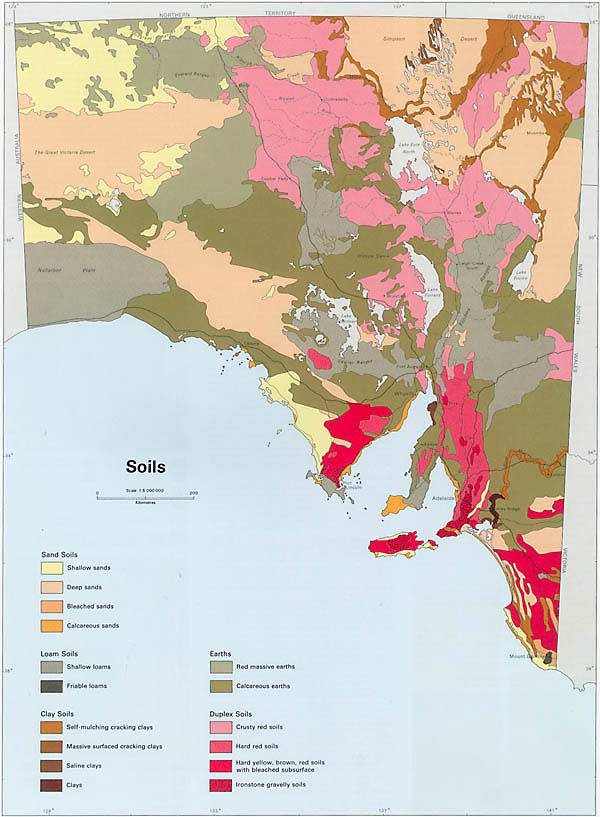
Soils of South Australia, divided into 16 subgroups, from the 1986 Atlas of South Australia.
Recently we’ve been thinking a lot about soil. After all, it is the International Year of Soils, and really, without dirt, there’s not much else. Understanding how our soils work and how to restore them is an essential part of our regeneration project and their structure and composition help define the boundaries of what’s possible on our patch of ground. As Adamson and Osborn asserted in their pioneering 1924 study of the ecology of the eucalypt forests of the Mount Lofty Ranges, climate and soils are the primary factors in determining ecological variation in the region, so even where the scrub has long been cleared, soils can also offer a memory of past ecosystems.
However, it’s taken us a while to unravel meaningful information about soils. There’s a whole new vocabulary, and when you don’t yet know your Kandosols from your Kurosols the whole experience can be a bit mystifying. To make things even more complex, there are oodles of different technical terms for describing any particular soil type, depending on era or classification systems. So we thought we’d share some resources that we’ve come across that may be of use in working out what you’re sitting on. Continue reading


 Yarnauwi Farm