• About
  • Anacotilla: History & Hearsay
  • Junk: A Curated Collection
  • Resources
  • Species List
  • Yarnauwingga and beyond

Yarnauwi Farm

~ Fleurieu Peninsula, South Australia

Yarnauwi Farm

Category Archives: history

Landscape history and future planning

30 Thursday Apr 2015

Posted by Joel in ecology, history, planning

≈ 9 Comments

Tags

design, ecology, erosion, farm, history, kangaroos, livestock, permaculture, planning, revegetation, soil, southwestern Fleurieu, trees, water, waterways

Recently we’ve been obsessing a bit about the history of our landscape (here, here, and even here, for example). It comes as the consequence of the last few years of reading and thinking about how Australia’s landscape and water systems have changed over time, but we hope it’s not purely an intellectual exercise. Understanding how our landscape was 200 years ago acts as a good guide for planning its future potential and limitations. By attempting to unravel the threads of actions and consequences that have reshaped these hills and valleys over the last couple of centuries, we can also not just address symptoms (such as treating an erosive headcut with a Zuni Bowl), but can also have a go at working on the causes of dysfunction in our soil, water and ecosystems. A lofty goal, but as Wes Jackson quips, “if your life’s work can be accomplished in your lifetime, you’re not thinking big enough!”

Landscape History - New Page

This spaghetti-and-meatballs flowchart is our first go at representing what might have happened in our neighbourhood over the last 180-odd years, compiled from reading, observations, historical records and discussions. It provides us with a list of things to do as we attempt to address elements of this (for example, in this year’s tree planting, we’re inoculating our seedlings with beneficial fungi to restore mycorrhizal networks). We expect this chart to be tweaked, adjusted and rewritten over time as we discover new ideas or revise our assumptions. Perhaps a next step might be to construct a sequel that shows how we might attempt to improve some of this stuff.

Are there connections, consequences or other things we’ve missed, overstated or got plain wrong? We’d love to hear your thoughts and ideas.

The Salvage Season

23 Monday Mar 2015

Posted by Joel in art & craft, ecology, history, regeneration, waterways

≈ Leave a comment

Tags

art, ecology, erosion, farm, history, photography, southwestern Fleurieu, waste, waterways

IMG_5900_2

The steely gaze of a doll, complete with an electrical tape necklace.

With the chilling of the air, it’s time for us to don our gloves and get stuck into mining the junk that lines the banks and bed of our erosion gullies. It’s become an annual tradition to pick a path through chest-high phalaris, filling bags with debris. It’s scratchy, dusty work, with plastic milk bottles and the remains of plastic bags collapsing into confetti with the gentlest of touches. Yet despite the discomfort, we can’t help but have a forensic fascination with what we unearth. Each discovery is a cryptic clue into the lives of our predecessors, those who decided that the headwaters of a creek would be the best place for their unwanted bric-a-brac.

IMG_5889

A broken clock amid bones. We’ll leave you to come up with your own metaphors.

Continue reading →

Maintain the rain! Piecing together the past to imagine a future

05 Thursday Mar 2015

Posted by Joel in ecology, history, planning, regeneration, trees, waterways

≈ 2 Comments

Tags

art, ecology, erosion, farm, history, livestock, photography, planning, revegetation, seasons, soil, southwestern Fleurieu, summer, trees, water, waterways, winter

It’s been a dry year on the Fleurieu Peninsula. After the inundation of 2013, 2014’s rainfall came in almost 200mm shy of the year before, and about 100mm short of the average. By February 2015, the dam had receded to a few centimetres of sludge, and the water carter had come to top up the stock water tanks. While there’s no doubt that the Fleurieu Peninsula has had the Mediterranean pattern of dry summers and cool, wet winters for some time, recently I’ve begun to wonder whether this pattern has shifted towards greater aridity as successive land-uses have cleared the landscape.

Curruckalinga, looking over St. Vincent’s Gulf, 1846, George French Angas, depicting a mosaic of woodland and open grassland. From the description: “This view is taken from the rocky hills near Mr Kemmis’s Station, to the northward of Rapid Bay … The undulating appearance of the country here represented, together with the singular manner in which the trees are dotted about in all directions over the landscape … principally ‘casuarinae’ or she-oak, with ‘eucalyptus’.” From the collection of the State Library of South Australia, B15276/33.

At the time of European colonisation, the Fleurieu Peninsula was most likely covered with a mosaic of woodland, forest and grasslands, maintained through Aboriginal burning and land management practices. In his paper on the discovery and settlement of the Fleurieu (1986), Rob Linn draws from the diaries of settlers in his descriptions of the landscape of the South Western Fleurieu. Writing in 1838, William Giles described the landscape around Rapid Bay, as “a most beautiful valley, the soil of great depth covered with most luxuriant herbage … on the sides of these hills we found plenty of keep for sheep, and wherever the grass had been burnt in these places it was looking beautifully verdant … fine land, excellent water, plenty of timber …” This was echoed by John Stephens in 1839, describing the “country from Cape Jervis upwards” as “very picturesque” and “well-timbered” (Linn 1986). Continue reading →

Visions of the Past: historical photos of Anacotilla

15 Thursday Jan 2015

Posted by Joel in history

≈ Leave a comment

Tags

Anacotilla, farm, history, photography, seasons, southwestern Fleurieu, trees, waterways, winter

4567. Anacotilla Bridge

Anacotilla Bridge on Main South Road, with Lorna Kelly (riding side saddle), E.C. and G.F. Kelly (c1896). Image courtesy of the Yankalilla & District Historical Society.

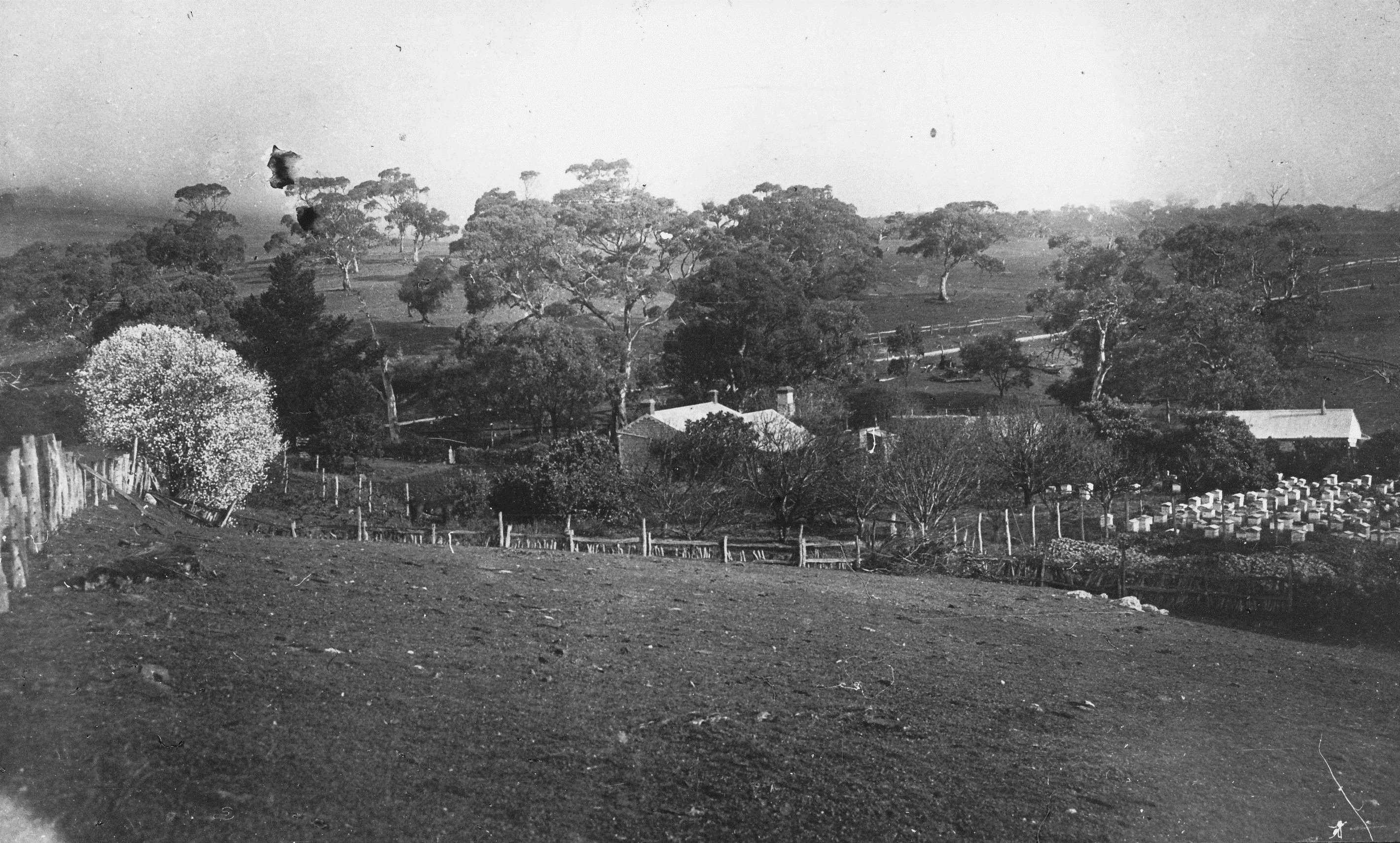
Our farm, Yarnauwi, is one lot of the once expansive Anacotilla pastoral property. Just over the ridge, in the Anacotilla river valley, are the old workers’ cottages, and on the hillside opposite, the sprawling homestead and outbuildings. We’ve recently been corresponding with the Yankalilla and District Historical Society about our interest in the property’s history, and they shared with us a number of photographs from the late 1800s onwards.

4563. Anacotilla

“Anacotilla”, Second Valley, home of A.C. Kelly in the 1880s. Image courtesy of the Yankalilla & District Historical Society.

IMG_5348

The Anacotilla cottage and outbuildings, 2014, viewed from Main South Road, near Paradise Drive. While the cottage has undergone substantial additions and renovations, the original two-room dwelling still exists at its centre.

Continue reading →

The Fleurieu in the 50s and 60s: A Second Time at Second Valley

10 Wednesday Dec 2014

Posted by Joel in exploring, history

≈ 4 Comments

Tags

history, photography, southwestern Fleurieu, summer

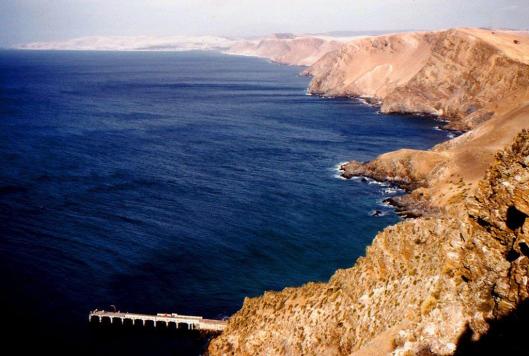
Second Valley jetty, looking north towards Normanville.

Second Valley jetty in the 1960s, looking north towards Normanville. 

In this special guest post, Joel’s dad Jeff Catchlove shares some of his memories and photographs from camping trips to the South-Western Fleurieu in the 1950s and 60s.

Second Valley has always been close to my heart. I’ve just turned 70 and reminiscence is inevitable. Our childhood was unencumbered – most of us were poor, though we didn’t know it. There was no TV but we just as eagerly listened to Biggles, Hop Harrigan, the Goons and Hancock’s Halfhour on ‘the wireless’. We also played outdoors every day, both at school and at home. Children’s books were limited to Enid Blyton, Captain W E Johns and Eagle or Daily Mail Annuals. We dressed in suits to go to ‘town’ on the trolley bus or train and the family acquired its first car when we were ten or so years old. That revolutionised the possibilities of where we could go as a family. Our FJ Holden quickly ushered in trips to Mt Gambier, the Great Ocean Rd, even Queensland so my dad and we could visit his Air Force mates again.

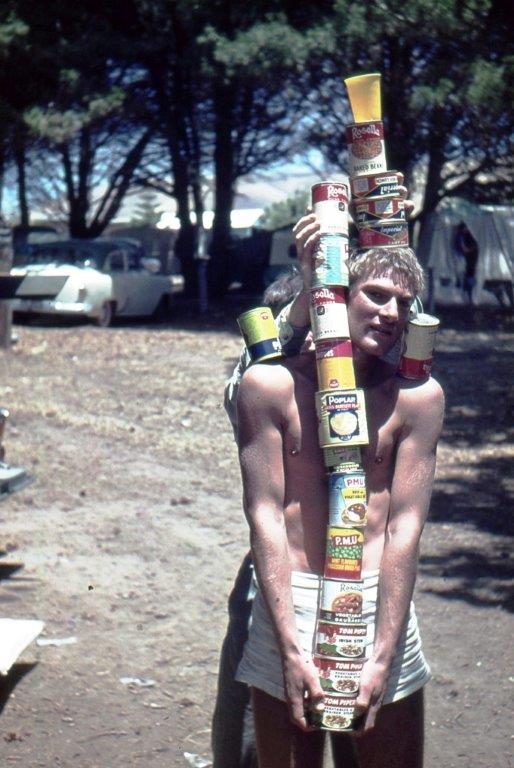
Camping at Second Valley in the 1960s, with a week's worth of rations.

Camping at Second Valley in the 1960s, complete with a week’s worth of rations.

Continue reading →

Newer posts →

Yarnauwi on Etsy

Enter your email address to follow this blog and receive notifications of new posts by email.

Join 223 other subscribers

What We’re Writing About

alpacas annual report art art and craft bees before and after birds books building cheese climate change craft damara design downloads ecology embroidery erosion etsy events farm fencing fire Fleurieu Fleurieu Coast Fleurieu Peninsula food fungi future hack hiking history illustration insects kangaroos leather leathercraft linoprint livestock logo nursery permaculture photography picnics planning Plastic-free July printing propagation rain recipes recycling regeneration regenerative agriculture reuse revegetation sea seasons seeds shed sheep sheepskins shop soil southwestern Fleurieu summer textiles tour tractor trees ute waste water waterways winter zones

Meta

  • Create account
  • Log in
  • Entries feed
  • Comments feed
  • WordPress.com

Blog at WordPress.com.

  • Subscribe Subscribed
    • Yarnauwi Farm
    • Join 223 other subscribers
    • Already have a WordPress.com account? Log in now.
    • Yarnauwi Farm
    • Subscribe Subscribed
    • Sign up
    • Log in
    • Report this content
    • View site in Reader
    • Manage subscriptions
    • Collapse this bar
 

Loading Comments...